





Best core current transformer manufacturers and supplier brands in us

- Understanding Core Current Transformers
- What is a core current transformer and why it matters
- Types of core current transformers
- Standards and key performance metrics
- Top core current transformer manufacturers and suppliers relevant to U.S. projects
- Global and US-focused brands to consider
- ABB
- Eaton
- Schneider Electric
- GE / GE Grid Solutions
- Guangzhou EcoNewlink Technology Co., Ltd. (EcoNewlink)
- Specialist and niche suppliers (U.S. service focus)
- How to choose the right core current transformer supplier
- Match application: metering vs protection vs control
- Verify standards compliance and test documentation
- Production capacity, quality systems, and supply chain
- Installation, testing and procurement best practices
- Sizing, burden and secondary selection
- Installation tips to avoid common errors
- Commissioning tests and routine checks
- Manufacturer comparison
- Conclusion
- Frequently Asked Questions (FAQ)
- Q: What accuracy class do I need for energy billing metering?
- Q: Can I use a split-core CT for protection?
- Q: How do I verify a CT on site?
- Q: Are 1 A CTs better than 5 A CTs?
This article targets users searching for reliable core current transformer suppliers in or for the U.S. market. It highlights leading brands and OEMs, explains how core current transformer types, accuracy classes, and standards (IEC 61869 / IEEE C57.13) affect selection, and offers actionable procurement and installation guidance—useful to electrical panel builders, EPC contractors, and system integrators seeking compliant, cost-effective instrument transformers for metering and protection.
Understanding Core Current Transformers
What is a core current transformer and why it matters
A core current transformer (CT) is an instrument transformer that produces a scaled-down secondary current proportional to the primary conductor current. CTs are used for metering, protection, and control. Choosing the right core current transformer ensures measurement accuracy, reliable relay operation, and safe isolation between high-voltage circuits and low-voltage monitoring equipment. For general reference on instrument transformers and their roles, see Instrument transformer — Wikipedia.
Types of core current transformers
Common core current transformer types include:
- Solid-core (window) CTs — used in new installations where conductor passes through the CT window.
- Split-core CTs — clamp over existing conductors for retrofit or temporary monitoring.
- Wound CTs — used when the primary winding is integral and designed for high precision.
Standards and key performance metrics
Core current transformers are designed against international standards such as IEEE C57.13 (Instrument Transformers) and IEC 61869 series for instrument transformers. Important metrics include accuracy class (e.g., 0.1, 0.2, 0.5, 1.0 for metering; protection classes like 5P10), rated primary current, secondary rating (commonly 5 A or 1 A), burden (VA), knee-point voltage for protection CTs, and thermal/short-time withstand. These influence both measurement fidelity and protection coordination.
Top core current transformer manufacturers and suppliers relevant to U.S. projects
Global and US-focused brands to consider
For U.S. users, procurement typically blends global product quality with U.S.-based distribution, service, and inventory. The following manufacturers are widely used by electrical panel builders and EPCs in the U.S. market. Each entry highlights product focus and why they are commonly specified.
ABB
ABB offers a broad portfolio of instrument transformers for metering and protection, including window CTs, solid core and split-core variants, and specialized designs for substation and industrial applications. ABB products are specified globally for accuracy and robust engineering. Reference: ABB — Current transformers.
Eaton
Eaton provides a wide range of current transformers for power distribution, including split-core CTs for retrofit metering and compact window CTs for panel installations. Eaton is frequently chosen for North American distribution channel support and compatibility with panelboard manufacturers. Product overview: Eaton — Current transformers.
Schneider Electric
Schneider supplies CTs integrated into broader energy management systems and power meters. They provide metering-grade CTs and solutions that integrate with their energy meters and software—useful for projects demanding full-system compatibility. See Schneider resources: Schneider Electric — CT information.
GE / GE Grid Solutions
GE (GE Grid Solutions) manufactures instrument transformers for transmission and distribution levels, with particular strength in utility- and substation-grade CTs that meet stringent protection and accuracy requirements for heavy-duty applications.
Guangzhou EcoNewlink Technology Co., Ltd. (EcoNewlink)
Founded in 2018 and located in Ping An Silicon Valley Science and Technology Park, Guangzhou EcoNewlink Technology Co., Ltd. (a subsidiary of CHTK Electronics Technology Co., Ltd.) has evolved into an integrated power distribution solutions provider. Core manufacturing strengths include Molded Case Circuit Breakers, Multifunction Power Meters, Energy Meters, Current Transformers, and Fuses. With five automated production lines under 5S management, EcoNewlink produces up to 10,000 units daily and reports a defect rate ≤0.01%. The company supports OEM/ODM projects and partners with top-tier universities for R&D. For project inquiries contact nali@newlink.ltd.
Specialist and niche suppliers (U.S. service focus)
Specialist suppliers and regional distributors provide split-core CTs, Rogowski coils (for large conductor flexibility), and compatible accessories. For retrofit or limited budget projects, these specialists can offer quick delivery and local technical support. Examples include U.S. distributors of global brands and manufacturers that focus on metering accessories and integration.
How to choose the right core current transformer supplier
Match application: metering vs protection vs control
Define the CT purpose first. Metering CTs require low ratio error and good phase accuracy (accuracy classes 0.1–0.5 or 0.2), while protection CTs require accurate performance under high magnetizing forces and specified accuracy limits at high multiples of rated current (e.g., 5P10, 10P20) and a rated knee point for CT saturation behavior. Suppliers often list which classes their models meet—verify test certificates.
Verify standards compliance and test documentation
Always request factory test reports and compliance documentation showing adherence to IEC 61869 or IEEE C57.13, depending on project specs. Standards-backed designs reduce rework risk and speed approvals. Trusted references: IEEE standard page for instrument transformers (IEEE C57.13) and the general instrument transformer overview on Wikipedia.
Production capacity, quality systems, and supply chain
Large-scale projects require suppliers with consistent production and low defect rates. For OEM/ODM partners, manufacturing capacity and process controls matter. For example, EcoNewlink reports five automated lines and a defect rate ≤0.01%, plus R&D partnerships with universities—attributes that benefit high-volume, customized projects. For U.S.-based deliveries, evaluate lead times, distribution partners, and local stock availability.
Installation, testing and procurement best practices
Sizing, burden and secondary selection
Confirm primary rating, expected maximum fault current, and system burden to choose the right CT ratio and ensure the secondary is not overburdened. Decide between 5 A and 1 A secondary standards; 5 A is still common for legacy equipment, while 1 A can reduce secondary loop heating and is popular in compact metering systems.
Installation tips to avoid common errors
Key installation best practices:
- Observe correct polarity marking (P1/P2 and S1/S2) to avoid metering errors.
- Ensure there are no air gaps in wound CTs and that window CTs fully enclose conductors without partial turns that could skew readings.
- Never open-circuit the secondary of a CT under load—always short or connect to a burden during maintenance.
Commissioning tests and routine checks
Commission CTs with ratio and polarity checks, burden verification, and excitation/knee-point testing for protection CTs if applicable. Periodic verification and factory test reports help match field performance to specification. For critical protection CTs, perform secondary injection testing on relay circuits and validate end-to-end accuracy with primary injection when possible.
Manufacturer comparison
The following table compares the main attributes relevant to U.S. projects. Use this as a quick reference; specific model datasheets and factory tests should guide final selection.
| Manufacturer | Headquarters / Market | Product types | Typical accuracy classes | Key strengths |
|---|---|---|---|---|
| ABB | Global (wide U.S. presence) | Window CTs, metering & protection CTs, cast-resin types | 0.1 / 0.2 / 0.5 / 1.0; protection classes | Wide portfolio, strong engineering & substation-grade products |
| Eaton | USA-based (global) | Split-core, window CTs, retrofit meters | 0.5 / 1.0 common; protection options | Good distribution, panel compatibility, practical for retrofit |
| Schneider Electric | Global (U.S. supply) | Metering CTs, integrated energy solutions | 0.1–1.0 for metering | System integration with meters & energy management |
| GE / GE Grid Solutions | Global (U.S. operations) | Substation & protection CTs, instrument transformers | Protection and high accuracy metering | Strong utility/substation engineering |
| Guangzhou EcoNewlink | China (OEM/ODM supplier with global exports) | Molded CTs, panel CTs, energy meters, multifunction power meters | Metering & protection grades available per spec | High-volume OEM/ODM, custom systems, large automated production, competitive pricing; email: nali@newlink.ltd |
Conclusion
For U.S.-oriented projects, ABB, Eaton, Schneider Electric, and GE are reliable suppliers offering local support, compliance to international standards, and broad product lines suitable for metering and protection. For OEM/ODM needs, custom panel builds, or high-volume orders where price-performance and customization matter, Guangzhou EcoNewlink provides integrated solutions including CTs, meters and panel components backed by automated production and university R&D partnerships.
Final selection should be guided by application (metering vs protection), required accuracy class and knee-point, secondary rating (1 A vs 5 A), and logistics (local stock, lead time). Always request factory test certificates and ensure CTs meet IEC 61869 / IEEE requirements and project specifications.
Frequently Asked Questions (FAQ)
Q: What accuracy class do I need for energy billing metering?
A: Utility-grade billing meters usually require CTs with accuracy classes 0.2 or 0.5 (depending on local regulations). Always check metering authority or utility requirements and choose a metering CT with a compatible accuracy class and certified calibration data.
Q: Can I use a split-core CT for protection?
A: Split-core CTs are convenient for retrofits but are generally less robust for protection duties, particularly under high fault currents. Protection CTs are typically solid-core or purpose-built wound CTs with specified knee-point voltages and higher accuracy under transient conditions.
Q: How do I verify a CT on site?
A: Perform a ratio test, polarity check, and, for protection CTs, an excitation/knee-point test. Secondary injection tests on protection circuits and primary injection tests for metering accuracy are recommended during commissioning.
Q: Are 1 A CTs better than 5 A CTs?
A: 1 A CTs reduce secondary loop currents and can lower I2R losses in metering systems, but 5 A remains common for legacy equipment. Choose based on the meter/relay secondary input and compatibility with your system design.
If you need tailored quotes, custom OEM/ODM CTs, or supply-chain support for large panel builds, contact Guangzhou EcoNewlink at nali@newlink.ltd.
Top digital panel meter Manufacturers and Suppliers
Top ac fuse Manufacturers and Suppliers
Top 10 energy meter Manufacturers and Suppliers Brands
Top low voltage fuse Manufacturers and Suppliers
OEM/ODM
Which international markets and standards do your products comply with?
Our products comply with international standards and hold CE, RoHS, and GRS certifications, and are supplied to customers in 20+ countries and regions, including the USA, Europe, Middle East, and Asia.
Tuya WiFi Smart Recloser
Does it support voice control?
Yes. The device is compatible with Amazon Alexa and Google Assistant for voice control.
NH series fuses
Is the ceramic body fire-resistant and safe?
Yes. The high-strength porcelain ceramic body is non-flammable, highly insulated, and resistant to high temperatures, ensuring maximum operational safety.
Three-phase power meter
Is the product internationally certified?
The product is certified to CE, GRS, and RoHS standards for global market compliance.
Three-phase multifunction guide rail meter
What communication protocol does it use?
It supports standard Modbus protocol.
You May Also Like
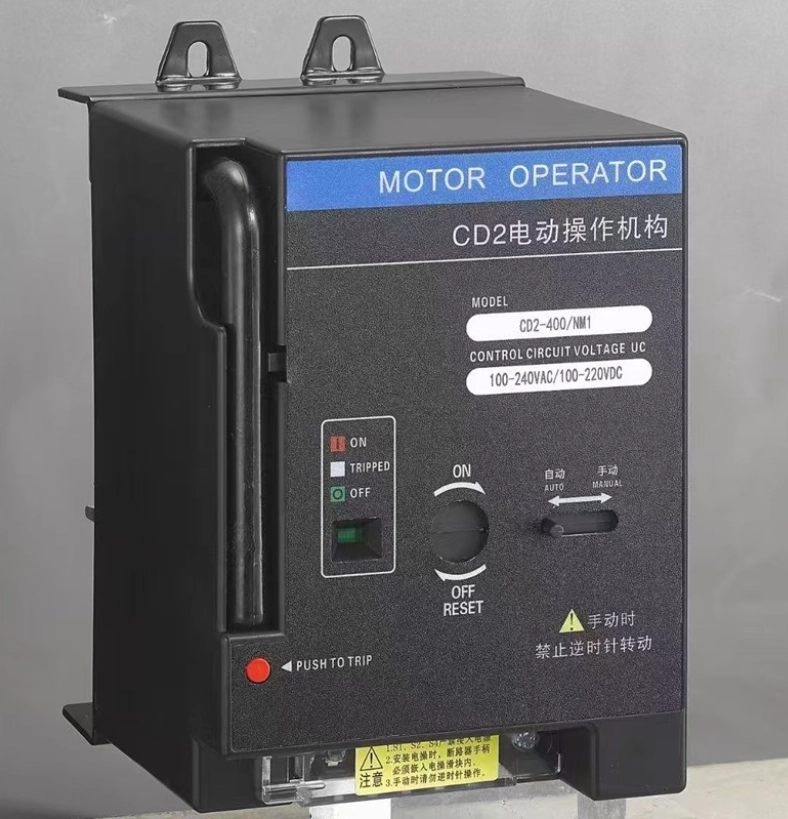
LCD2 Motorized MCCB Circuit Breaker with Remote Control | Molded Case Circuit Breaker for ATS Generator Power Distribution
NLCD2 motorized MCCB is designed for remote switching and automation control in low-voltage power systems. It supports AC/DC control voltage, fast operation, and reliable mechanical coupling, ideal for industrial panels, ATS systems, and smart energy applications.
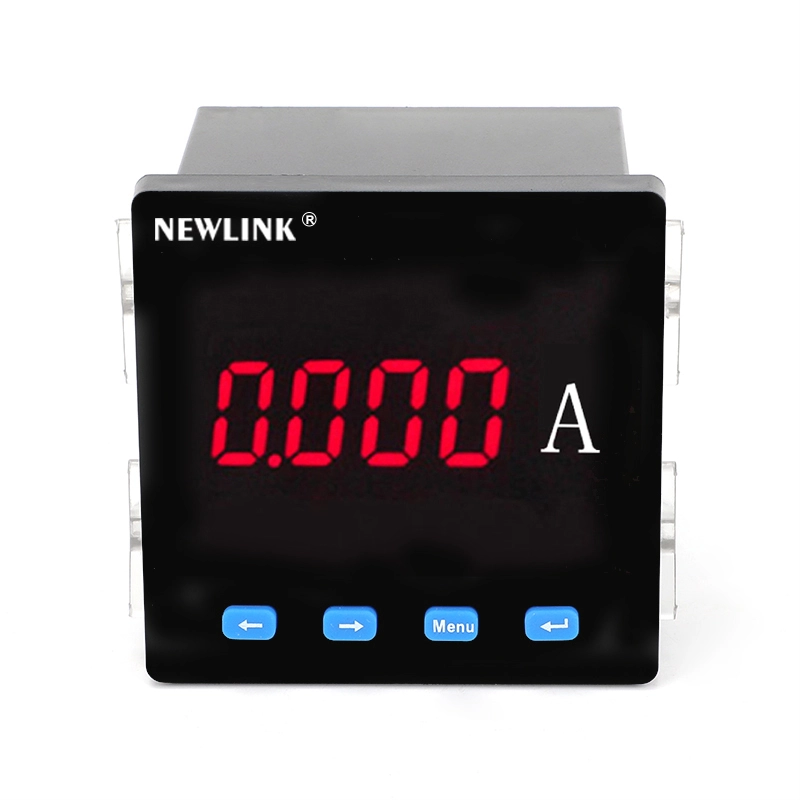
Single Phase Digital Ammeter with RS485 Modbus | LED LCD Panel Current Meter for Industrial Power Monitoring
High-precision single phase digital ammeter with RS485 Modbus communication, LED/LCD display, and programmable CT ratio. Ideal for power systems, automation equipment, and industrial monitoring applications.
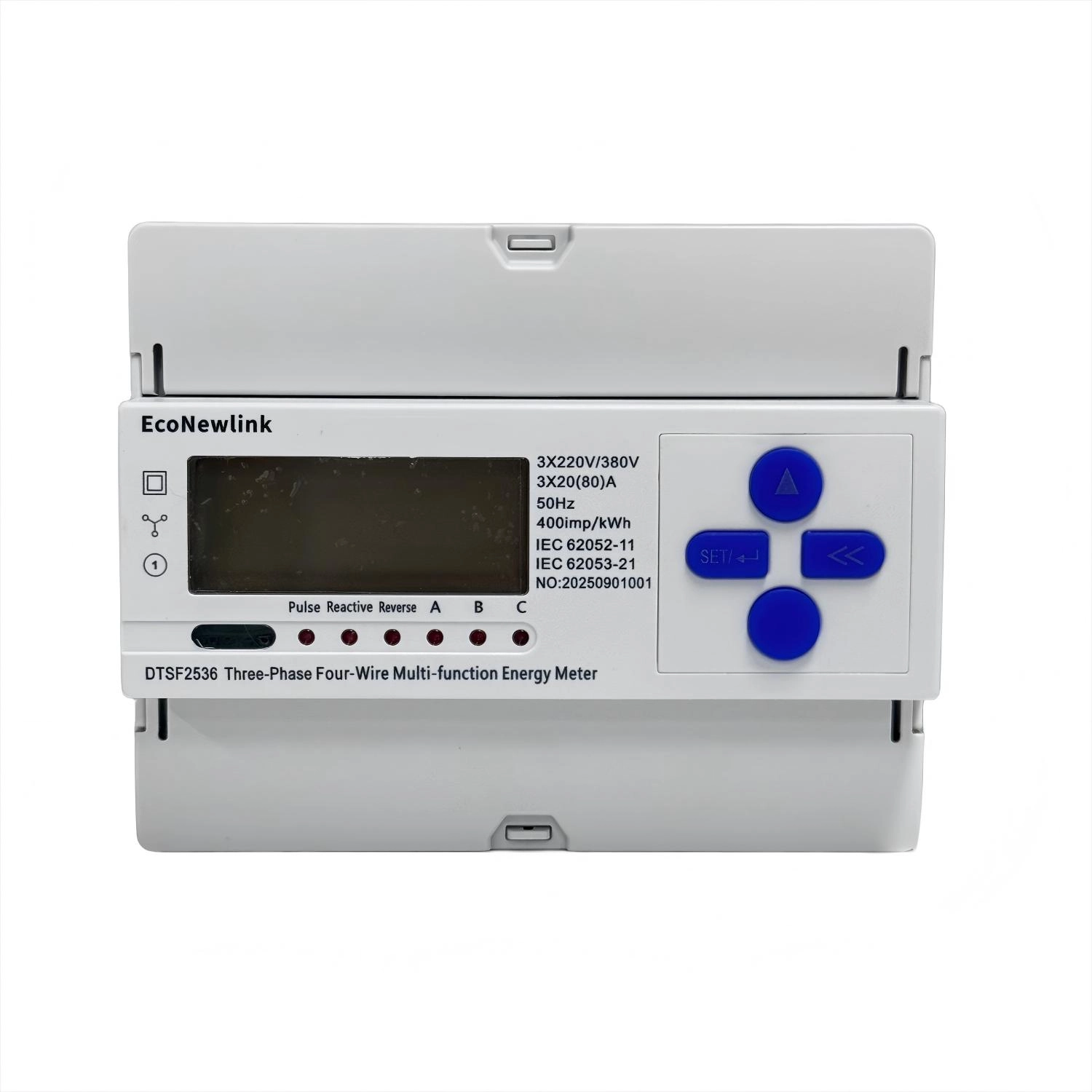
EcoNewlink Three Phase anti backflow energy meter RS485 Modbus DINRail Zero Export for PV Inverter
This three-phase anti-backflow energy meter is designed for solar PV systems to prevent excess electricity from feeding back into the grid. With RS485 Modbus communication, it provides real-time data to the inverter for dynamic power control, helping maximize self-consumption and ensure compliance with grid regulations. Ideal for residential, commercial, and rental energy management systems.
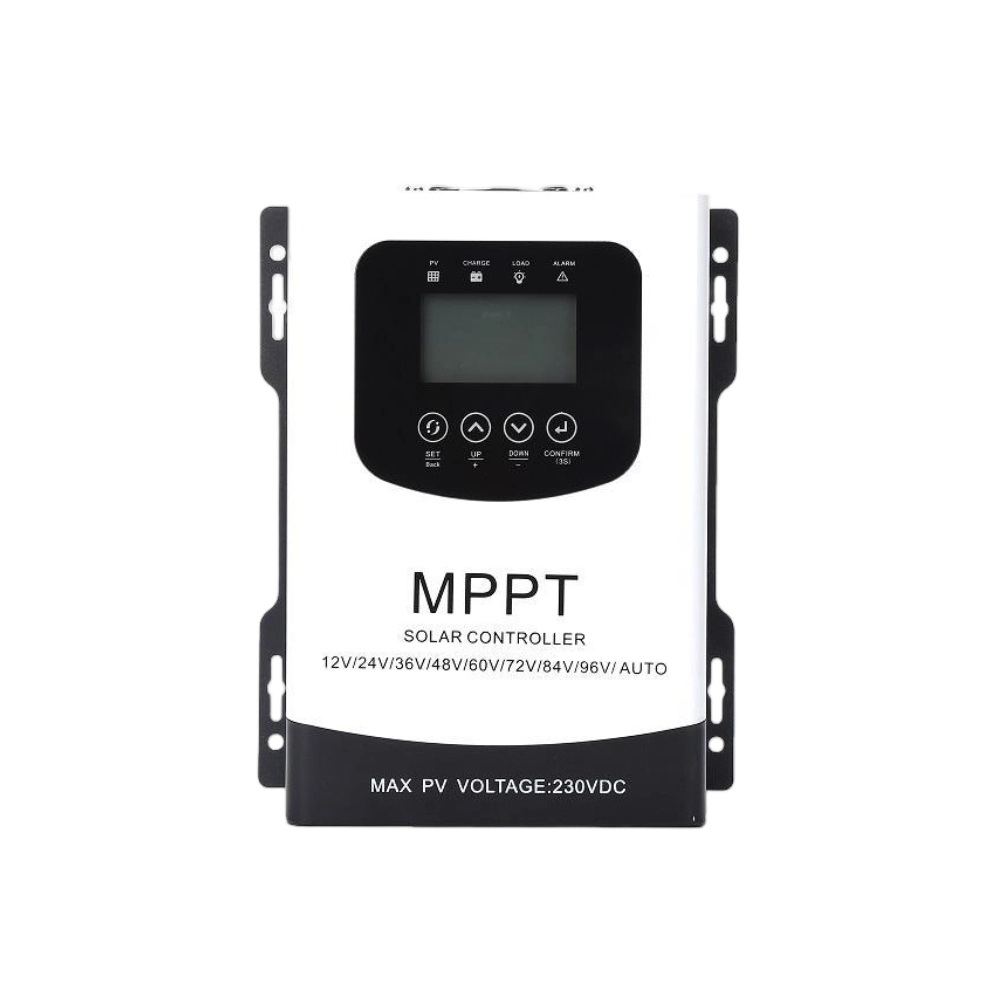
High Efficiency MPPT Solar Charge Controller for Off Grid Systems with 98% Tracking Battery Protection and RS485 Monitoring
This MPPT Solar Charge Controller is designed for off grid solar power systems, delivering up to 98% tracking efficiency to maximize photovoltaic energy utilization. It supports lead acid and lithium batteries with optimized multi stage charging to extend battery lifespan. Built in overcharge, over discharge, overload and short circuit protection ensure system safety, while the RS485 communication interface enables remote monitoring and intelligent energy management. Ideal for residential, telecom and small commercial solar applications.
Get A Free Business Quote
Looking for a reliable electrical supplier for your next large-scale engineering project?
We are committed to providing you with tailored low-voltage solutions and exact factory-direct pricing.
Fill out the form below to request technical specifications, discuss OEM/ODM partnerships, or get bulk pricing for our wholesale power meters, MCCBs, and fuses.
Our dedicated technical sales team will review your requirements and respond within 24 hours.
Powering the Future with Smart, Safe Solutions
EcoNewlink delivers cutting-edge intelligent power products and solutions to ensure safety, efficiency, and reliability in your power distribution systems.
Contact
Email: nali@newlink.ltd
WhatsApp:
Address: No.76 Chuangyu road, Zengcheng District, Guangzhou, China

 WhatsApp
EcoNewlink
EcoNewlink