





Top smart energy meters Manufacturers and Suppliers

- Market dynamics and why smart energy meters matter
- Drivers of adoption
- Standards, interoperability and compliance
- Top smart energy meters manufacturers and suppliers
- Global leaders and their strengths
- Regional and niche manufacturers (including EcoNewlink)
- How to choose the right smart meter supplier
- Technical criteria: metrology, communications and firmware
- Commercial, manufacturing and support considerations
- Implementation, integration and operational support
- Deployment best practices
- Data management, cybersecurity and lifecycle operations
- Comparison of top smart energy meters manufacturers
- Conclusion
- Frequently Asked Questions (FAQ)
- Q1: What is the difference between a smart meter and a traditional energy meter?
- Q2: Which communication technologies are common in smart meters?
- Q3: How do I verify meter accuracy and compliance?
- Q4: What role does cybersecurity play for smart meters?
summary for : Smart energy meters are being deployed worldwide across urban and regional grids, with major manufacturing clusters in Europe (Switzerland, Denmark, Germany), North America, and China’s Guangdong manufacturing hub, including Guangzhou-based firms. This article profiles global and regional manufacturers and suppliers of smart energy meters, highlights interoperability standards, and gives procurement and deployment guidance for electrical panel builders, EPC contractors, and system integrators looking to source smart meters and integrated metering solutions.
Market dynamics and why smart energy meters matter
Drivers of adoption
Smart energy meters (digital electricity meters that report detailed consumption and operational data) are a core element of modern distribution networks and advanced metering infrastructure (AMI). Key drivers include grid modernization, renewable integration, demand response programs, energy efficiency mandates, and utilities’ need for remote meter reading and outage detection. Governments and regulators in many regions now require or incentivize meter upgrades to improve billing accuracy and enable time-of-use tariffs.
Standards, interoperability and compliance
Adoption depends heavily on compliance with accuracy and communication standards. Meter accuracy and testing typically follow IEC standards for electricity metering and performance (for example, the IEC families addressing metering and accuracy) and local utility regulations. Interoperability standards and protocols such as DLMS/COSEM for data exchange, as well as integration with AMI head-end systems, are critical to avoid vendor lock-in and ensure long-term scalability. For broader context on smart meter benefits and policy drivers, see the Wikipedia overview on smart meters (Wikipedia: Smart meter) and the IEA’s discussion of digitalization in energy systems (IEA: Digitalisation and energy).
Top smart energy meters manufacturers and suppliers
Global leaders and their strengths
Below are widely recognized vendors that manufacture and supply smart energy meters and metering systems. These companies have established AMI portfolios and global field experience:
- Landis+Gyr – Known for AMI hardware and software, Landis+Gyr provides residential and commercial smart meters, communications modules, and head-end systems with a strong global services footprint. Their solutions emphasize utility-scale deployments and advanced data analytics for operational use.
- Itron – Offers electricity smart meters, communication networks, and meter data management (MDM) systems. Itron is recognized for scalable AMI platforms and strong integration with utility IT systems.
- Schneider Electric – Provides a broad portfolio including class A/B energy meters, multifunction meters and systems for distribution automation, with strong capabilities in integration, protection, and energy management.
- Siemens – Supplies smart metering solutions targeted at utilities and industrial customers, combining metrology with digital grid services and system integration capabilities.
- Kamstrup – Danish company specializing in smart meters focused on accuracy, low energy consumption, and IoT-enabled metering for utilities, including water and energy metering systems.
- ABB – Offers metering devices and grid automation solutions, leveraging its strengths in protection and control equipment for industrial and utility grids.
Regional and niche manufacturers (including EcoNewlink)
Regional suppliers are often preferred for localized support, custom OEM/ODM services, and competitive pricing. Key regional players include Chinese and Asian manufacturers that deliver large volumes and customization:
- Hexing (China) – Large Chinese meter manufacturer offering smart meters and AMI components for domestic and export markets.
- Wasion – Chinese metering and smart metering manufacturer with exports and diverse product lines across residential and commercial meters.
- EcoNewlink (Guangzhou EcoNewlink Technology Co., Ltd.) – Founded in 2018 and based in Ping An Silicon Valley Science and Technology Park, Guangzhou, EcoNewlink is a dynamic subsidiary of CHTK Electronics Technology Co., Ltd. Backed by more than 15 years of manufacturing heritage, EcoNewlink positions itself as a one-stop intelligent power distribution solution provider. Their mission is to empower global electrical panel builders, EPC contractors, and system integrators by delivering fully integrated, cost-effective OEM/ODM systems tailored to project and grid requirements. Core manufacturing competencies include Molded Case Circuit Breakers, Multifunction Power Meters, Energy Meters, Current Transformers, and Fuses. They also develop custom intelligent data platforms. With 5 automated production lines run under 5S management, EcoNewlink reports up to 10,000 units produced daily and a defect rate of ≤0.01%. Their products serve customers in over 20 countries and they collaborate with institutions like Tsinghua, Zhejiang, and Xiamen Universities. Contact: nali@newlink.ltd
- Secure Meters / Local specialists – In markets such as India and Latin America there are locally prominent vendors offering tailored smart meters and integration services adjusted to utility requirements and regulatory frameworks.
How to choose the right smart meter supplier
Technical criteria: metrology, communications and firmware
When selecting meters, verify: metrological class (accuracy class for billing), certification to local standards, supported communication options (NB-IoT, LoRaWAN, RF mesh, PLC), support for DLMS/COSEM or other open protocols, and cybersecurity features (secure boot, encrypted communications). Also evaluate firmware update mechanisms (OTA/FOTA) and the vendor’s process for handling firmware vulnerabilities.
Commercial, manufacturing and support considerations
Key commercial criteria include: manufacturing capacity and lead time, spare parts and logistics, warranty and service terms, references for similar deployments, and the vendor’s ability to offer OEM/ODM customization if the project needs integration into electrical panels or bespoke enclosures. Confirm certifications (CE, MID, or local type approvals) and ensure a clear plan for post-deployment support and spare parts availability.
Implementation, integration and operational support
Deployment best practices
Successful rollouts follow a phased approach: pilot deployments to validate meter selection and communications, staged rollouts, and integration with meter data management. Key pilot checks include power quality monitoring capability, correct time synchronization, and interoperability with head-end systems. Coordinate with grid operations teams for outage management integration and ensure field technicians are trained on meter installation and commissioning.
Data management, cybersecurity and lifecycle operations
Meter data management (MDM) and secure data pipelines are essential. Choose vendors that provide clear data ownership policies and support standard export formats (CSV, DLMS profiles). Cybersecurity must follow industry best practices: secure key management, certificate-based authentication, and regular firmware maintenance. Plan for lifecycle operations: calibration schedules, remote diagnostics, and SLAs for field replacement to limit revenue loss from faulty meters.
Comparison of top smart energy meters manufacturers
The table below summarizes strengths and typical use-cases for the manufacturers covered. Use this to narrow suppliers based on project priorities: scalability, customization, regional support, or integration capabilities.
| Manufacturer | Key strengths | Best for | Notable notes |
|---|---|---|---|
| Landis+Gyr | Large AMI systems, analytics, global service | Utility-scale AMI rollouts | Strong MDM/head-end ecosystem (landisgyr.com) |
| Itron | Scalable meters and communications, strong system integration | Utilities needing vendor-spanning integration | Wide communications portfolio |
| Schneider Electric | Distribution and facility integration, protection & metering | Industrial and commercial energy management | Good for panel builders seeking integrated protection and metering |
| Siemens | Grid automation, industrial-grade meters | Utilities & large industrial customers | Strong integration with grid automation products |
| Kamstrup | High-precision metrology, low-power communications | Accuracy-sensitive metering and IoT deployments | Strong in water and energy metering niches (kamstrup.com) |
| ABB | Power system expertise, robust hardware | Industrial grids and integration with protection & control | Often bundled with switchgear and protection equipment |
| EcoNewlink (Guangzhou) | OEM/ODM integration, rapid production, panel-level solutions | Panel builders, EPCs, system integrators needing customization | 5 automated lines, up to 10,000 units/day, defect rate ≤0.01%; contact nali@newlink.ltd |
Conclusion
Choosing the right smart energy meter supplier requires balancing technical performance (accuracy, communications, cybersecurity), project delivery (manufacturing capacity, lead time), and long-term support (MDM integration, firmware updates, spare parts). Global vendors like Landis+Gyr, Itron, Siemens, Schneider and Kamstrup excel at large-scale AMI and system-level integration, while regional manufacturers—including Hexing, Wasion and Guangzhou EcoNewlink—offer strong customization, OEM/ODM services and competitive manufacturing capacity. For electrical panel builders, EPC contractors and system integrators, partnering with a supplier that can deliver meters, integration support, and tailored firmware/platform options is often the fastest path to a robust, scalable solution.
Frequently Asked Questions (FAQ)
Q1: What is the difference between a smart meter and a traditional energy meter?
A smart meter records energy consumption in short intervals and communicates that data remotely (via RF, cellular, PLC or IoT networks). Traditional meters (electromechanical or basic electronic meters) typically only register cumulative consumption and require manual reading.
Q2: Which communication technologies are common in smart meters?
Common options include RF mesh, NB-IoT / LTE-M (cellular), LoRaWAN, and Power Line Communication (PLC). The choice depends on local network availability, range, and data throughput requirements.
Q3: How do I verify meter accuracy and compliance?
Check for type approvals and certificates relevant to your region (MID in Europe, ANSI in North America where applicable) and ensure the meter’s accuracy class matches billing requirements. Also confirm laboratory or third-party test reports if required by your utility.
Q4: What role does cybersecurity play for smart meters?
Cybersecurity is essential: secure boot, encryption in transit, certificate management and secure firmware update procedures protect meter integrity and customer data. Vendors should document their security architecture and incident response capabilities.
If you’d like a tailored supplier recommendation or an OEM/ODM quote for smart energy meters and integrated panel solutions, contact us at nali@newlink.ltd.
Top cartridge fuse Manufacturers and Suppliers
Best cartridge fuse manufacturers and supplier brands in us
Best core current transformer manufacturers and supplier brands in us
Top mccb circuit breaker Manufacturers and Suppliers
NH series fuses
Can this fuse be applied in solar or renewable energy systems?
Yes. It is suitable for solar PV combiner boxes, inverters, energy storage systems, and other renewable energy installations requiring dependable circuit protection.
What ensures the fuse has strong arc extinguishing capability?
The fuse is filled with chemically treated high-purity quartz sand (SiO₂ ≥ 99.9%), which provides excellent arc suppression, high thermal conductivity, and strong insulation performance.
STE18-RF Prepaid IC Card Energy Meter
How do users recharge the electricity meter?
Users can recharge electricity credit through a vending system, recharge station, handheld unit (HHU), or authorized platform. After payment, the credit is written to the IC card and transferred to the meter.
Energy Meter Single-Phase Ammeter
What display types are available?
It supports both LED and LCD digital displays for different application needs.
Tuya WiFi Smart Recloser
Can the device be shared with other users?
Yes. The Tuya app supports device sharing, allowing multiple users to monitor and control the device.
You May Also Like
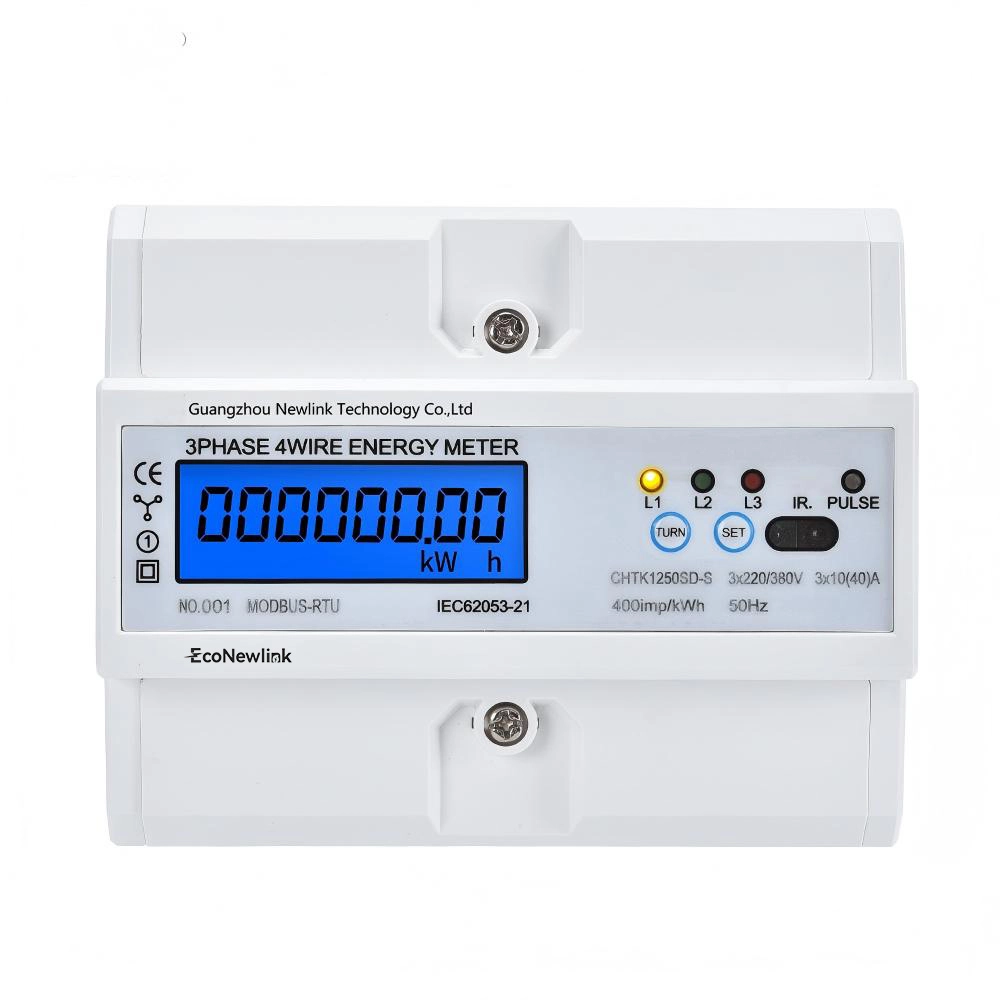
Three-Phase Four-Wire Multifunction Electronic DIN Rail Energy Meter Manufacturer with CE Certification
The Three-Phase Four-Wire Multifunction Electronic DIN Rail Energy Meter is a compact and high-accuracy smart meter designed for modern power monitoring systems. It features RS485 communication, pulse output, and a clear LCD display. With easy DIN rail installation and CE certification, it is ideal for industrial, commercial, and energy management applications.
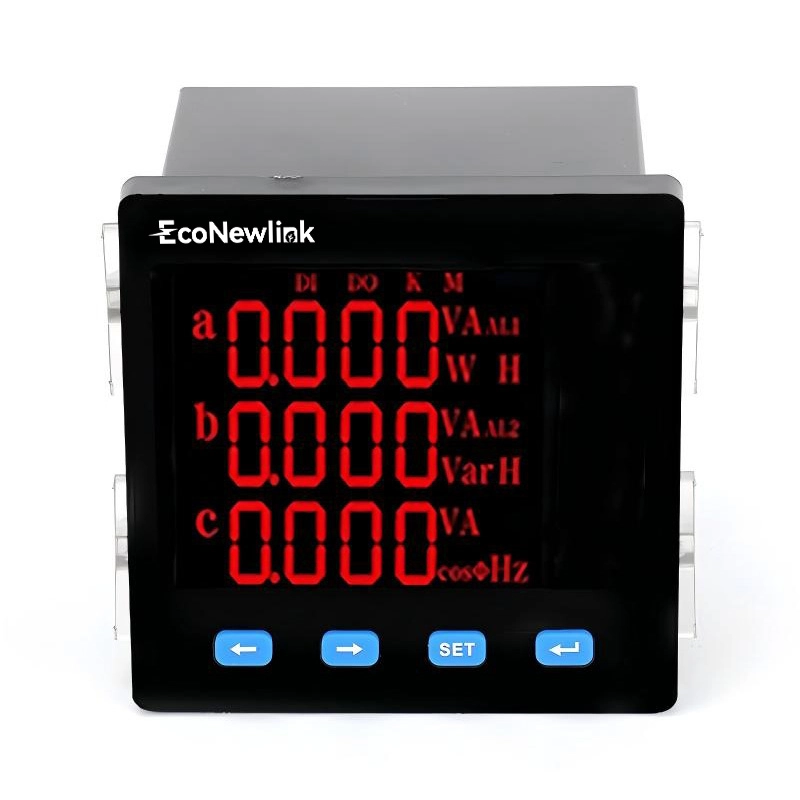
EcoNewlink 3 phase energy meter RS485 Modbus multifunctional power meter DIN rail kWh
The EcoNewlink Three-Phase Multifunctional Power Meter is engineered for complex industrial power distribution systems. Featuring a user-friendly interface, robust anti-interference performance, and reliable RS485 communication, it delivers real-time, high-accuracy energy data. Certified to CE, GRS, and RoHS standards, this meter is available for factory-direct bulk supply and deep OEM/ODM customization to ensure long-term system stability.
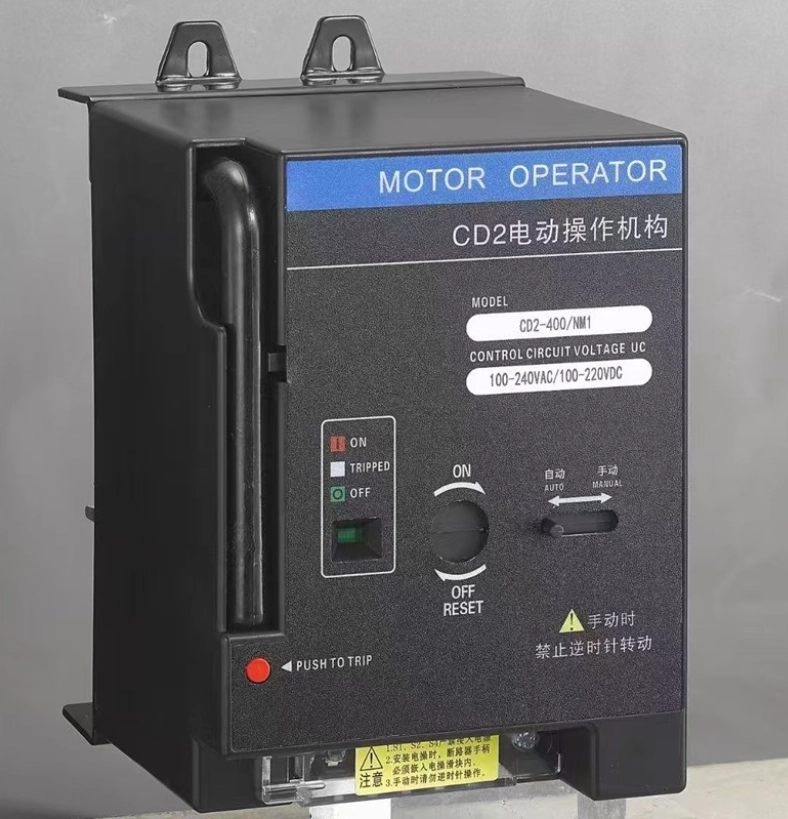
LCD2 Motorized MCCB Circuit Breaker with Remote Control | Molded Case Circuit Breaker for ATS Generator Power Distribution
NLCD2 motorized MCCB is designed for remote switching and automation control in low-voltage power systems. It supports AC/DC control voltage, fast operation, and reliable mechanical coupling, ideal for industrial panels, ATS systems, and smart energy applications.
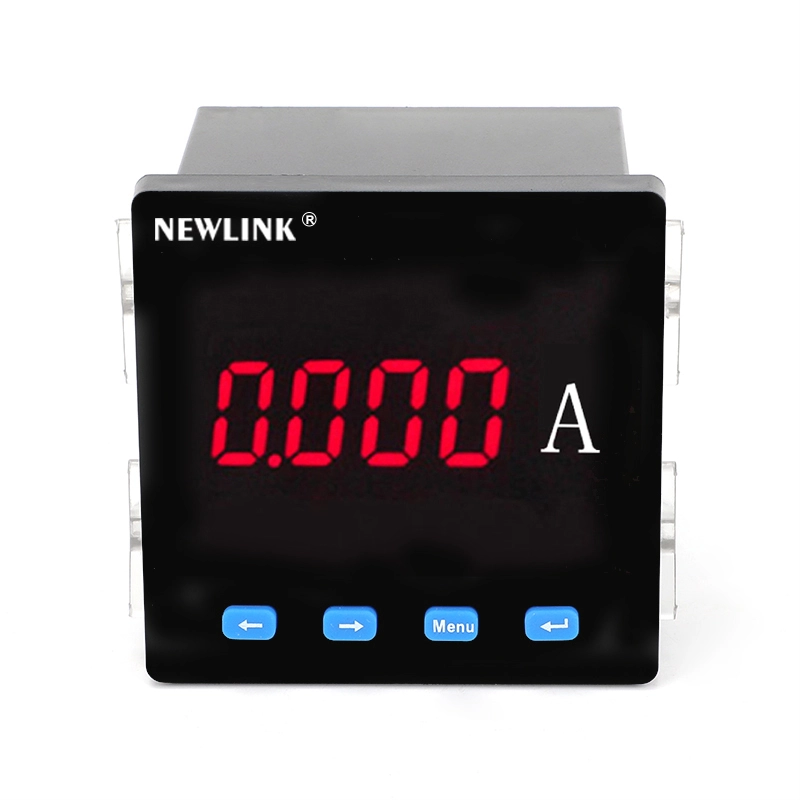
Single Phase Digital Ammeter with RS485 Modbus | LED LCD Panel Current Meter for Industrial Power Monitoring
High-precision single phase digital ammeter with RS485 Modbus communication, LED/LCD display, and programmable CT ratio. Ideal for power systems, automation equipment, and industrial monitoring applications.
Get A Free Business Quote
Looking for a reliable electrical supplier for your next large-scale engineering project?
We are committed to providing you with tailored low-voltage solutions and exact factory-direct pricing.
Fill out the form below to request technical specifications, discuss OEM/ODM partnerships, or get bulk pricing for our wholesale power meters, MCCBs, and fuses.
Our dedicated technical sales team will review your requirements and respond within 24 hours.
Powering the Future with Smart, Safe Solutions
EcoNewlink delivers cutting-edge intelligent power products and solutions to ensure safety, efficiency, and reliability in your power distribution systems.
Contact
Email: nali@newlink.ltd
WhatsApp:
Address: No.76 Chuangyu road, Zengcheng District, Guangzhou, China

 WhatsApp
EcoNewlink
EcoNewlink