





Can MCCBs Be Used in Homes? When Modern Residential Systems Need Industrial-Grade Protection
Can molded case circuit breakers (MCCBs) be used in homes? Discover when MCCBs are suitable for residential electrical systems, especially with EV chargers, solar power, and high-load installations. Learn how EcoNewlink delivers reliable protection solutions.

- Can MCCBs Be Used in Homes?
- Where MCCBs Fit in a Residential Setting
- Main Incoming Power Supply
- High-Rise and Multi-Unit Residential Buildings
- Homes with EV Chargers and Solar Systems
- When to Choose an MCCB Instead of an MCB
- When Main Load Exceeds 100A
- When Fault Current Is Too High for MCBs
- When Adjustable Protection Is Required
- Best Practice: MCCB for Main Supply, MCB for Branch Circuits
- Can MCCBs Directly Replace MCBs?
- Physical Installation Differences
- When a Panel Upgrade Is Needed
- Conclusion
- FAQ
- TDK (SEO Optimization)
Can MCCBs Be Used in Homes?
For a long time, electrical professionals followed a simple rule: MCBs are used in homes, while MCCBs are used in industrial systems. This guideline made sense when residential electrical loads were relatively small and predictable.
However, modern homes are changing. With the rapid growth of electric vehicles, rooftop solar systems, energy storage batteries, and high-power appliances, residential electrical systems are becoming more complex and demanding.
At Guangzhou EcoNewlink Technology Co., Ltd., we work closely with electrical panel builders, EPC contractors, and system integrators worldwide. Founded in 2018 and backed by more than 15 years of electrical manufacturing experience, our company develops intelligent power distribution solutions including MCCBs, power meters, energy meters, current transformers, and fuses.
Through real-world projects across more than 20 countries, we have seen how modern residential power systems increasingly resemble small commercial installations. This shift raises an important question:
Can MCCBs be used in homes, and when does it actually make sense?
Where MCCBs Fit in a Residential Setting
A few years ago, MCCBs rarely appeared in residential systems. Today, that situation is gradually changing as home energy demand grows.
Understanding where MCCBs fit helps homeowners, engineers, and installers design safer electrical systems.
Main Incoming Power Supply
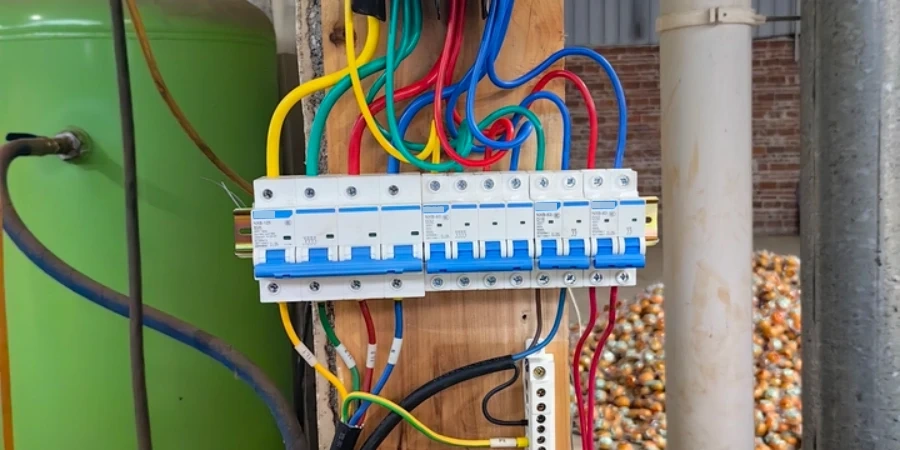
One of the most common residential uses for MCCBs is at the main incoming power supply of a building.
When electricity enters a house or apartment building, it must pass through a main protection device before being distributed to branch circuits. If the total load demand becomes high enough, a standard MCB may not provide sufficient protection.
In these cases, an MCCB offers advantages such as:
-
Higher breaking capacity
-
Adjustable protection settings
-
Better handling of large fault currents
EcoNewlink MCCBs are widely used in main distribution panels for residential buildings, commercial complexes, and solar power systems, providing reliable protection where load demand exceeds traditional limits.
High-Rise and Multi-Unit Residential Buildings
Large apartment buildings behave more like commercial electrical systems than traditional homes.
A 20–60 unit residential building may have:
-
Centralized distribution panels
-
High transformer capacity
-
Higher available fault current from the grid
In these situations, standard residential breakers may not have sufficient short-circuit breaking capacity.
Compact MCCBs are increasingly used as main protection devices in high-rise residential buildings, especially in dense urban areas where electrical infrastructure delivers higher fault currents.
Homes with EV Chargers and Solar Systems
This is one of the fastest-growing use cases.
Modern homes may include:
-
EV fast chargers drawing 32A–50A continuously
-
Solar inverters connected to rooftop PV systems
-
Battery energy storage systems
-
Heat pumps and smart appliances
When these systems operate simultaneously, total electrical demand increases significantly.
An MCCB installed as the main protective device can provide adjustable protection thresholds and higher breaking capacity, making it suitable for modern energy systems.
EcoNewlink has supported many solar + storage + EV charging projects, where our DC and AC MCCBs provide stable protection for high-load residential systems.
When to Choose an MCCB Instead of an MCB
A better question than “Can I use an MCCB?” is:
“Should I use an MCCB?”
The answer depends on a few key technical factors.
When Main Load Exceeds 100A
MCBs work well for most branch circuits and smaller loads.
However, when the main supply current approaches or exceeds 100A, MCCBs become the better option.
Reasons include:
-
Higher current handling capability
-
Adjustable overload protection
-
Greater mechanical durability
This is particularly common in large houses, villas, or small commercial-residential hybrid buildings.
When Fault Current Is Too High for MCBs
MCBs typically have a breaking capacity between 6kA and 18kA.
In some urban environments, the available grid fault current can exceed this level due to high-capacity transformers.
If the prospective short circuit current (PSCC) exceeds the breaker’s rating, the device may not safely interrupt the fault.
In these situations, an MCCB with higher breaking capacity (25kA, 36kA, or more) is required.
EcoNewlink MCCBs are engineered with high interrupting capacity and precision electronic trip units, ensuring reliable protection even in demanding power systems.
When Adjustable Protection Is Required
Unlike most MCBs, MCCBs often allow adjustable trip settings, including:
-
Overload protection
-
Short-circuit protection
-
Long-time and instantaneous protection
This flexibility is useful for homes with:
-
Solar power systems
-
Battery energy storage
-
EV charging infrastructure
-
Planned future load expansion
Adjustable protection helps engineers fine-tune system behavior during commissioning and future upgrades.
Best Practice: MCCB for Main Supply, MCB for Branch Circuits
In most modern installations, MCCBs and MCBs are complementary devices rather than competitors.
A typical configuration looks like this:
| Position | Recommended Device | Reason |
|---|---|---|
| Main incoming supply (>100A or high fault current) | MCCB | High breaking capacity, adjustable protection |
| Standard main supply (<100A) | MCB | Simpler and cost-effective |
| Branch circuits (lighting, outlets) | MCB | Proper sizing and economical |
| High-load branch circuits | MCB (32–63A) | Suitable for appliances |
| Sub-distribution panels | MCCB or MCB | Depends on load demand |
This structure provides strong protection at the main supply while keeping branch circuits simple and cost-effective.
It is the same design philosophy used in commercial and industrial electrical systems, adapted for residential environments.
Can MCCBs Directly Replace MCBs?
Short answer: No.
Although both devices protect circuits, they are designed for different installation methods.
Physical Installation Differences
MCBs are designed for DIN rail mounting, which is standard in residential distribution boards.
MCCBs are typically bolt-mounted or panel-mounted devices requiring:
-
Larger enclosures
-
Busbar connections
-
Proper cable termination
Because of these differences, you cannot simply remove an MCB and install an MCCB in the same position.
When a Panel Upgrade Is Needed
If a residential system requires an MCCB, the electrical panel may need modification or replacement.
This typically includes:
-
Installing a panel designed for MCCB mounting
-
Upgrading busbars to match current rating
-
Using properly sized conductors
-
Ensuring compliance with IEC standards
Proper installation should always be carried out by a qualified electrician.
Conclusion
Residential electrical systems are evolving rapidly. With the rise of electric vehicles, solar energy, and smart homes, electrical loads are increasing and protection requirements are changing.
While MCBs remain ideal for most branch circuits, MCCBs are becoming increasingly important in main supply protection for high-load residential installations.
At Guangzhou EcoNewlink Technology, we combine advanced manufacturing, automated production lines, and strict quality control to deliver reliable circuit breakers and intelligent power distribution solutions for global markets.
Our products are trusted by leading companies such as Schneider, BYD, and CHINT, and are designed to support the next generation of safe, efficient electrical systems.
For customized power distribution solutions or OEM/ODM cooperation, please contact us:
Email: nali@newlink.ltd
FAQ
1. Can MCCBs be used in residential electrical systems?
Yes, especially for main power supply protection in homes with high electrical loads or large distribution panels.
2. Are MCCBs better than MCBs for homes?
Not necessarily. MCCBs are best used for main supply protection, while MCBs remain ideal for branch circuits.
3. What is the main advantage of MCCBs?
Higher breaking capacity, adjustable protection settings, and suitability for high-load systems.
4. When should I upgrade from an MCB to an MCCB?
When main load exceeds 100A or when fault current levels exceed standard MCB ratings.
5. Can MCCBs be installed in standard home distribution boards?
Usually no. MCCBs require larger panels and different mounting methods.
6. Are MCCBs used in solar or EV charging systems?
Yes. Many modern solar and EV installations use MCCBs as main protective devices due to higher power demand.
TDK (SEO Optimization)
Title
Can MCCBs Be Used in Homes? Residential Applications of Molded Case Circuit Breakers
Description
Learn when MCCBs can be used in residential electrical systems, especially with solar power, EV chargers, and high-load installations. Explore modern breaker selection with EcoNewlink.
Keywords
MCCB for home, molded case circuit breaker residential, MCCB vs MCB, circuit breaker for EV charger, solar power breaker, residential power distribution, EcoNewlink MCCB solutions
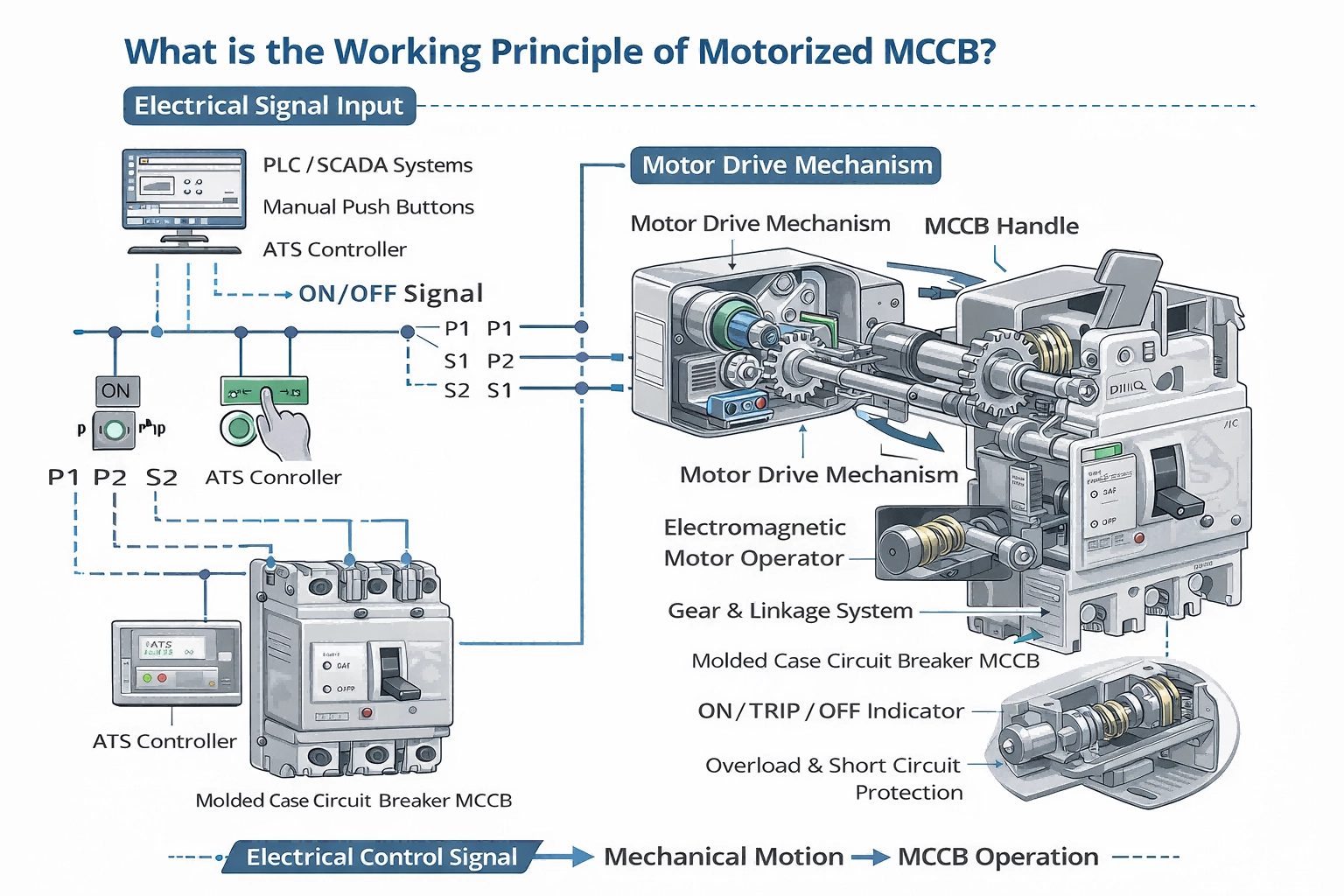
How to Use a Motorized MCCB Circuit Breaker for Remote Control and ATS Systems
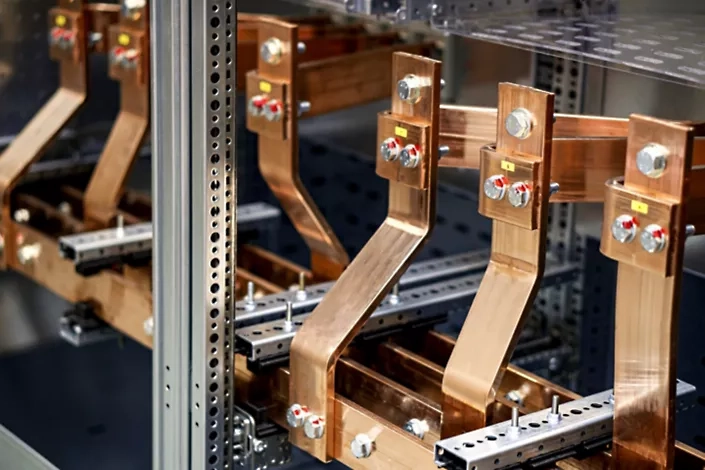
30-Day DIY Electrical Panel Cost-Saving Guide – Day 3

30-Day DIY Electrical Panel Cost-Saving Guide – Day 2
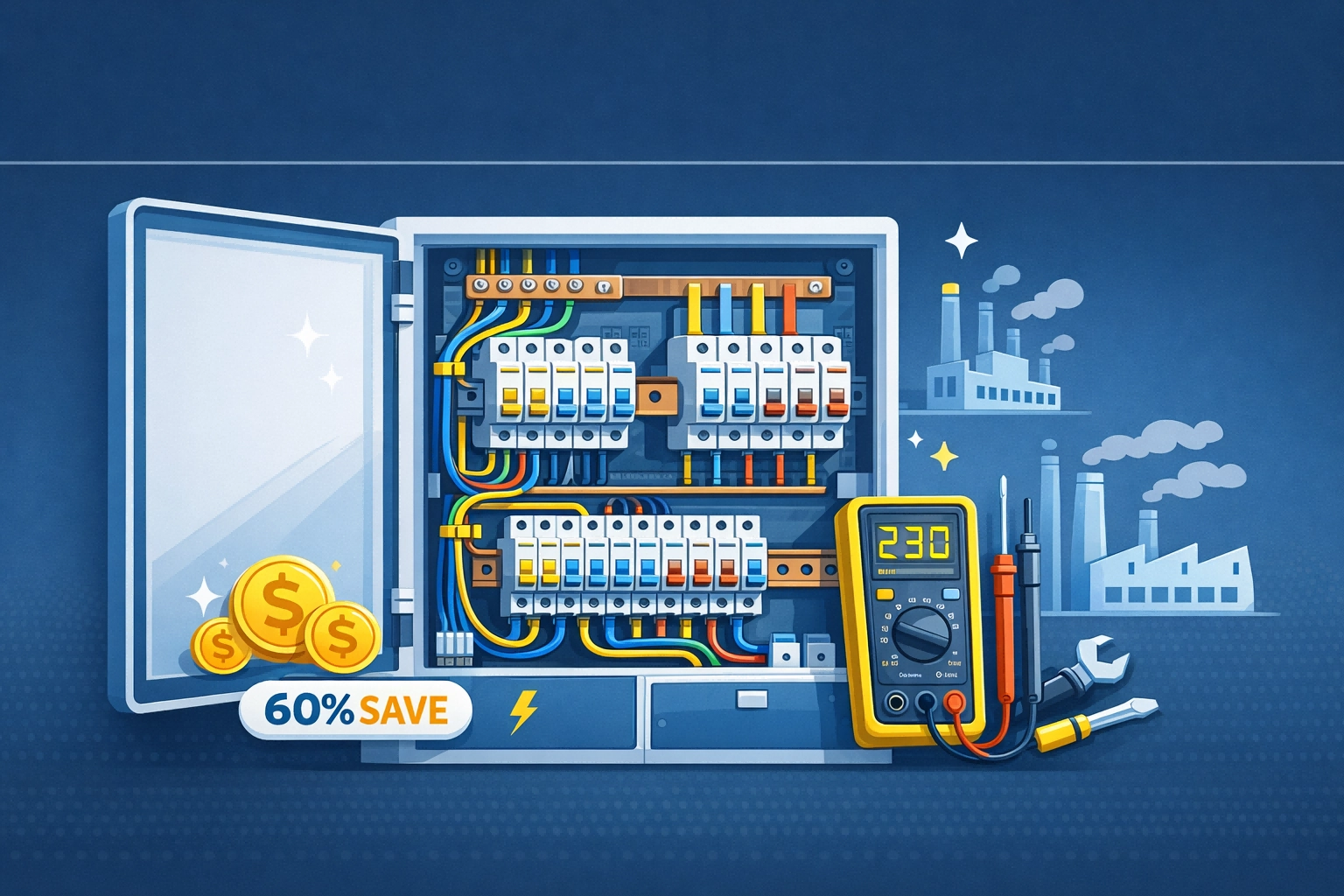
How to Build Your Own Electrical Panel and Save Up to 60% on Costs
Current Transformer(CT)
Can this current transformer be used for both energy metering and relay protection?
No. One current transformer should be used either for energy metering or for relay protection, not both at the same time, to ensure measurement accuracy.
Service
What kind of technical support do you provide?
We offer comprehensive technical support, including:
- Product selection guidance
- System design support
- OEM/ODM engineering assistance
- Installation and application advice
Our engineering team ensures customers receive efficient and customized solutions for different applications.
Solar Controller with MPPT (Basic Model)
Does the controller protect the battery from overcharging and deep discharge?
Yes, it includes overcharge, over discharge, overload and short circuit protection, along with a Low Voltage Disconnect function to prevent deep battery discharge.
3P NLCD2 Series Motorized Operating MCCB
Can it be operated manually?
Yes, it has a manual/auto switching mechanism for emergency operation.
Three Phase anti backflow energy meter
Why is energy saving sometimes limited?
This may be due to low daytime load no battery storage or incorrect installation.
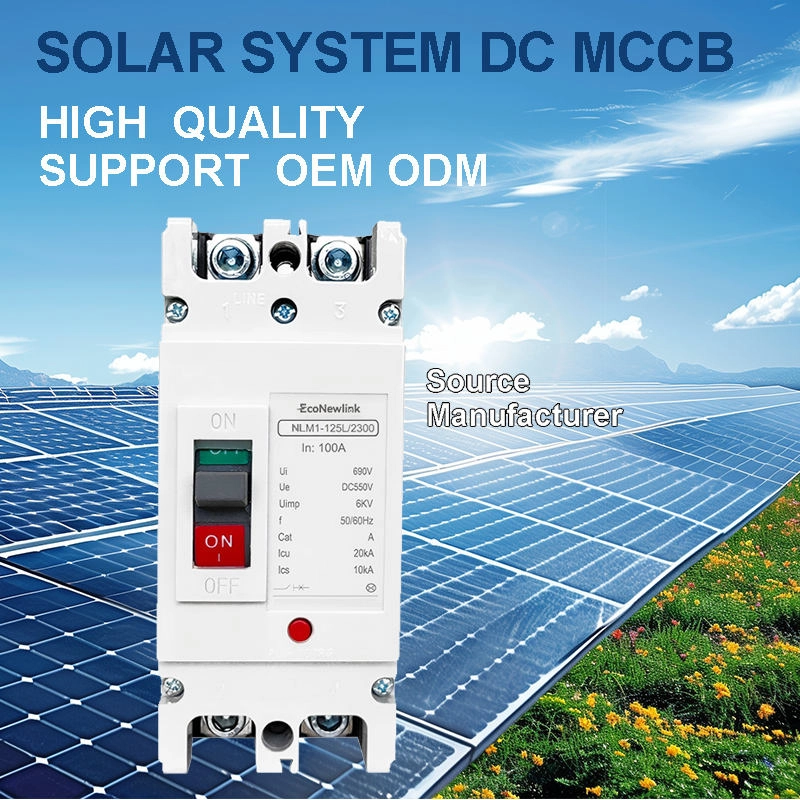
EcoNewlink DC MCCB NLM1Z 250 200A 48V Waterproof Electronic Trip 25kA Breaking Capacity
The EcoNewlink DC MCCB NLM1Z 250 200A 48V is a high-performance miniature circuit breaker designed for reliable low-voltage DC protection. Featuring a 25kA breaking capacity and waterproof design, it ensures safe and stable operation in harsh environments, including industrial systems, solar power installations, and energy storage solutions. With electronic trip technology, this MCCB delivers precise overload and short-circuit protection, combining durability, efficiency, and ease of integration for OEM and custom power distribution applications.
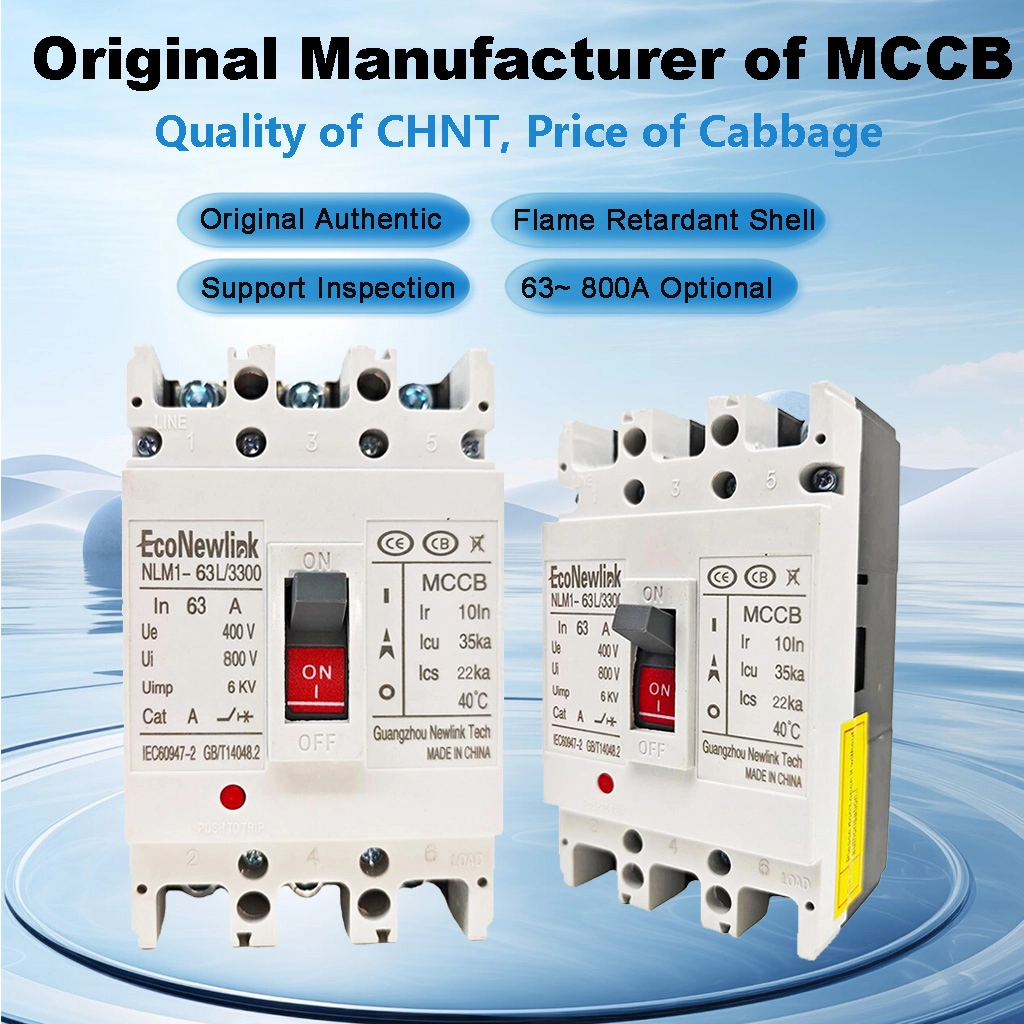
M1 / NLDM1 Series Moulded Case Circuit Breaker MCCB Manufacturer | 400V–1000V | 10A–2000A | High Breaking Capacity
The M1 / NLDM1 Series moulded case circuit breaker (MCCB) is designed for AC power distribution up to 1000V and 2000A. It provides overload, short circuit and undervoltage protection with high breaking capacity, compact design and modular accessories. Ideal for industrial, commercial and motor protection applications.
Request More Information or Subscribe for Updates
Thank you for reading our article!
If you would like more detailed information, have specific questions, or want to stay updated with the latest articles and guides, please fill out the form below.
Our team will get back to you with tailored information and resources.
Powering the Future with Smart, Safe Solutions
EcoNewlink delivers cutting-edge intelligent power products and solutions to ensure safety, efficiency, and reliability in your power distribution systems.
Contact
Email: nali@newlink.ltd
WhatsApp:
Address: No.76 Chuangyu road, Zengcheng District, Guangzhou, China

 WhatsApp
EcoNewlink
EcoNewlink