





How to Choose MCB & MCCB | Find Reliable Chinese Circuit Breaker Manufacturers Description:
A complete buyer’s guide to selecting MCB and MCCB, evaluating suppliers, and sourcing high-quality circuit breakers from China with the best price-performance ratio.
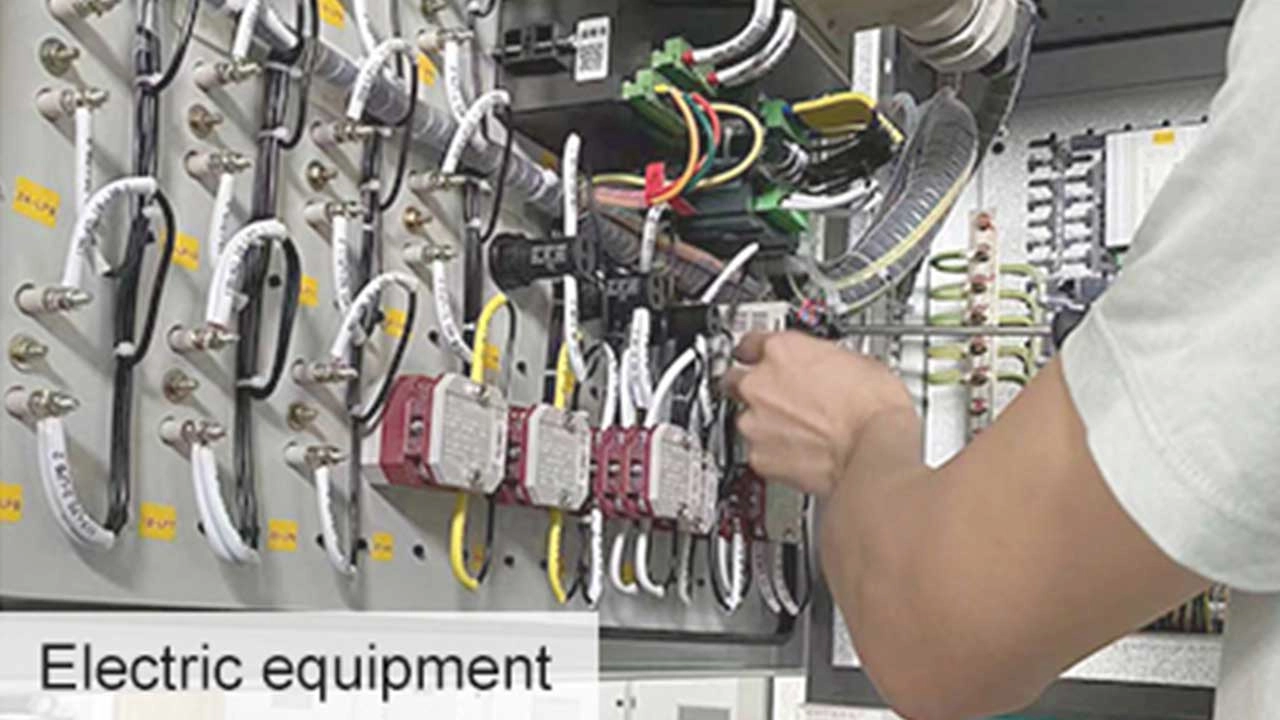
- How to Choose MCB & MCCB and Find Reliable Chinese Manufacturers
- 1. MCB vs MCCB: Which One Should You Choose?
- When to Choose MCB (Miniature Circuit Breaker)
- When to Choose MCCB (Molded Case Circuit Breaker)
- 2. How to Choose the Right Specifications
- 1. Rated Current (In)
- 2. Breaking Capacity (kA)
- 3. Trip Curve (for MCB)
- 4. Voltage Type (AC / DC)
- 5. Certification Requirements
- 3. How to Find a Real Chinese Manufacturer (Not a Trader)
- Problem:
- How to Identify a Real Factory:
- 1. Ask These Questions:
- 2. Check Product Depth
- 3. Check Certifications + Test Reports
- 4. Check Experience with Big Clients
- 4. How to Evaluate Price vs Quality (The Real Truth)
- What really matters:
- 1. Cost Over Time (Not Unit Price)
- 2. Consistency
- 3. Technical Support
- 5. Why Buyers Choose EcoNewlink
- 6. Common Mistakes Buyers Should Avoid
- Conclusion
How to Choose MCB & MCCB and Find Reliable Chinese Manufacturers
If you are sourcing circuit breakers for your project or distribution business, you’ve probably faced these questions:
- Which is better: MCB or MCCB?
- How do I choose the right specifications?
- How do I find a reliable Chinese supplier—not just a trader?
- How do I balance price vs quality vs certification?
At Guangzhou EcoNewlink Technology Co., Ltd., we work with panel builders, EPC contractors, and distributors across more than 20 countries. From our experience, the biggest challenge buyers face is not product selection—it’s making the right decision under uncertainty.
This guide will help you avoid common mistakes and choose the right products and suppliers with confidence.
1. MCB vs MCCB: Which One Should You Choose?
Before choosing a supplier, you must first choose the correct product type.
When to Choose MCB (Miniature Circuit Breaker)
MCBs are suitable for low-current applications:
- Residential buildings
- Offices and small commercial projects
- Lighting and socket circuits
- Small equipment protection
Typical specs:
- Current: up to 125A
- Breaking capacity: 6kA–10kA (sometimes 15kA+)
👉 If your project is standard distribution, MCB is usually enough.
When to Choose MCCB (Molded Case Circuit Breaker)
MCCBs are used for higher power and more complex systems:
- Industrial plants
- Large commercial buildings
- Solar + energy storage systems
- Generator protection
- Main distribution panels
Typical specs:
- Current: 16A–2500A
- Breaking capacity: up to 200kA
- Adjustable protection
👉 If your system involves high load, motors, or critical infrastructure, MCCB is the right choice.
2. How to Choose the Right Specifications
Many buyers focus only on price—but wrong specs can cause failures, returns, or even safety risks.
Here are the key parameters you must check:
1. Rated Current (In)
Always match the load demand.
👉 Tip:
Choose 80–125% of actual load, not exactly equal.
2. Breaking Capacity (kA)
This is critical.
- Residential: 6kA–10kA
- Commercial: 10kA–25kA
- Industrial: 25kA–100kA+
👉 Near transformers = higher fault current → need higher kA
3. Trip Curve (for MCB)
- Type B → homes
- Type C → general commercial
- Type D → motors
👉 Wrong curve = nuisance tripping
4. Voltage Type (AC / DC)
This is where many buyers make mistakes.
- AC breaker ≠ DC breaker
- Solar / battery system MUST use DC breaker
EcoNewlink supplies DC MCCB up to 1500V, widely used in PV and energy storage systems.
5. Certification Requirements
Different markets require different certifications:
- Europe: CE, IEC
- Middle East: SABER / SASO
- Africa: SONCAP / LOA
- USA: UL
👉 No certification = cannot clear customs
3. How to Find a Real Chinese Manufacturer (Not a Trader)
This is the most important part for buyers.
Problem:
Most suppliers online are trading companies, not factories.
How to Identify a Real Factory:
1. Ask These Questions:
- Do you support OEM/ODM?
- Can you provide production photos/videos?
- Do you have production lines?
- What is your monthly capacity?
👉 Real factories answer clearly. Traders hesitate.
2. Check Product Depth
Factories usually offer:
- Full product range (MCB + MCCB + CT + meter)
- Customization options
- Technical support
EcoNewlink provides one-stop power distribution solutions, not just single products.
3. Check Certifications + Test Reports
Ask for:
- IEC reports
- Type test reports
- Factory ISO
4. Check Experience with Big Clients
Factories often OEM for brands like:
- CHINT
- DELIXI
- Schneider (OEM chain)
👉 This is a strong signal of manufacturing capability.
4. How to Evaluate Price vs Quality (The Real Truth)
Many buyers fall into this trap:
👉 Cheapest price = highest risk
What really matters:
1. Cost Over Time (Not Unit Price)
Cheap breaker:
- Fails faster
- Causes downtime
- Damages reputation
Good breaker:
- Stable
- Fewer complaints
- Lower long-term cost
2. Consistency
A good supplier must provide:
- Same quality every batch
- Stable delivery time
- Low defect rate
EcoNewlink achieves ≤0.01% defect rate through automated production and strict QC.
3. Technical Support
A real manufacturer helps you:
- Choose correct model
- Avoid spec mistakes
- Optimize cost
5. Why Buyers Choose EcoNewlink
From a buyer’s perspective, the ideal supplier is not just cheap—it must be reliable, flexible, and scalable.
At EcoNewlink, we provide:
- MCB, MCCB, CT, meters, fuses (one-stop solution)
- OEM/ODM customization
- Support for solar, industrial, and building projects
- Daily capacity up to 10,000 units
- Global certifications (CE, RoHS, etc.)
- Experience in 20+ countries
We help customers reduce sourcing risk and improve project success rate.
6. Common Mistakes Buyers Should Avoid
- Choosing based on price only
- Ignoring breaking capacity
- Mixing AC and DC breakers
- Buying from traders without factory support
- Not checking certification requirements
- No sample testing before bulk order
Conclusion
Choosing the right MCB or MCCB is not just about product specs—it’s about:
- Understanding your application
- Matching correct parameters
- Selecting a reliable manufacturer
A good decision at the beginning saves time, cost, and risk later.

Global Switchgear Market Hits $139B in 2026: Why Electrical Infrastructure Is the Decade's Smartest Bet
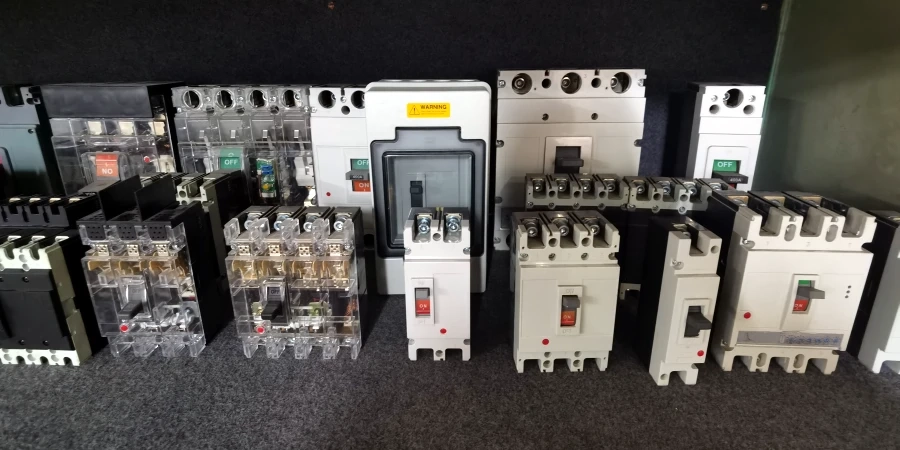
5 Common Low-Voltage Circuit Breakers You Should Know: MCB, MCCB, ACB, RCCB, and RCBO
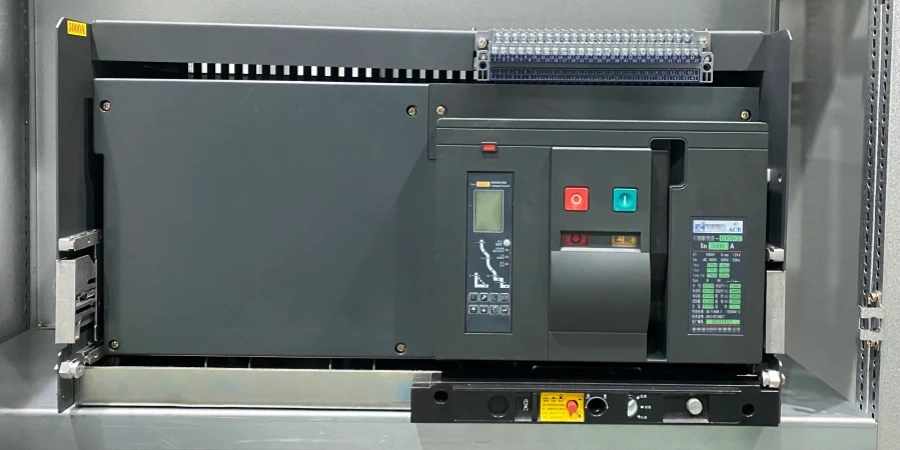
Why Are Air Circuit Breakers Usually Used Only in Low-Voltage Systems?
Photovoltaic DC circuit breaker DC MCB
What voltage does it support?
The breaker supports DC125V (1P) and DC250V (2P) configurations.
NLDB1Z-125 manul
NH series fuses
What is the service life and warranty policy?
Manufactured with premium materials and strict quality control, the fuse ensures long service life. Warranty terms are available based on project and order agreements.
STE18-RF Prepaid IC Card Energy Meter
What is the maximum current supported by this meter?
The STE18-RF prepaid meter typically supports a basic current of 5A and a maximum current of up to 100A, making it suitable for most residential and small commercial applications.
How do users recharge the electricity meter?
Users can recharge electricity credit through a vending system, recharge station, handheld unit (HHU), or authorized platform. After payment, the credit is written to the IC card and transferred to the meter.
Logistics
Can I use my own freight forwarder or shipping agent?
Absolutely. EcoNewlink fully supports customer-nominated forwarders and logistics partners.
We will:
- Coordinate directly with your agent
- Provide accurate packing data and cargo details
- Ensure smooth handover and on-time shipment
This gives you full control over shipping costs and logistics arrangements.
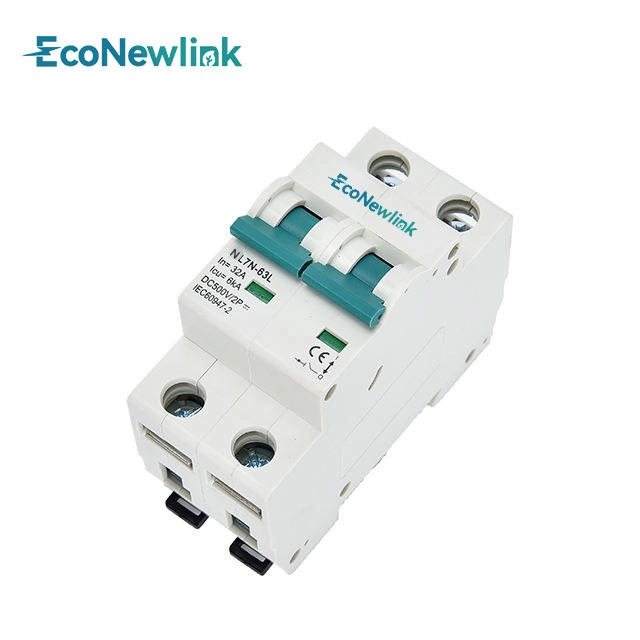
Breaking Capacity Dual Power Manual Transfer Isolating Switch Interlock MCB
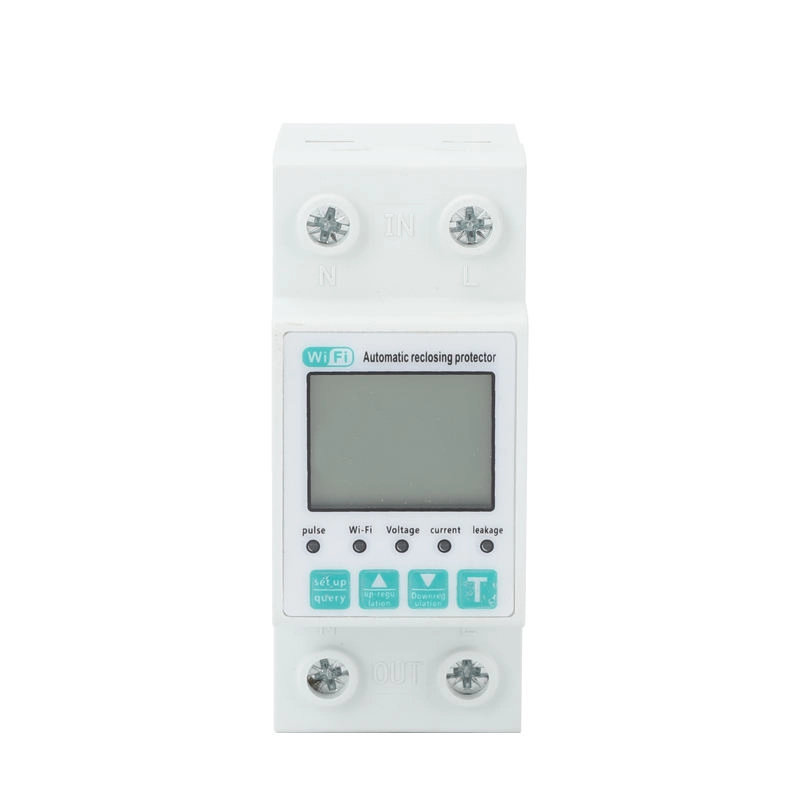
Tuya WiFi Smart Recloser 63A Single Phase kWh Meter with Timer, Earth Leakage, Over/Under Voltage and Overcurrent Protection
This Tuya WiFi smart recloser combines energy metering, timer control and multiple electrical protections in one compact device. It supports remote monitoring through the Smart Life or Tuya app, allowing users to check power data, set schedules and manage circuits conveniently. Designed for single-phase systems, it helps improve electrical safety and energy management in residential, commercial and light industrial applications.
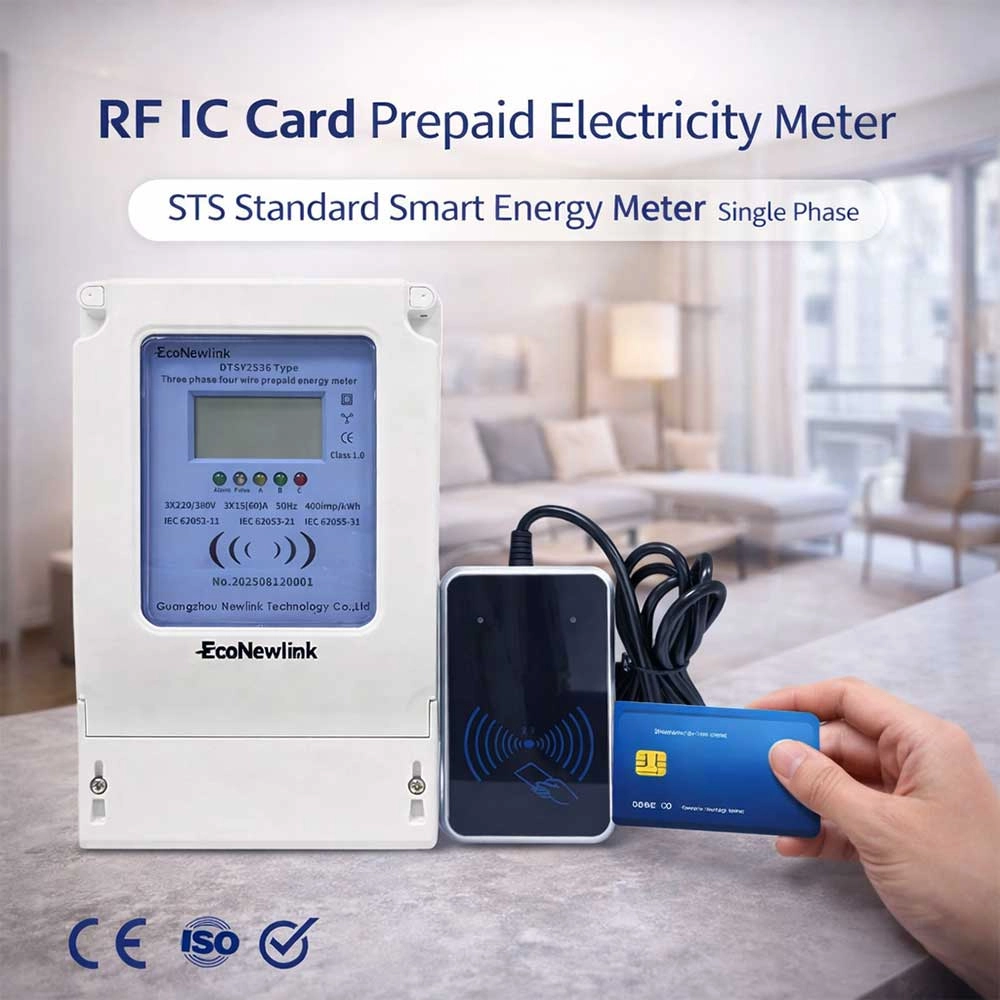
STE18-RF Prepaid IC Card Energy Meter – STS Compliant RF Smart Electricity Meter for Secure Prepaid Power Management and Vending System Integration
The STE18-RF Prepaid IC Card Electricity Meter is an STS-compliant smart energy meter designed for secure and efficient prepaid power management. Using reliable RF IC card communication, the meter enables accurate electricity data storage, token-based credit management, and seamless integration with vending systems or handheld units. Its modular plug-and-play architecture supports flexible smart metering deployment while ensuring stable performance, tamper protection, and offline operation without continuous network connectivity.
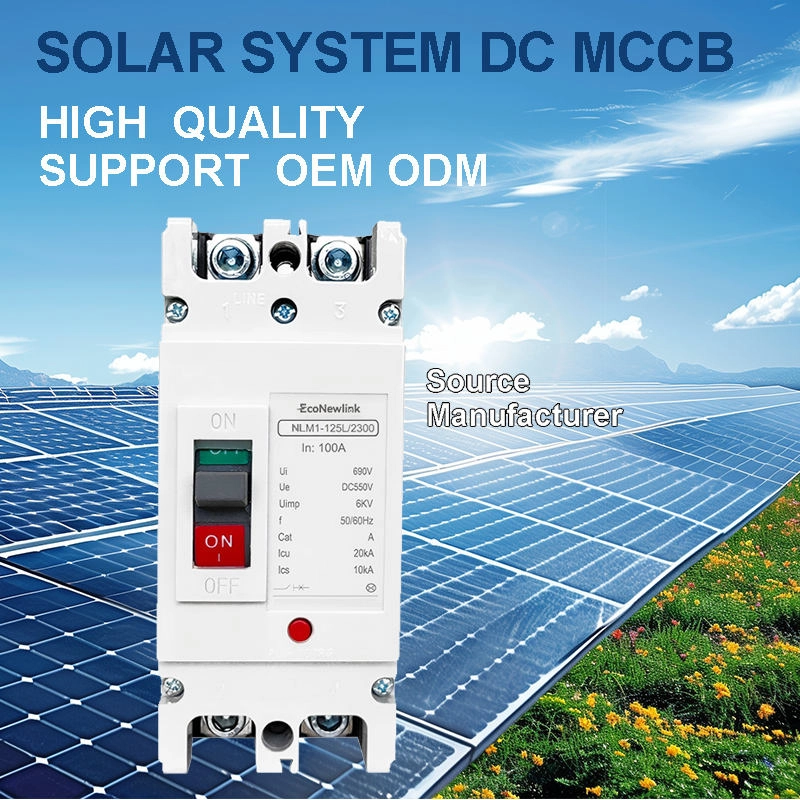
EcoNewlink DC MCCB NLM1Z 250 200A 48V Waterproof Electronic Trip 25kA Breaking Capacity
The EcoNewlink DC MCCB NLM1Z 250 200A 48V is a high-performance miniature circuit breaker designed for reliable low-voltage DC protection. Featuring a 25kA breaking capacity and waterproof design, it ensures safe and stable operation in harsh environments, including industrial systems, solar power installations, and energy storage solutions. With electronic trip technology, this MCCB delivers precise overload and short-circuit protection, combining durability, efficiency, and ease of integration for OEM and custom power distribution applications.
Request More Information or Subscribe for Updates
Thank you for reading our article!
If you would like more detailed information, have specific questions, or want to stay updated with the latest articles and guides, please fill out the form below.
Our team will get back to you with tailored information and resources.
Powering the Future with Smart, Safe Solutions
EcoNewlink delivers cutting-edge intelligent power products and solutions to ensure safety, efficiency, and reliability in your power distribution systems.
Contact
Email: nali@newlink.ltd
WhatsApp:
Address: No.76 Chuangyu road, Zengcheng District, Guangzhou, China

 WhatsApp
EcoNewlink
EcoNewlink