





Why are automatic reclosing circuit breakers (ecb) essential for off-grid solar power systems? | Insights by EcoNewlink
- 1) How do I size the interrupting capacity (breaking capacity) of an automatic reclosing ECB for a 48–400 V off-grid battery system that can produce very high short-circuit currents?
- 2) What manufacturing features and tests ensure an ECB can safely perform automatic reclosing on transient PV or battery faults without premature failure?
- 3) How should I configure reclosing logic (number of reclose attempts, dead time, permanent lockout) for hybrid off-grid systems with inverter/charger, BMS, and generator backup?
- 4) Can solid-state (electronic) ECBs replace mechanical breakers in off-grid solar systems, and what are the manufacturing trade-offs?
- 5) What certifications, test documentation and traceability should I insist on when buying automatic reclosing ECBs for PV and battery applications?
- 6) How can I ensure selective coordination and prevent nuisance tripping between automatic reclosing ECBs, inverters and string-level protections in a prefabricated off-grid power module?
Author: Electrical components manufacturing specialist. This article addresses purchase- and manufacturing-focused technical questions about automatic reclosing circuit breakers (ECB) for off-grid solar and battery-backed microgrids. It embeds practical specifications, factory-test expectations, and coordination guidance to help procurement, design and QA teams make informed purchases.
1) How do I size the interrupting capacity (breaking capacity) of an automatic reclosing ECB for a 48–400 V off-grid battery system that can produce very high short-circuit currents?
Why it matters: Prospective short-circuit current (PSCC) from battery banks or parallel inverters can greatly exceed nominal charger or inverter output. Undersized interruption capability risks welded contacts, catastrophic arcing, fires and permanent equipment damage.
Actionable sizing approach:
- Measure or calculate PSCC at the intended breaker location. For batteries, PSCC ≈ battery nominal voltage / internal resistance (measured or vendor-provided). For inverter outputs, combine inverter fault contribution with battery/charger contribution using manufacturer's short-circuit contribution curves.
- Select an ECB whose DC or AC breaking capacity (kA) exceeds the measured PSCC at the installation point with at least a 25–50% safety margin. For example, if the PSCC is 2.5 kA DC at a DC combiner, target an interrupt rating ≥3.1–3.75 kA DC.
- Ensure the breaker’s rated DC voltage >= system maximum voltage plus expected transients (e.g., open-circuit PV voltages or battery charging spikes). Do not rely on AC-only ratings—use DC-rated breakers or solid-state ECBs explicitly tested for DC interruption.
- Factor in downstream protection and bus impedance—shorter cable runs and parallel strings raise PSCC. Update calculations when scaling the system (adding panels, batteries, or parallel inverters).
- Request manufacturer short-circuit test reports at the specified DC voltage and current. Type-test evidence is mandatory—do not accept only AC test certificates for DC service.
Buyer checklist for interrupting capacity:
- Provide PSCC measurement method and values in RFQ.
- Require interrupt rating (kA) for the exact DC voltage and waveform (pure DC or DC with ripple).
- Ask for witnessable factory test reports or third-party type tests verifying the DC interrupt capability.
2) What manufacturing features and tests ensure an ECB can safely perform automatic reclosing on transient PV or battery faults without premature failure?
Why it matters: Automatic reclosing imposes additional mechanical and thermal cycles. A breaker that recloses repeatedly on persistent fault will weld contacts or degrade arc-quenching components.
Key manufacturing features:
- Contact materials and plating: high-wear silver alloys or silver‑cadmium oxide (AgCdO) with appropriate plating for low contact resistance and arc erosion resistance.
- Arc-energy management: for DC circuits, robust arc-chute geometries or active arc-suppression (magnetic blowouts, dielectric barriers) for mechanical breakers; for solid-state ECBs, snubbers and current-limiting semiconductor stacks to control arc energy.
- High mechanical endurance design: specified mechanical cycles and electrical cycles at rated current with reclosing sequences; look for 10,000s mechanical operations and verified electrical endurance under reclose sequences.
- Programmable electronic trip and reclose logic implemented in embedded control with non-volatile settings and secure firmware to avoid unintended mode changes.
Essential factory and type tests to request:
- DC interrupt tests at rated voltage and multiple currents, including fault pulses representative of battery-fed faults.
- Reclosing cycle tests: simulated transient faults followed by programmed reclose attempts (e.g., transient fault → 1–3 autorecloses → lockout) to demonstrate repeatability and absence of contact welding.
- Dielectric, impulse and insulation tests at elevated temperatures representative of on-site conditions.
- Thermal-rise tests at continuous load and at typical off-grid ambient temperatures (40–60°C) to validate derating tables.
- Environmental tests: salt spray, humidity, and vibration if deployed in harsh field enclosures.
Purchasing tips:
- Include reclose-cycle endurance as a contractual test step in the factory acceptance test (FAT).
- Insist on material traceability for contacts and insulation components to ensure consistent life performance.
- Specify firmware revision, ability to export trip logs, and secure firmware-update procedures.
3) How should I configure reclosing logic (number of reclose attempts, dead time, permanent lockout) for hybrid off-grid systems with inverter/charger, BMS, and generator backup?
Why it matters: Incorrect reclosing logic can cause devices to re-energize into a permanent fault, damage sensitive inverters, or conflict with BMS/generator control and anti-islanding protections.
Configuration principles:
- Prefer conservative default settings: 0–2 automatic reclose attempts for DC battery circuits and 1–3 for AC distribution where transient faults are likely. Keep the first reclose delay short (2–10 s) to allow arc extinction; subsequent delays should increase (10–60 s) to allow equipment state changes.
- Implement graduated lockout: after configurable reclose attempts fail, breaker goes to manual reset or remote operator lockout to force human inspection. This prevents repetitive reclosing into a persistent fault.
- Coordinate ECB reclose logic with inverter anti-islanding and BMS: when an ECB trips and attempts reclosing, the BMS should flag the event; if the BMS forces inverter output to zero on detection of a fault, the ECB's reclose settings must avoid a sequence that repeatedly restarts the inverter and stresses its power electronics.
- Use communication-aware protection: breakers with Modbus/CAN/IEC 61850 integration can share trip states with the inverter/genset, enabling coordinated automatic sequences (e.g., isolate faulted string, ramp-down inverter, then reclose). This reduces blunt reclosing and prevents cascade trips.
Implementation checklist:
- Define the reclose policy per circuit in the system protection single-line diagram and include it in FAT/PAT (Protection Acceptance Tests).
- Test coordinated sequences in a lab or FAT: trip → BMS/inverter response → reclose attempts → lockout.
- Log reclose events with timestamps and fault current values for post-event analysis and warranty claims.
4) Can solid-state (electronic) ECBs replace mechanical breakers in off-grid solar systems, and what are the manufacturing trade-offs?
Why it matters: Solid-state circuit breakers (SSCBs) offer high-speed interruption and precise current-limiting. But they bring different thermal, reliability and cost trade-offs compared to mechanical ECBs with reclosing.
Solid-state benefits:
- Fast sub-cycle interruption (milliseconds) and programmable reclose logic—excellent for protecting sensitive inverters and preventing cascading failures.
- Precise electronic trip curves, integral metering, and fault analytics—valuable for telemetered off-grid systems and predictive maintenance.
Solid-state trade-offs and manufacturing considerations:
- Continuous on-state losses: SSCBs have voltage drop across semiconductor switches, producing continuous heat. Thermal management (heatsinks, forced air, liquid cooling) is a significant part of SSCB design and BOM—expect higher manufacturing complexity and cost.
- Fault endurance: SSCBs can clear and reclose rapidly without mechanical wear, but they must be designed for avalanche energy and surge robustness under battery-fed DC faults. Ensure manufacturer provides energy-handling test data.
- Serviceability: replacing an SSCB module may be more costly than swapping a mechanical breaker. Modular design and field-replaceable power modules are desirable.
- Electromagnetic compatibility (EMC) concerns: fast switching introduces electrical noise—filtering and shielding add BOM costs and must be validated during type tests.
Recommendation for buyers:
- For small systems where thermal losses and cost matter, high-quality mechanical ECBs with tested reclosing logic may be preferable.
- For high-value installations where uptime and rapid symmetric interruption matter (e.g., telecom, critical microgrids), SSCBs provide superior performance; insist on thermal models and long-term loss budgets from the manufacturer.
5) What certifications, test documentation and traceability should I insist on when buying automatic reclosing ECBs for PV and battery applications?
Why it matters: Standards compliance and traceable testing are the buyer’s primary protections against field failures and warranty disputes.
Documentation and certifications to require:
- Type test reports for DC interruption at the specified voltage and current (third-party or factory tests witnessed by client). Type tests should include DC breaking, reclose-cycle testing, dielectric and impulse tests, and thermal-rise tests.
- Standards compliance: breakers intended for low-voltage systems typically reference IEC 60947-2 (circuit breakers). For installations subject to UL requirements, verify relevant UL listings for the breaker style; verify the breaker is explicitly listed for DC application where required. Additionally, ensure inverter and system components comply with UL 1741/IEEE 1547 requirements where applicable for inverter behavior.
- Material and part traceability: supplier certificates for contact materials, insulation, and critical components (date codes, batch numbers) and conformity to RoHS and REACH if required by project specifications.
- Factory acceptance test (FAT) plan embedded in the contract: include reclose-cycle tests, overcurrent interruption, insulation resistance, and communication interface checks; specify witness options and digital evidence delivery (logs and video).
- Quality management evidence: ISO 9001 registration and documented process control for assembly and functional testing.
Procurement wording example: Supplier will provide third-party witnessed DC interrupt type-test report at X V DC and Y kA DC, FAT report including reclose-cycle test (N recloses), and material batch traceability for contacts and insulating components.
6) How can I ensure selective coordination and prevent nuisance tripping between automatic reclosing ECBs, inverters and string-level protections in a prefabricated off-grid power module?
Why it matters: Poor coordination results in unnecessary outages, repeated reclosing, and difficulty in fault localization—especially costly in remote off-grid deployments.
Coordination strategy:
- Map time-current characteristics (TCC) for all protective devices: string fuses/breakers, combiner-level breakers, main ECBs, inverter internal protection and any downstream loads. Use manufacturer trip curves (or measured curves for electronic trip units) to build a coordinated TCC diagram.
- Use selective curves and time grading: ensure each upstream breaker has a longer time delay (or higher instantaneous trip level) than the next downstream breaker at expected fault currents so only the closest device clears.
- Where selective coordination is not feasible with mechanical trip characteristics, use communication-based protection: breakers with programmable electronic trip curves and communications (Modbus/CAN/IEC 61850) can implement primary/backup coordination logic and remote lockouts.
- Simulate real-world faults in FAT: create test faults at string level and verify only the intended device trips and that automatic reclosing follows the designed sequence (retry → lockout). Log measurements and compare with TCC predictions.
Manufacturing/assembly considerations:
- Document the protection hierarchy in manufacturing drawings and label breaker settings on the as-built single-line diagram.
- Set and lock trip parameters at factory when feasible; include a tamper-evident seal or password protection for electronic trip units.
- Provide training materials for field technicians describing reclose logic, manual reset procedures and fault isolation steps.
Concluding summary — Advantages of automatic reclosing ECBs in off-grid solar systems
Automatic reclosing circuit breakers (ECB) designed for off-grid solar and battery-backed microgrids deliver measurable advantages: higher uptime through automatic restoration after transient faults; improved safety and asset protection by limiting fault energy; reduced O&M cost and site visits; precise electronic protection and analytics when using electronic/solid-state designs; and better coordination with inverters, BMS and gensets when breakers offer programmable reclosing and communications. These benefits depend on correct breaker selection (DC-rated interrupt capacity, thermal margin, contact materials), documented type- and FAT-tests (including reclosing cycles), and integration planning (trip curves, communications and BMS/inverter coordination).
If you need factory-verified DC-rated automatic reclosing ECBs, sample FAT protocols or a tailored bill of materials for prefabricated off-grid power units, contact us for a quote at www.econewlink.com or email nali@newlink.ltd.
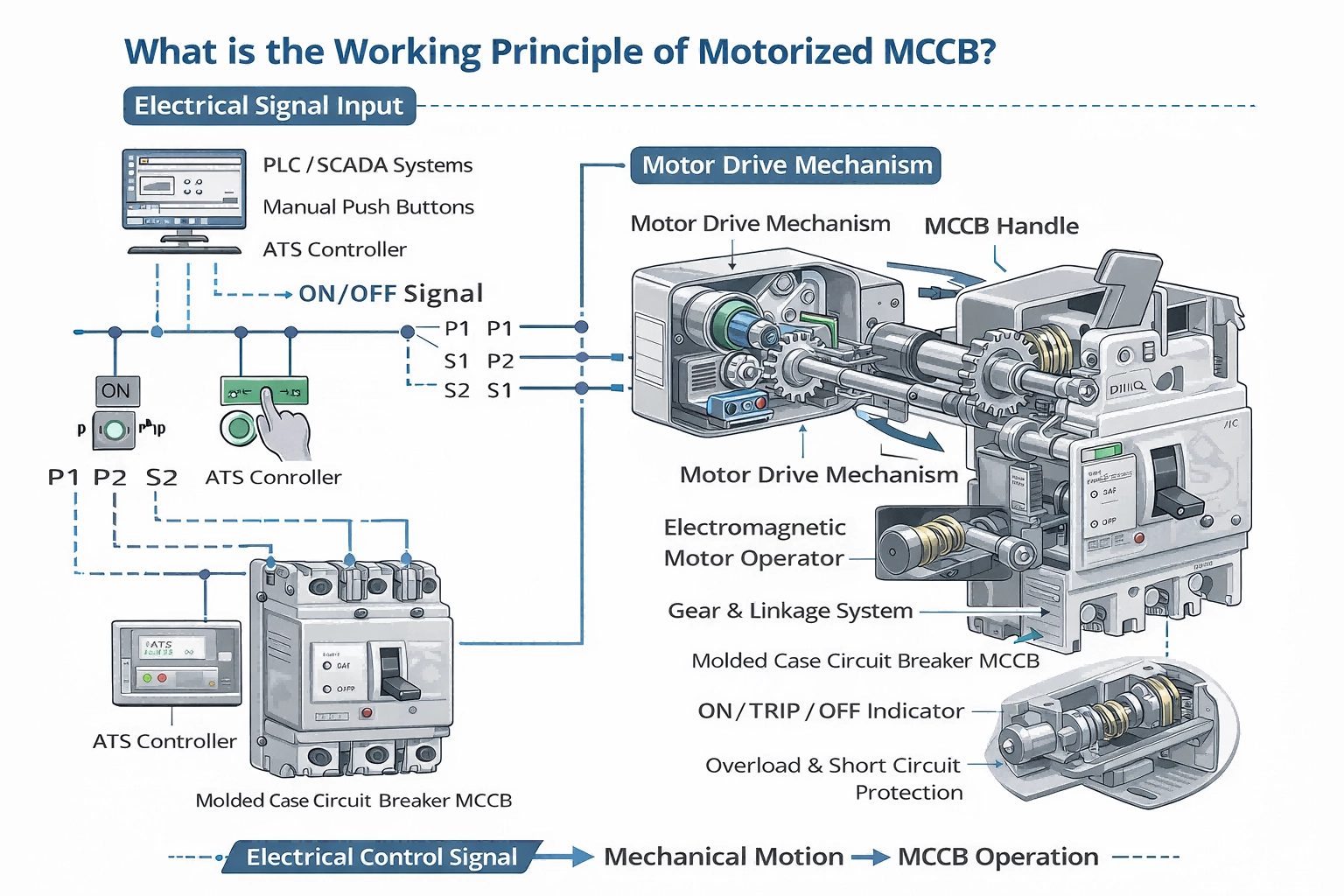
How to Use a Motorized MCCB Circuit Breaker for Remote Control and ATS Systems
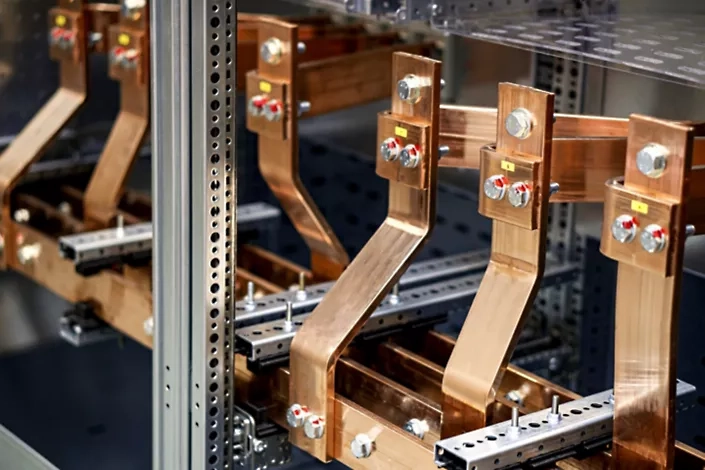
30-Day DIY Electrical Panel Cost-Saving Guide – Day 3

30-Day DIY Electrical Panel Cost-Saving Guide – Day 2
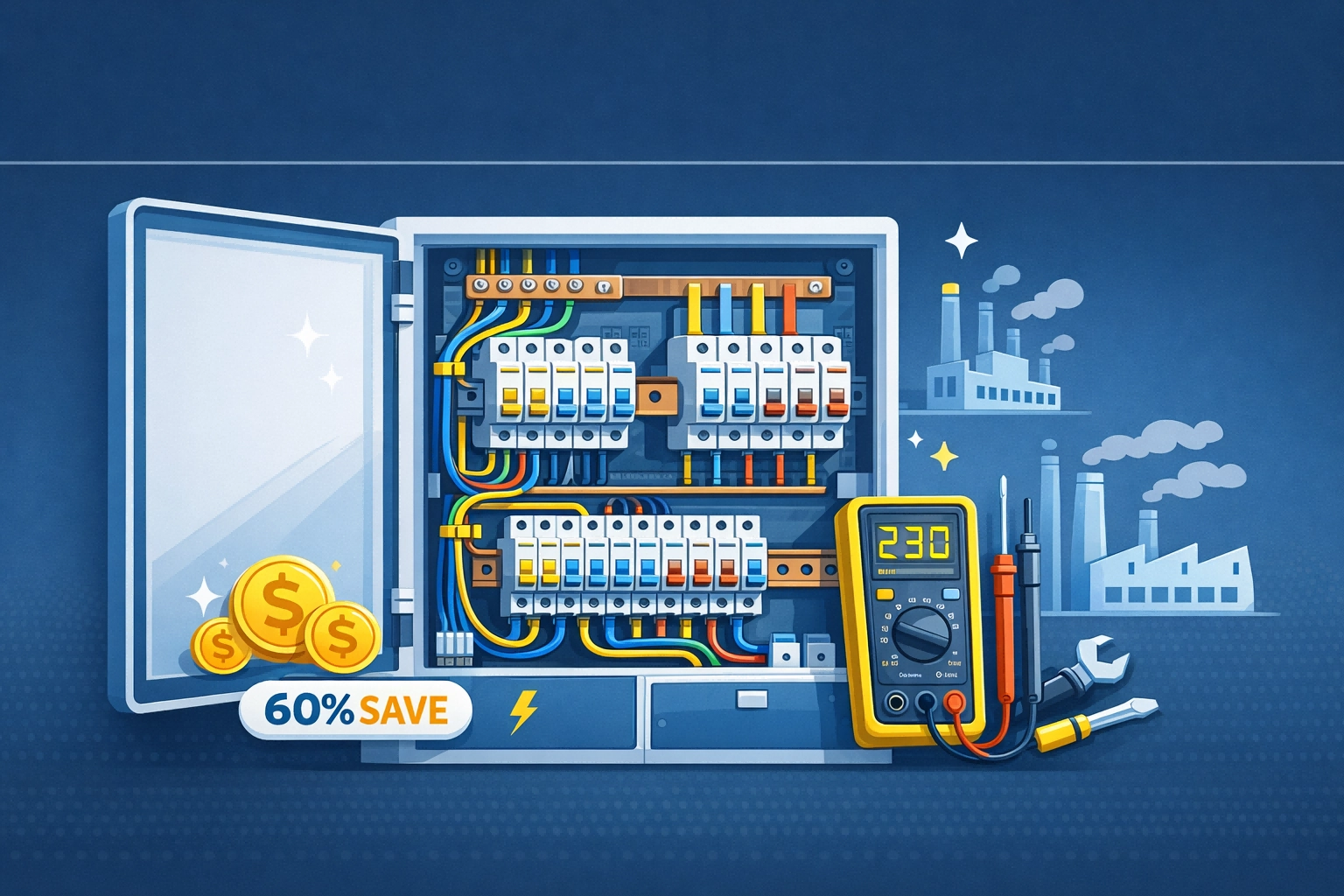
How to Build Your Own Electrical Panel and Save Up to 60% on Costs
Energy Meter Single-Phase Ammeter
Does this meter support communication?
Yes, RS485 communication with MODBUS-RTU protocol is available as an optional feature.
3P NLCD2 Series Motorized Operating MCCB
What control voltage is available?
DC24V, AC110V, AC230V, AC400V options are supported.
Tuya WiFi Smart Recloser
Can I control the breaker remotely?
Yes. Once connected to WiFi, you can turn the breaker on or off remotely through the mobile app.
NH series fuses
What ensures the fuse has strong arc extinguishing capability?
The fuse is filled with chemically treated high-purity quartz sand (SiO₂ ≥ 99.9%), which provides excellent arc suppression, high thermal conductivity, and strong insulation performance.
NLDM1 Molded Case Circuit Breaker(MCCB)
What installation methods are supported?
Both vertical and horizontal installation are supported.
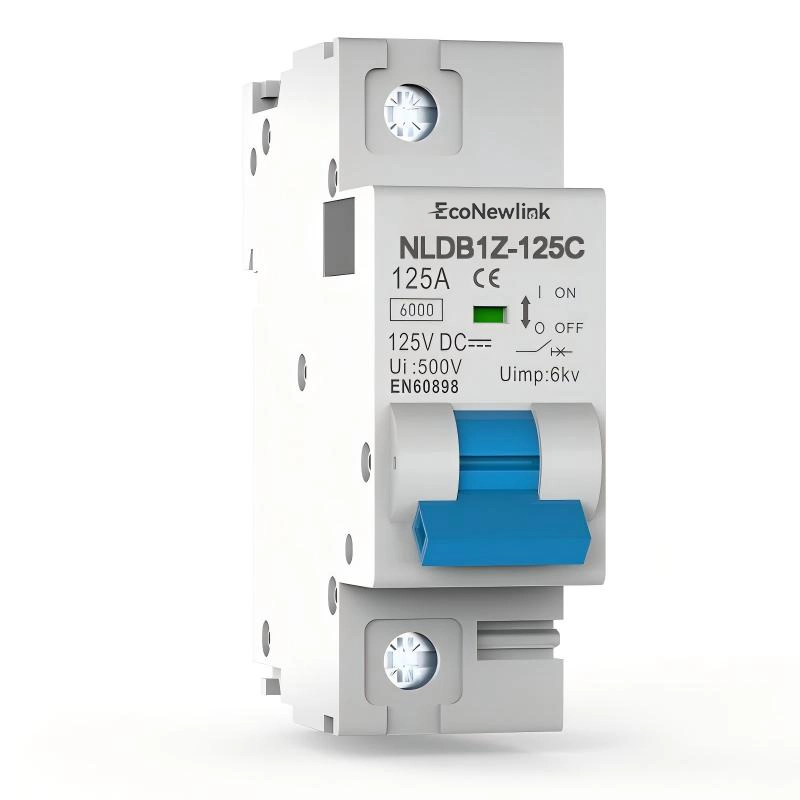
DIN Rail Solar DC MCB Circuit Breaker 63A-125A 250V DIN Rail Miniature Circuit Breaker for Photovoltaic System
High-performance DC miniature circuit breaker for solar photovoltaic systems, supporting 63A-125A current and up to 250V DC voltage. DIN rail installation, optional 6kA/10kA breaking capacity, reliable protection for solar panels, battery systems and DC distribution.

High Efficiency MPPT Solar Charge Controller for Off Grid Systems with 98% Tracking Battery Protection and RS485 Monitoring
This MPPT Solar Charge Controller is designed for off grid solar power systems, delivering up to 98% tracking efficiency to maximize photovoltaic energy utilization. It supports lead acid and lithium batteries with optimized multi stage charging to extend battery lifespan. Built in overcharge, over discharge, overload and short circuit protection ensure system safety, while the RS485 communication interface enables remote monitoring and intelligent energy management. Ideal for residential, telecom and small commercial solar applications.
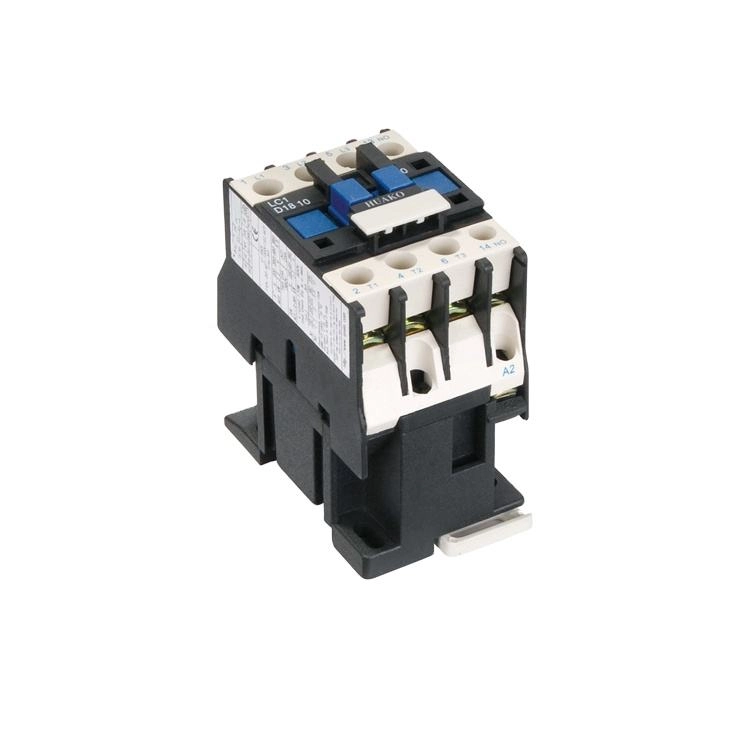
LC1 (CJX2) 220V Single Pole 2 Pole 3P 4 Pole Electrical Contactor Magnetic AC DP Definite Purpose Contactor
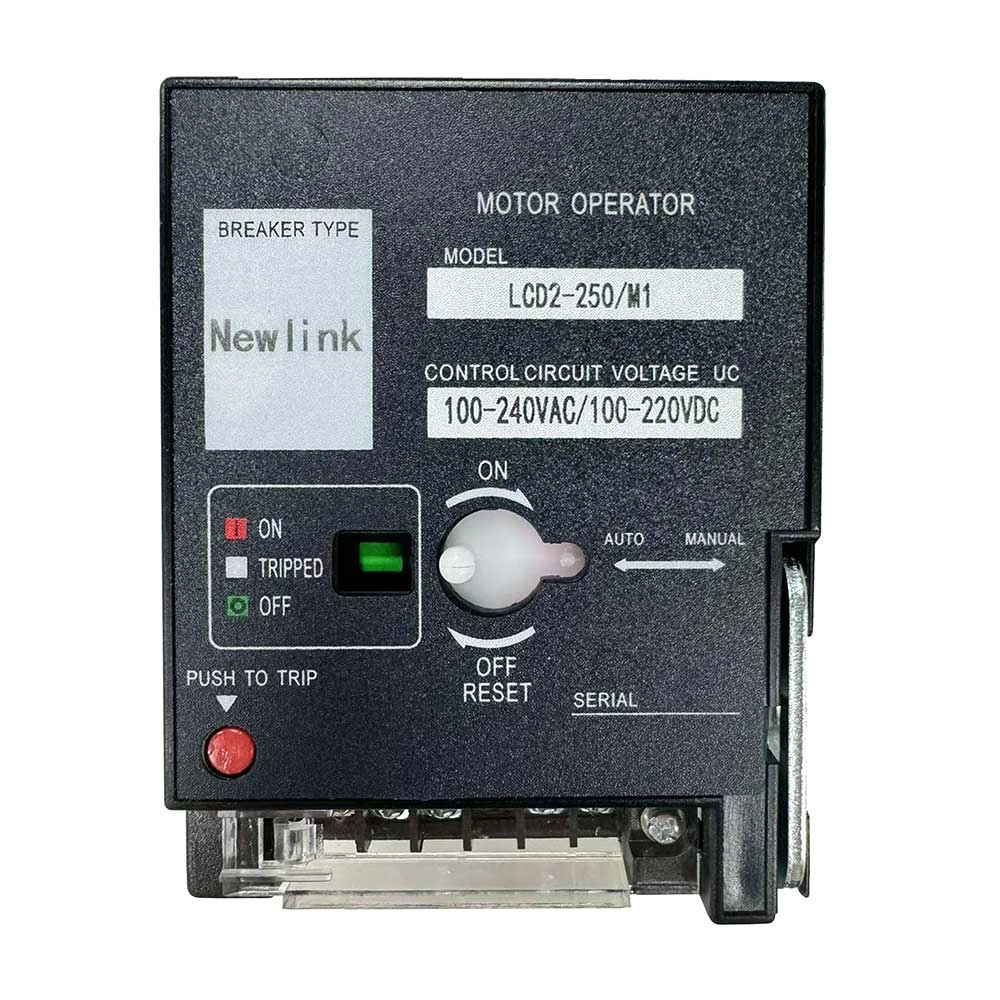
LCD2 Series Motorized Operating MCCB | Remote Control Motor Operator Molded Case Circuit Breaker | 100-240VAC/100-220VDC | Smart Power Distribution |
Motorized MCCB with remote open/close function for intelligent power distribution. Supports automatic/manual switching, control voltage 100-240VAC/100-220VDC, and reliable protection for industrial cabinets and low-voltage systems
Request More Information or Subscribe for Updates
Thank you for reading our article!
If you would like more detailed information, have specific questions, or want to stay updated with the latest articles and guides, please fill out the form below.
Our team will get back to you with tailored information and resources.
Powering the Future with Smart, Safe Solutions
EcoNewlink delivers cutting-edge intelligent power products and solutions to ensure safety, efficiency, and reliability in your power distribution systems.
Contact
Email: nali@newlink.ltd
WhatsApp:
Address: No.76 Chuangyu road, Zengcheng District, Guangzhou, China

 WhatsApp
EcoNewlink
EcoNewlink