





how to avoid compatibility risks in large-scale power distribution panel projects? | Insights by EcoNewlink
- 1. How do I verify and document SCCR compatibility when the site prospective fault current differs from vendor ratings?
- 2. What concrete steps ensure protective relays and IEDs from different vendors interoperate reliably over IEC 61850, Modbus, or DNP3?
- 3. How can I prevent busbar overheating and connection failures when mixing copper and aluminum conductors in large panels?
- 4. What specific manufacturer evidence stops hidden obsolescence and firmware incompatibilities in digital panels?
- 5. How to confirm breaker trip curve coordination and selective protection that will still work after future load expansions?
- 6. What exact FAT and SAT tests, and what documentation, will prevent compatibility surprises during commissioning?
- Concluding summary: Advantages of a standards-driven, documented approach
How to Avoid Compatibility Risks in Large-Scale Power Distribution Panel Projects
As an experienced electrical components manufacturing consultant and content specialist, this guide answers six specific, pain-point questions buyers and engineers frequently face when purchasing large-scale power distribution panels. It embeds industry best practices—SCCR assessment, breaker trip curve coordination, IEC 61439 compliance, communication protocol interoperability, harmonic distortion mitigation, FAT and SAT—so your procurement decisions reduce commissioning surprises and lifecycle risk.
1. How do I verify and document SCCR compatibility when the site prospective fault current differs from vendor ratings?
Why this matters: Short-Circuit Current Rating (SCCR) is a primary compatibility and safety parameter. If the assembled panel's SCCR is lower than the utility or upstream fault current (prospective fault current, PFC), equipment can fail catastrophically, void warranties, and violate local codes (e.g., NEC/NFPA 70 in the U.S.).
Actionable steps:
- Gather accurate site data: Obtain the latest utility or on-site calculated PFC at the point of connection, including any future nearby generation (generators, PV inverters) that change PFC.
- Request manufacturer evidence: Require the vendor to provide type test reports and routine test documentation demonstrating the assembly’s SCCR per IEC 61439 (type/routine test references) or UL standards (UL 891, UL 67) where applicable.
- Perform an independent SCCR assessment: Have the assembler or an independent engineer perform an SCCR evaluation combining the equipment component ratings (breakers, fuses, busbars, bolted joints) using accepted methodologies (manufacturer-rated device SCCR, combination ratings, and substantiation per IEC/UL guidance).
- Apply an industry margin: While site-specific, many engineering teams plan for a contingency margin (commonly 10–25%) above calculated PFC to accommodate measurement uncertainty and future changes—document the rationale in the project file.
- Mitigate with device selection: If the PFC exceeds panel SCCR, specify higher-rated components (e.g., switchgear rated for higher kA) or current-limiting fuses to raise assembly SCCR. Ensure fused/breaker coordination is validated.
- Documentation checklist to request from vendor: single-line diagram (SLD) with fault levels, component cut sheets and time-current characteristic (TCC) curves, type test reports, assembly SCCR substantiation report, torque and jointing procedures, and routine test records for the supplied unit(s).
Standards citation: Use IEC 61439 for low-voltage assemblies SCCR substantiation and IEEE/IEC/UL guidance (e.g., UL 1558/UL 891/UL 67 depending on product) for North American projects. IEEE 1584 guides short-circuit and arc-flash calculations.
2. What concrete steps ensure protective relays and IEDs from different vendors interoperate reliably over IEC 61850, Modbus, or DNP3?
Why this matters: Interoperability failure between protection/control IEDs and SCADA can cause protection gaps, nuisance trips, or lack of visibility—serious safety and availability risks.
Actionable steps:
- Define an interoperability matrix up front: For every IED, list supported protocols (IEC 61850 edition/version, Modbus TCP/RTU, DNP3), sample rates, GOOSE/SMV capabilities, and required datasets. Request the vendor to fill in this matrix with firmware versions.
- Insist on conformance and interoperability testing: Require evidence of IEC 61850 / IEC 61850-8-1 conformance (e.g., independent lab test reports or manufacturer self-declaration plus test logs). For Modbus/DNP3, request functional test logs and mapping tables showing register/point addresses, scaling, and unit conventions.
- Version control and firmware disclosure: Ask vendors to declare firmware versions, build dates, and any proprietary extensions. Include a clause in the purchase order that prohibits shipping units with undocumented proprietary protocol variants without prior acceptance testing.
- Define a test plan: Include component-level FAT with full protocol exchange, IED-to-SCADA integration tests, GOOSE/SMV subscription mapping validation, and cyber-security configuration checks (e.g., TLS, authentication where supported). For IEC 61850 projects, include SCL (Substation Configuration Language) file exchange and validation during FAT.
- Use gateway or protocol converters only when validated: If you must bridge protocols (e.g., IEC 61850 to Modbus), specify a tested gateway and require end-to-end functional tests showing latency, loss, and failover behavior under stress.
- Include acceptance criteria and fallbacks: Define acceptable message latency, missed-update tolerances, and a documented fall-back behavior for loss of communications (e.g., local trip on relay vs. remote trip).
Standards citation: IEC 61850 (communication networks and systems for power utility automation) and its conformance testing guidance are the primary references. For cyber-security, consult IEC 62351 and site-specific IT/OT policies.
3. How can I prevent busbar overheating and connection failures when mixing copper and aluminum conductors in large panels?
Why this matters: Improper mixing of copper and aluminum or incorrect jointing can lead to galvanic corrosion, increased contact resistance, localized heating, and ly failure under load.
Actionable steps:
- Specify conductor materials explicitly: In procurement documents and BOMs, state whether busbars and conductors are copper or aluminum. If mixed materials are unavoidable, require bimetallic splicing components (e.g., copper-to-aluminum transition lugs) and documented installation torque values.
- Ask for thermal tests and temperature-rise data: Per IEC 61439, assemblies have specified temperature rise limits. Request manufacturer temperature-rise tests or thermal analysis for anticipated continuous loads and worst-case harmonics.
- Control jointing, plating and lubrication: Require anti-oxidation compounds for aluminum terminations, specify copper plating on contact surfaces where needed, and include torque values and jointing procedures in the vendor’s factory test package.
- Use matched hardware and certified connectors: Insist on connectors certified for bi-metallic transitions and request manufacturer declarations of compatibility. Avoid ad-hoc field splices without factory substantiation.
- Include in commissioning: During SAT, measure contact resistances of critical joints with micro-ohm meters and compare to factory values. Thermal scanning under load during FAT/SAT can reveal hot spots early.
Standards citation: IEC 61439 (assembly temperature rise and verification tests) and manufacturer handbooks for connectors and lugs (e.g., tork values, plating recommendations).
4. What specific manufacturer evidence stops hidden obsolescence and firmware incompatibilities in digital panels?
Why this matters: Digital elements (relays, metering, communication modules) often become obsolete faster than mechanical parts. Without evidence, you risk receiving products with unsupported firmware or future inability to obtain spare parts.
Actionable steps:
- Request lifecycle and obsolescence statements: Require the supplier to provide a declared hardware/firmware lifecycle, last order dates, and a guaranteed minimum availability window (e.g., 5–10 years) as contractually binding where possible.
- Inventory firmware and software deliverables: Ask for a complete list of firmware/software versions pre-loaded on units and ensure the vendor supplies the firmware images, release notes, and any vendor-specific configuration tools necessary for maintenance.
- Ask for spare parts strategy: Require a bill of materials (BOM) with manufacturer part numbers and a recommended spares list with lead times. Where single-source components are used, include clauses for cross-qualification or redesign notification.
- Insist on IPR and secure supply commitments: For project-critical IEDs, request written assurances about long-term support, security patching, and notification periods for product EOL (end-of-life).
- Include FAT with upgrade/rollback tests: During FAT, test a firmware upgrade and rollback procedure on non-critical units to validate vendor guidance and to capture potential compatibility issues before site deployment.
Standards/Best practice: Follow purchaser’s IT/OT asset management and ISO 9001-driven supplier quality requirements. Put obsolescence management clauses in contracts referencing IEC TR 62402 (Obsolescence management).
5. How to confirm breaker trip curve coordination and selective protection that will still work after future load expansions?
Why this matters: Poor coordination creates nuisance trips that disrupt production, or worse, fails to isolate faults selectively, risking wider outages and equipment damage.
Actionable steps:
- Provide accurate load profile and future expansion scenarios: Give vendors the maximum expected load per feeder, motor inrush profiles, and potential additional loads to size and coordinate protection curves correctly.
- Require Time-Current Characteristic (TCC) studies: Request a complete TCC coordination study showing present and future scenarios, with manufacturer-supplied TCC curves for breakers and protective devices, and the chosen protection settings documented.
- Validate with selectivity margins: Ensure the study demonstrates selectivity margins (time and current) between upstream and downstream devices to prevent overlap; common practice is to plan clear separation in time bands aligned with device settings and fuse characteristics.
- Consider inrush and harmonic effects: For large motors and VFD-fed loads, include motor starting curves and VFD clamping behavior. Harmonic distortion may affect protective device sensing—ask for harmonic impact analysis and derating recommendations.
- Document setting change controls: Mandate that any future protection setting changes go through a documented engineering change process with updated coordination studies and traceability to the master TCC study.
Standards citation: IEEE recommended practices for protection coordination, manufacturer application notes for breakers and relays, and local code requirements (e.g., NEC). TCC outputs should be included in the acceptance documentation bundle.
6. What exact FAT and SAT tests, and what documentation, will prevent compatibility surprises during commissioning?
Why this matters: Incomplete testing or missing documentation is the most common cause of commissioning delays and unexpected rework. FAT and SAT are your last chance to validate the product against the contract and site conditions.
Actionable FAT/SAT checklist (procure and enforce):
- Documentation to demand before FAT: complete SLD, panel workshops drawings, wiring lists, BOM with manufacturer part numbers, type/routine test reports, SCCR substantiation, TCC study, firmware lists, and communication mapping files (e.g., SCL for IEC 61850).
- Electrical routine tests (factory): insulation resistance, continuity checks, power-on functional test, verification of protective device operation (trip tests), and measurement of busbar and cable connection torque values. Request logged test results and calibrated instrument certificates.
- Thermal and mechanical tests: temperature-rise measurements at rated continuous current, mechanical operation cycles for switches and breakers, and vibration checks if required by the application environment.
- Communication and protection checks: full protocol exchange tests, GOOSE/SMV functional tests, SCADA integration tests, and relay binary/analog point validation. Include cyber-security configuration verification if applicable.
- Simulated fault and trip tests: coordinated trip verification using secondary injection or simulated faults where practical to demonstrate selective clearing per the TCC study.
- SAT at site: repeat key functional tests after installation—insulation, continuity, correct wiring, SCADA integration, and thermal scanning under initial load. Verify grounding/earthing continuity and measure loop impedances if required by local code.
- Acceptance documentation: As-built SLDs, 'as-tested' FAT/SAT reports with instrument serials/calibration, signed test witness records (including third-party or client witness where required), and the final updated BOM and spare parts list. Include commissioning procedures and maintenance manuals.
Best practice: Include a clause in purchase orders that shipment is contingent on passing FAT witnessed by client or third-party. That prevents field rework and enforces compliance with documented requirements.
Concluding summary: Advantages of a standards-driven, documented approach
Following the structured steps above—accurate PFC and SCCR reconciliation, interoperability matrices and protocol testing, material and joint controls for busbars, explicit obsolescence/firmware management, documented breaker coordination studies, and rigorous FAT/SAT—delivers measurable advantages: faster commissioning, predictable performance, fewer warranty claims, improved safety compliance (IEC/UL/NEC), reduced lifecycle costs, and a clear path for future expansion. Buyers who require traceable documentation and enforce FAT/SAT witness clauses minimize hidden costs and schedule risk.
If you need help producing procurement specs, an SCCR substantiation, a TCC coordination study, or a FAT/SAT test plan tailored to your project, contact us for a quote.
Website: www.econewlink.com • Email: nali@newlink.ltd
Authoritative references and standards to consult: IEC 61439 (low-voltage switchgear assemblies), IEC 61850 (substation automation), IEEE 1584 (short-circuit/arc-flash), UL 891/UL 67 (NA switchboards/panelboards), IEC 62351 (OT security), and IEC TR 62402 (obsolescence management).
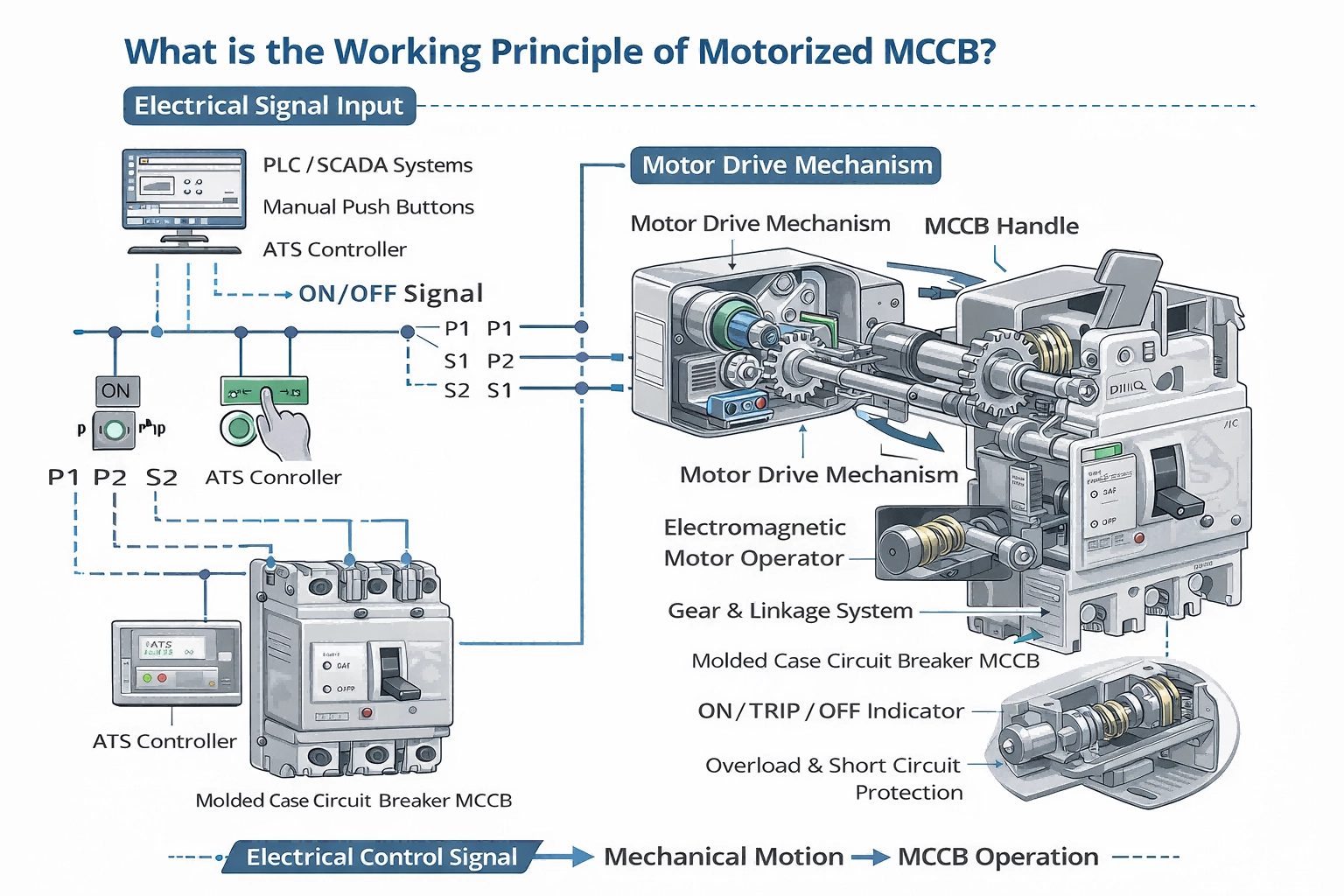
How to Use a Motorized MCCB Circuit Breaker for Remote Control and ATS Systems

30-Day DIY Electrical Panel Cost-Saving Guide – Day 3

30-Day DIY Electrical Panel Cost-Saving Guide – Day 2

How to Build Your Own Electrical Panel and Save Up to 60% on Costs
Logistics
Can you support mixed orders and consolidated shipments?
Yes, EcoNewlink supports multi-product consolidation and mixed container loading, helping customers:
- Reduce shipping costs
- Simplify procurement
- Improve inventory efficiency
We are especially experienced in one-stop sourcing and shipment integration for electrical products and power distribution systems.
Service
What certifications does EcoNewlink hold?
EcoNewlink products are manufactured in compliance with international standards and hold certifications such as:
- CE Certification (EU compliance)
- RoHS Certification (environmental safety)
- GRS Certification (Global Recycled Standard for sustainable materials)
These certifications ensure our products meet global market access requirements and environmental regulations.
Three Phase anti backflow energy meter
Where should the meter be installed?
It must be installed at the main grid connection point to measure total power flow.
Three-phase power meter
What is the lead time?
Mass production takes 【30】 days; samples take 【10】 days.
Energy Meter Single-Phase Ammeter
Is installation complicated?
No, it uses standard panel mounting and is easy to install in electrical cabinets.
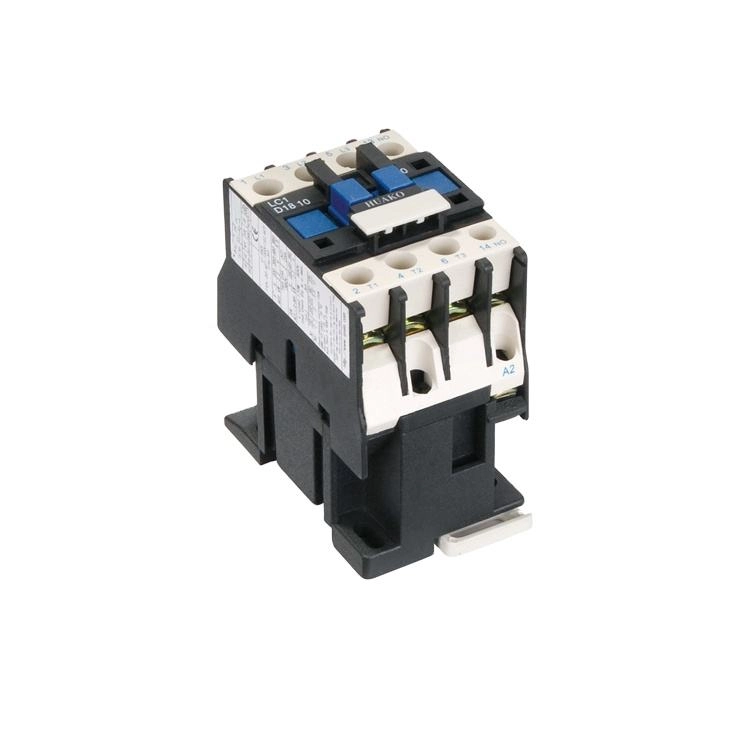
LC1 (CJX2) 220V Single Pole 2 Pole 3P 4 Pole Electrical Contactor Magnetic AC DP Definite Purpose Contactor
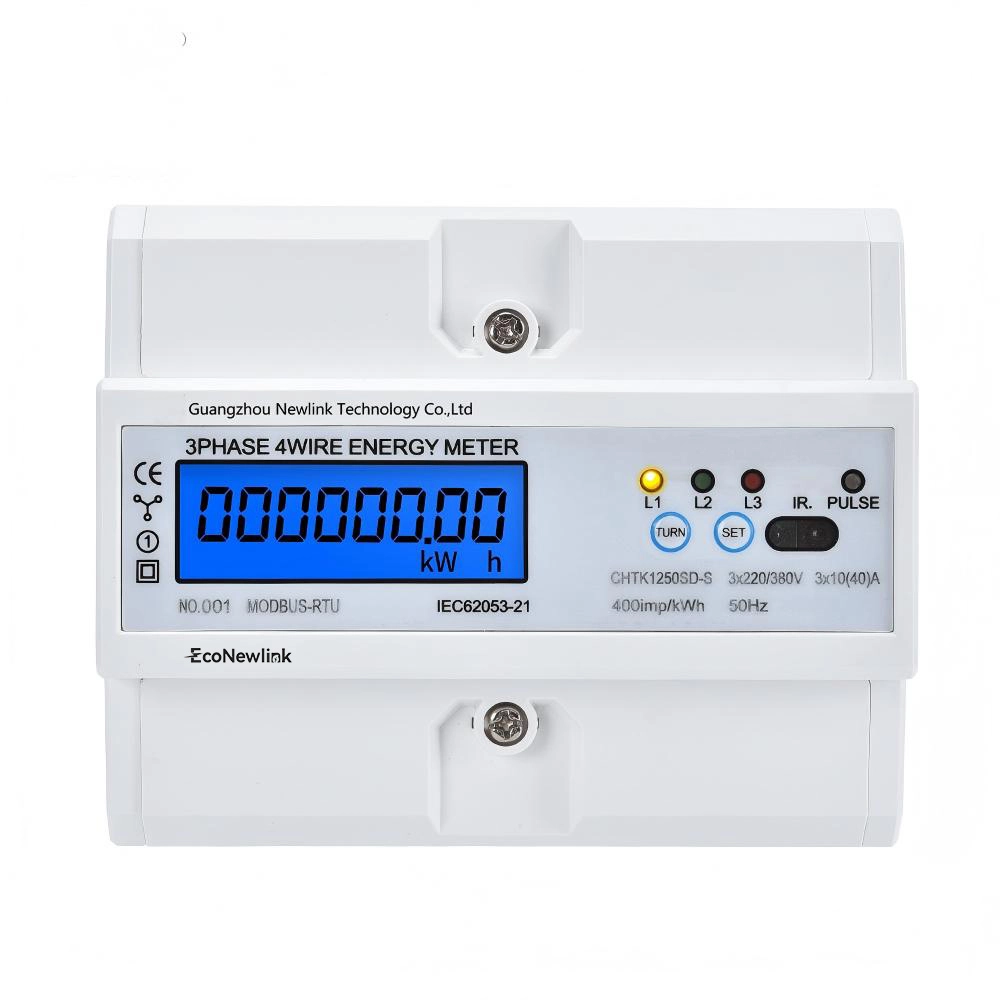
Three-Phase Four-Wire Multifunction Electronic DIN Rail Energy Meter Manufacturer with CE Certification
The Three-Phase Four-Wire Multifunction Electronic DIN Rail Energy Meter is a compact and high-accuracy smart meter designed for modern power monitoring systems. It features RS485 communication, pulse output, and a clear LCD display. With easy DIN rail installation and CE certification, it is ideal for industrial, commercial, and energy management applications.
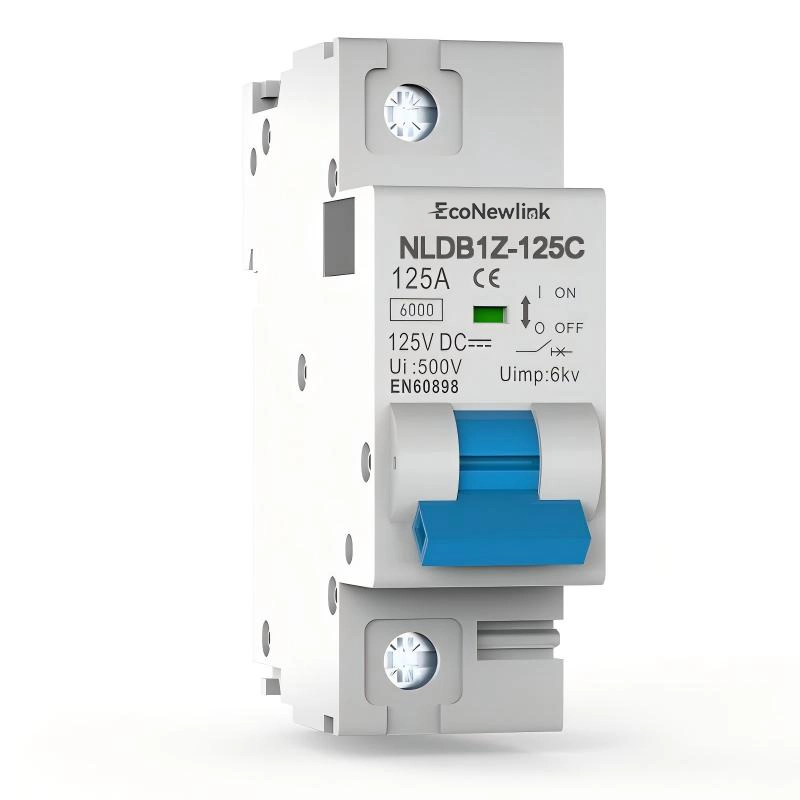
DIN Rail Solar DC MCB Circuit Breaker 63A-125A 250V DIN Rail Miniature Circuit Breaker for Photovoltaic System
High-performance DC miniature circuit breaker for solar photovoltaic systems, supporting 63A-125A current and up to 250V DC voltage. DIN rail installation, optional 6kA/10kA breaking capacity, reliable protection for solar panels, battery systems and DC distribution.
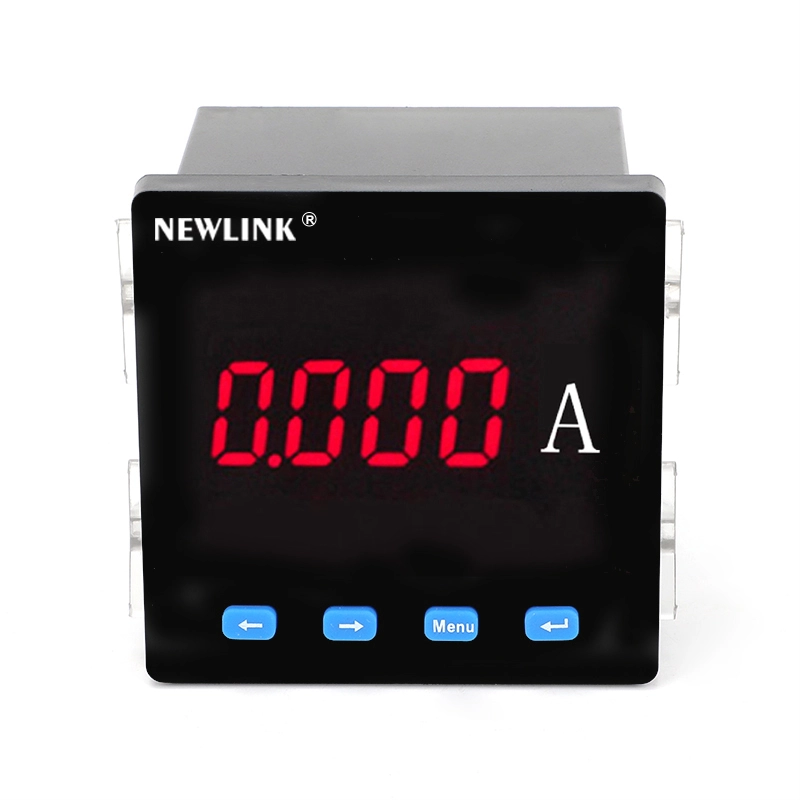
Single Phase Digital Ammeter with RS485 Modbus | LED LCD Panel Current Meter for Industrial Power Monitoring
High-precision single phase digital ammeter with RS485 Modbus communication, LED/LCD display, and programmable CT ratio. Ideal for power systems, automation equipment, and industrial monitoring applications.
Request More Information or Subscribe for Updates
Thank you for reading our article!
If you would like more detailed information, have specific questions, or want to stay updated with the latest articles and guides, please fill out the form below.
Our team will get back to you with tailored information and resources.
Powering the Future with Smart, Safe Solutions
EcoNewlink delivers cutting-edge intelligent power products and solutions to ensure safety, efficiency, and reliability in your power distribution systems.
Contact
Email: nali@newlink.ltd
WhatsApp:
Address: No.76 Chuangyu road, Zengcheng District, Guangzhou, China

 WhatsApp
EcoNewlink
EcoNewlink