





why use ceramic blade fuses instead of glass fuses in low-voltage distribution systems? | Insights by EcoNewlink
- 1. How do interrupting rating and let‑through energy (I2t) really differ between ceramic and glass fuses for low-voltage distribution?
- 2. Will ceramic fuses prevent catastrophic shattering and secondary damage inside compact distribution enclosures compared to glass fuses?
- 3. How should I derate ceramic blade/cartridge fuses for continuous loads, ambient temperature and enclosure placement?
- 4. Which manufacturer test reports and certifications should I demand when buying ceramic fuses for LV distribution?
- 5. Do ceramic fuses tolerate motor and transformer inrush currents better than glass fuses — how do I size to avoid nuisance tripping?
- 6. What manufacturing and material quality flags indicate a reliable ceramic fuse supplier versus cheaper glass fuse options?
1. How do interrupting rating and let‑through energy (I2t) really differ between ceramic and glass fuses for low-voltage distribution?
Answer: The most important technical differences for distribution applications are interrupting rating (breaking capacity) and let‑through energy (I2t). Ceramic-bodied fuses (often sand‑filled ceramic cartridge or ceramic-bodied blade styles) are designed and tested to withstand much higher prospective fault currents without catastrophic failure because the ceramic body and filler suppress and quench arcs. Glass fuses typically have lower breaking capacities and are intended for low prospective fault energy circuits (consumer electronics or small appliance protection) where visual element inspection is prioritized.
Practical guidance: always match the fuse's published interrupting rating (kA or A RMS symmetrical) to the prospective fault current at the point of installation. For low‑voltage distribution, select a ceramic fuse with an interrupting rating equal to or greater than the available fault current. Also review the time‑current characteristic and the specified I2t (melting and clearing integrals) on the datasheet: ceramic fuses used in distribution will typically have lower peak let‑through energy for the same nominal rating than an equivalent glass fuse, providing better downstream device protection and reduced thermal stress during faults.
Reference standards: verify compliance with IEC 60269 (fuse-links for low-voltage systems) or UL 248 series for the region. Datasheet I‑T and I2t graphs are the authoritative source for comparison.
2. Will ceramic fuses prevent catastrophic shattering and secondary damage inside compact distribution enclosures compared to glass fuses?
Answer: Yes — ceramic fuses are far less likely to shatter and cause secondary damage. Ceramic cartridge/blade fuses are commonly filled with quartz/silica sand and have robust ceramic bodies that contain hot plasma and molten metal during an interruption event. The sand quickly quenches the arc and absorbs energy, preventing explosive glass fragmentation and the ejection of hot debris.
Why it matters: in compact switchboards or consumer distribution boxes, glass fuse rupture can spray hot fragments or allow sustained arcing, increasing fire risk and damaging adjacent components. Ceramic fuses are specified in industrial and LV distribution environments to minimize these hazards and to meet workplace and electrical safety codes. For installations inside metal enclosures where safety and arc containment are priorities, ceramic fuses are the standard choice.
3. How should I derate ceramic blade/cartridge fuses for continuous loads, ambient temperature and enclosure placement?
Answer: Ceramic fuses still heat as current flows; continuous thermal stress reduces margin and changes time‑current behavior. Manufacturers provide derating curves (temperature vs. allowable continuous current) and maximum allowable ambient temperatures. Typical procurement and design steps:
- Use the fuse's published derating curve to choose a continuous current rating at the expected ambient temperature inside the enclosure (consider worst‑case: solar gain, adjacent heat sources, internal fans off).
- Allow margin for manufacturing tolerances and circuit surge; common practice is to size fuses so continuous current ≤ 75–85% of rated fuse current unless the manufacturer approves continuous duty at 100%.
- Consider enclosure ventilation and grouping effects: multiple fuses in a bank will raise local ambient temperature and may require additional derating per datasheets or IEC guidelines.
Concrete action: request the manufacturer's temperature rise and derating data, and use time‑current curves at the derated current to confirm no nuisance opening. For safety-critical feeders, add coordination studies with upstream protective devices to maintain selectivity after derating.
4. Which manufacturer test reports and certifications should I demand when buying ceramic fuses for LV distribution?
Answer: For procurement quality control and regulatory compliance, require documented evidence beyond a generic datasheet. Key documents to request:
- Type test reports showing interrupting rating testing to IEC 60269 or UL 248, including the tested prospective fault current and test conditions.
- Time‑current (I‑T) curves and I2t (melting and clearing integrals) for the specific part number and lot.
- Temperature rise and derating test reports (ambient temperature vs allowable continuous current).
- Mechanical shock, vibration and humidity/thermal shock tests when the application requires that robustness (industrial panels, outdoor enclosures).
- Material and RoHS/REACH declarations, internal traceability (batch/lot numbers), and factory quality control certificates (ISO 9001 traceability to manufacturing records).
- Third‑party certification: a valid UL listing, CSA, or CETL mark for North America, or CE marking backed by appropriate harmonized standards in the EU. For global projects, confirm compliance with IEC 60269 series.
Procurement tip: insist on sample lot testing for high‑volume runs and keep copies of factory test reports for site acceptance. If the supplier offers IEC/UL laboratory witness results, those are stronger evidence than supplier self‑declarations.
5. Do ceramic fuses tolerate motor and transformer inrush currents better than glass fuses — how do I size to avoid nuisance tripping?
Answer: Inrush tolerance depends on the fuse’s time‑current characteristic (fast‑acting vs. time‑delay/slow‑blow design). The fuse body (ceramic vs glass) affects interrupting rating and thermal stability but does not by itself determine inrush tolerance. However, ceramic time‑delay designs are widely available and preferred in distribution where motors and transformers are present because they combine robust arc suppression with engineered delay characteristics.
Sizing approach:
- Identify inrush magnitude and duration (for motors, transformer magnetizing inrush can be 6–10× steady current for milliseconds to seconds).
- Use the manufacturer’s time‑current curves for the specific ceramic time‑delay fuse; ensure the inrush event lies below the curve (i.e., the fuse stays closed during the inrush). If not, choose the next larger time‑delay fuse and re‑check coordination with downstream/ upstream devices.
- Calculate and compare the worst‑case I2t of the inrush against the fuse’s I2t let‑through and the downstream device’s withstand energy. Ceramic time‑delay fuses commonly provide a better compromise between inrush tolerance and fault clearing than equivalent glass fast‑acting types.
Remember: upsizing a fuse to accommodate inrush reduces short‑circuit interrupting margin and selectivity; perform coordination studies using actual time‑current curves rather than only nominal ampere ratings.
6. What manufacturing and material quality flags indicate a reliable ceramic fuse supplier versus cheaper glass fuse options?
Answer: For industrial low‑voltage distribution, the following manufacturing and material attributes are indicators of a reliable ceramic fuse product and manufacturer:
- Sand filler: specification of quartz/silica sand filler and its grading — correct filler suppresses arcs and limits element evaporation.
- Fuse element metallurgy and join quality: nickel‑plated copper vs silver alloys, consistent welds or crimps, and documented tensile/solderability tests.
- Body integrity: homogeneous ceramic body without voids, measured dielectric strength, and mechanical shock/vibration test results.
- Plating and contact surfaces: silver or tin plating on end caps or blades with solderability and corrosion resistance data.
- Dimensional tolerances and interchangeability: critical for blade and cartridge types to ensure correct holder fit and contact pressure (low contact resistance reduces heating).
- Factory test frequency and traceability: percentage of production lot tested, lot traceability, and retained sample policy.
Supplier due diligence: ask for factory inspection photos, sample cross‑sections of the fuse, and factory quality audits (ISO 9001 certificates, supplier audit reports). Compare these to the supplier’s datasheet claims and third‑party test reports before placing bulk orders.
Conclusion: For low‑voltage distribution systems where safety, high prospective fault current interruption, reliable arc quenching, and thermal/mechanical robustness matter, ceramic blade/cartridge fuses are the preferred choice over glass fuses. Ceramic designs (sand‑filled, ceramic body) provide superior interrupting ratings, safer failure modes (non‑shattering), better thermal stability and predictable time‑current behavior. Use manufacturer time‑current curves, I2t data, derating charts and IEC/UL test reports to size fuses correctly and ensure coordination with upstream and downstream protection. Request factory test reports, third‑party certification and lot traceability when procuring for distribution panels.
For a quote and datasheet review tailored to your panel ratings and prospective fault currents, contact us at www.econewlink.com or email nali@newlink.ltd — we can provide fuse selection, coordination studies and supplier documentation review.
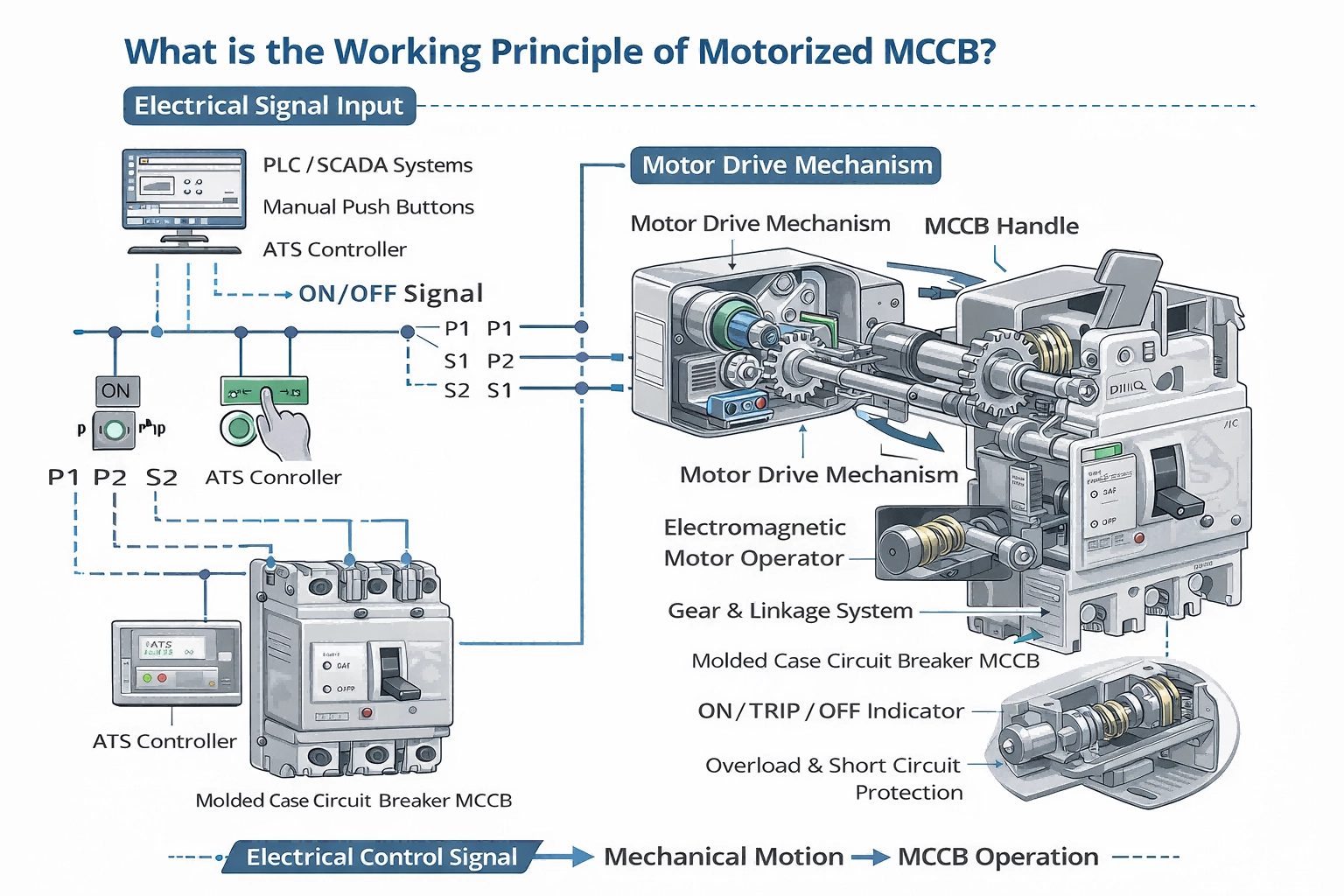
How to Use a Motorized MCCB Circuit Breaker for Remote Control and ATS Systems
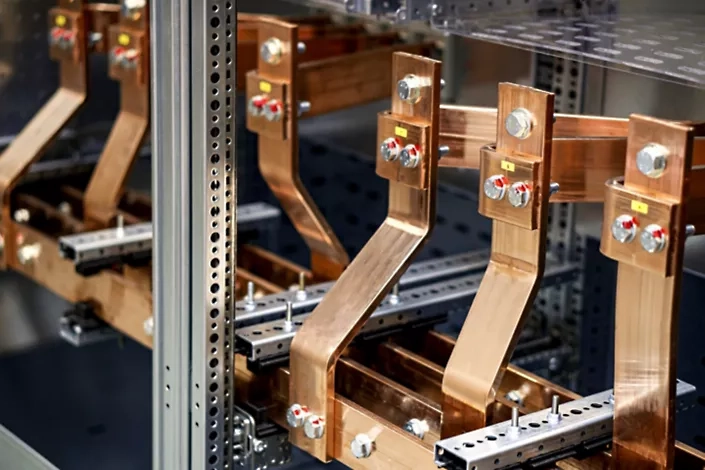
30-Day DIY Electrical Panel Cost-Saving Guide – Day 3

30-Day DIY Electrical Panel Cost-Saving Guide – Day 2
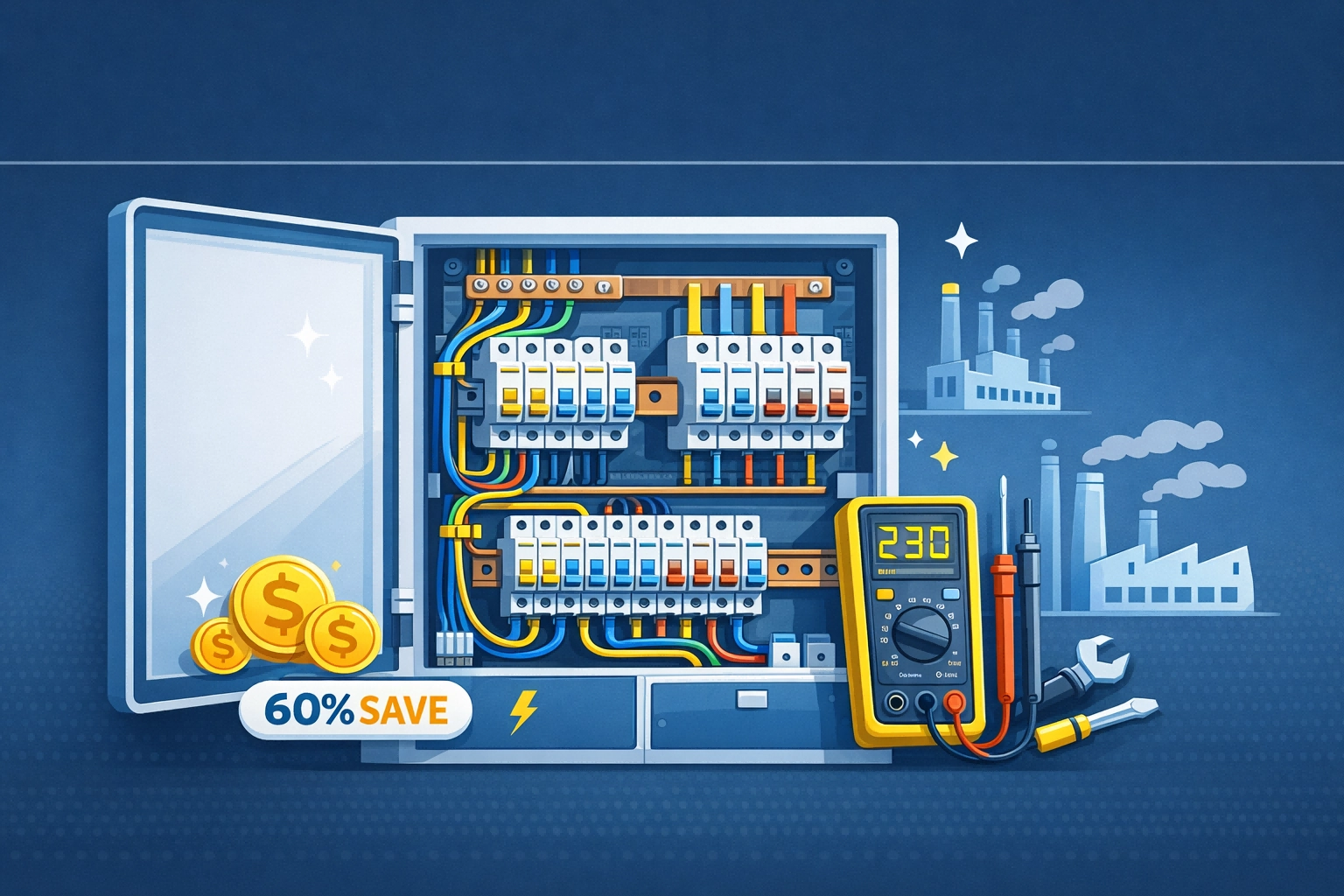
How to Build Your Own Electrical Panel and Save Up to 60% on Costs
Solar Controller with MPPT (Basic Model)
What type of solar system is this MPPT controller suitable for?
This controller is designed for off grid solar power systems, including residential solar systems, telecom stations, solar street lights and small commercial photovoltaic applications.
Three-phase multifunction guide rail meter
What communication protocol does it use?
It supports standard Modbus protocol.
What standards does the product comply with?
It complies with GB/T 17215, GB/T 17883, and CE certification requirements.
Can it be used in industrial environments?
Yes, it is designed for industrial and commercial applications.
Three-phase power meter
Is the product internationally certified?
The product is certified to CE, GRS, and RoHS standards for global market compliance.
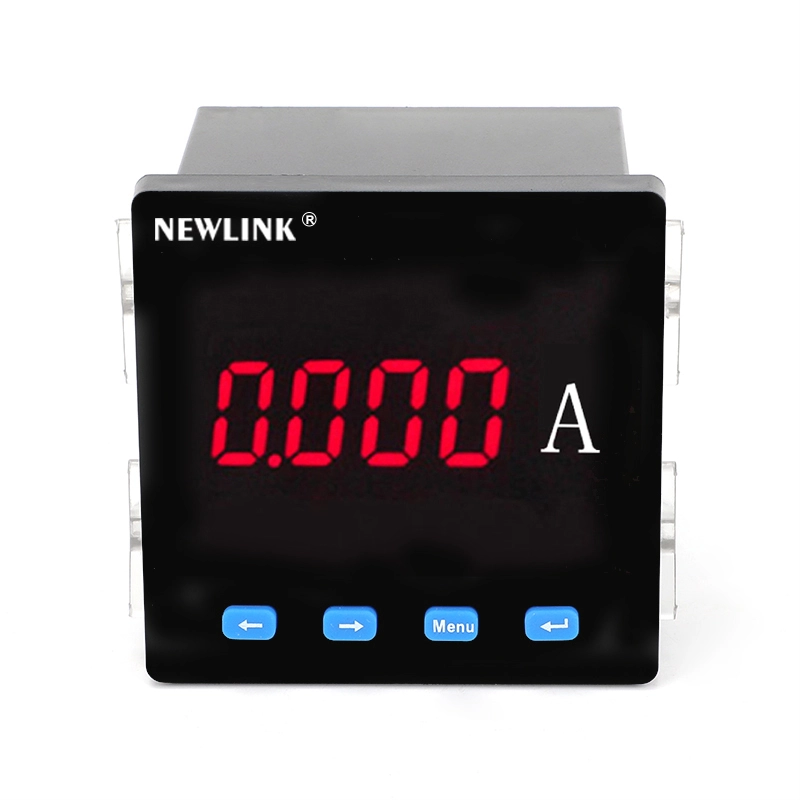
Single Phase Digital Ammeter with RS485 Modbus | LED LCD Panel Current Meter for Industrial Power Monitoring
High-precision single phase digital ammeter with RS485 Modbus communication, LED/LCD display, and programmable CT ratio. Ideal for power systems, automation equipment, and industrial monitoring applications.
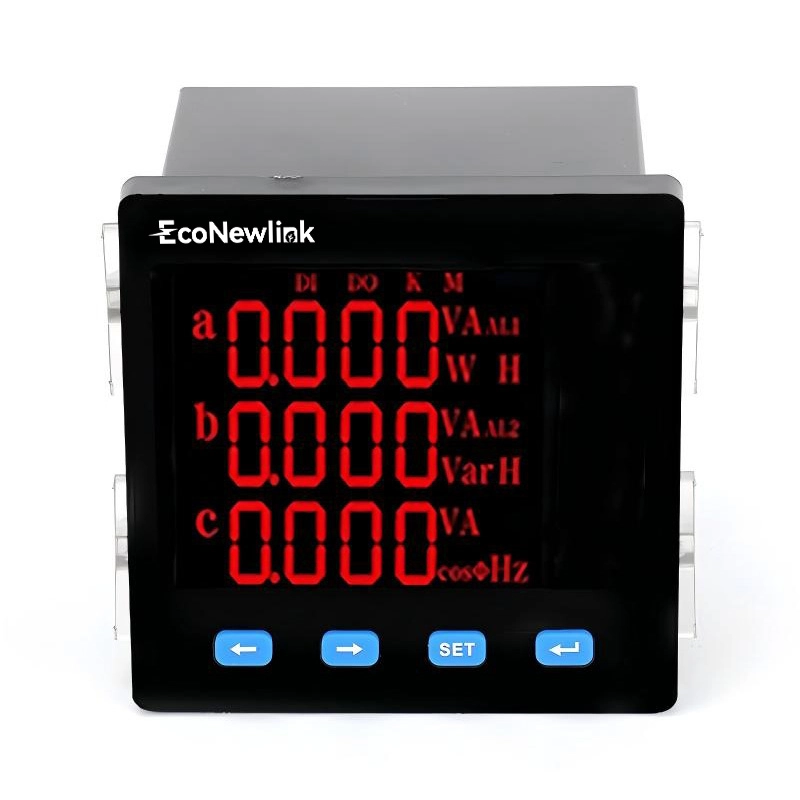
EcoNewlink 3 phase energy meter RS485 Modbus multifunctional power meter DIN rail kWh
The EcoNewlink Three-Phase Multifunctional Power Meter is engineered for complex industrial power distribution systems. Featuring a user-friendly interface, robust anti-interference performance, and reliable RS485 communication, it delivers real-time, high-accuracy energy data. Certified to CE, GRS, and RoHS standards, this meter is available for factory-direct bulk supply and deep OEM/ODM customization to ensure long-term system stability.
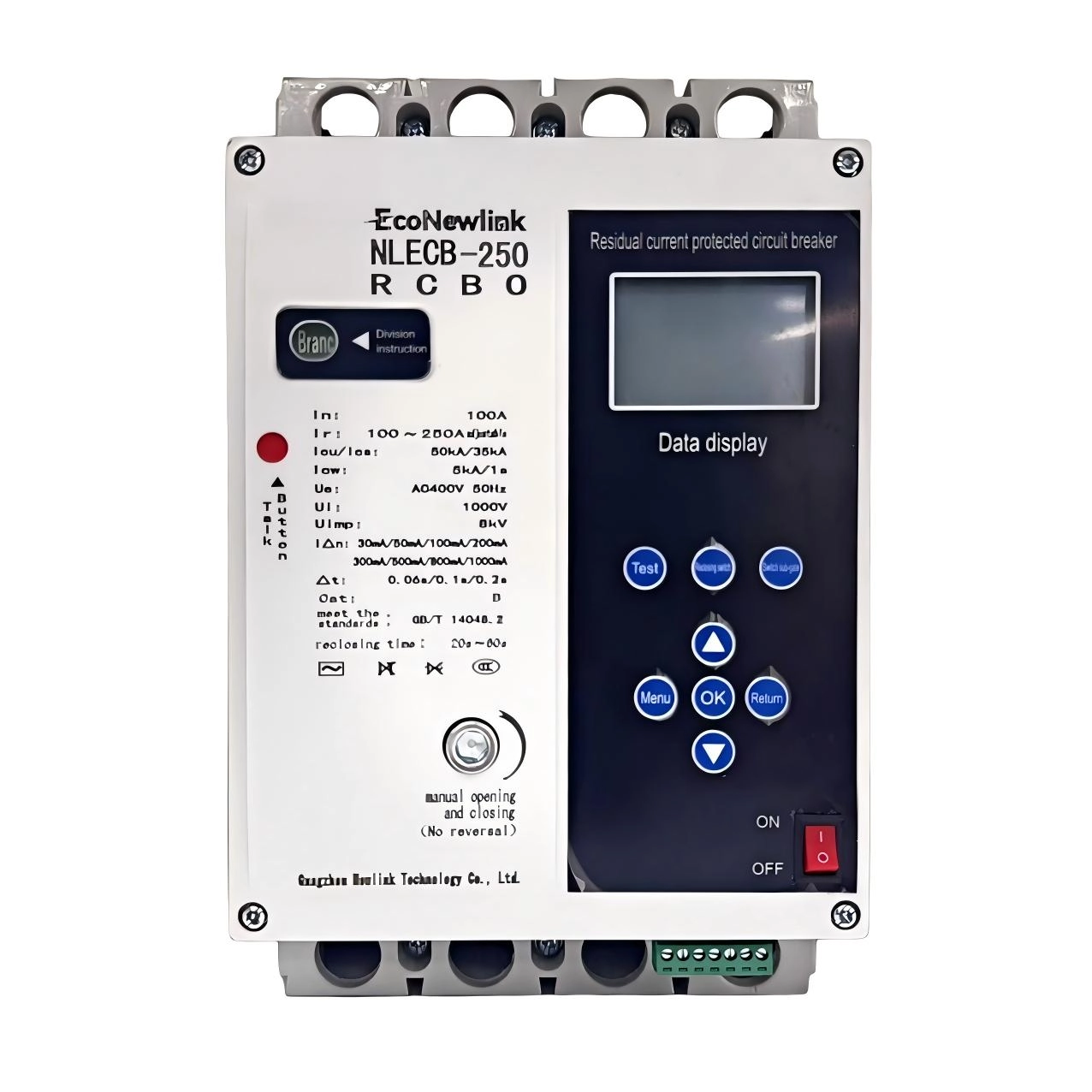
NLECB Automatic Reclosing ECB Circuit Breaker for Overload, Short-Circuit & Leakage Protection
This photovoltaic automatic reclosing circuit breaker (ECB) is designed for solar and low-voltage power distribution systems. It provides automatic reclosing functionality and comprehensive protection, including overload, short-circuit, and leakage protection, ensuring stable and reliable operation in harsh environments.
It solves common pain points in solar and smart power systems, such as manual reset issues, system downtime, and safety risks caused by unstable grid conditions. The waterproof design enhances durability and extends product life in outdoor installations.
Key advantages include high reliability, improved safety, reduced maintenance time, and automatic fault recovery. The product complies with international standards and certifications including ISO, CE, RoHS, and GRS, making it suitable for global markets.
OEM and customization services are available to support brand differentiation and specific engineering requirements.
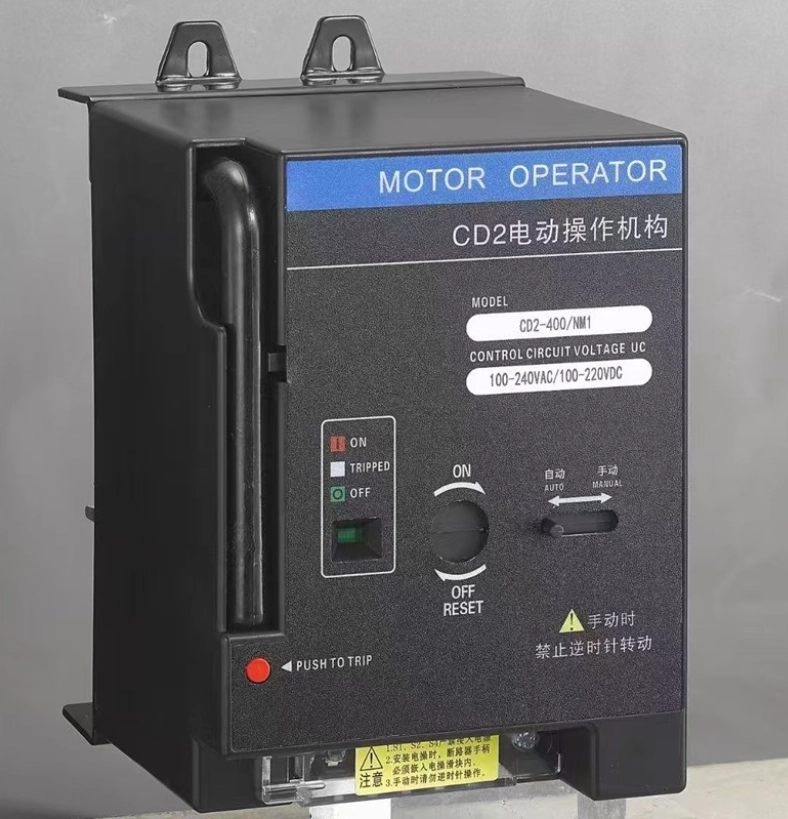
LCD2 Motorized MCCB Circuit Breaker with Remote Control | Molded Case Circuit Breaker for ATS Generator Power Distribution
NLCD2 motorized MCCB is designed for remote switching and automation control in low-voltage power systems. It supports AC/DC control voltage, fast operation, and reliable mechanical coupling, ideal for industrial panels, ATS systems, and smart energy applications.
Request More Information or Subscribe for Updates
Thank you for reading our article!
If you would like more detailed information, have specific questions, or want to stay updated with the latest articles and guides, please fill out the form below.
Our team will get back to you with tailored information and resources.
Powering the Future with Smart, Safe Solutions
EcoNewlink delivers cutting-edge intelligent power products and solutions to ensure safety, efficiency, and reliability in your power distribution systems.
Contact
Email: nali@newlink.ltd
WhatsApp:
Address: No.76 Chuangyu road, Zengcheng District, Guangzhou, China

 WhatsApp
EcoNewlink
EcoNewlink