





what is the difference between solar inverter and hybrid inverter? | Insights by EcoNewlink
- 1. How do energy conversion losses compare when charging batteries via a hybrid inverter (DC-coupled) vs using a separate solar inverter plus battery inverter (AC-coupled)?
- 2. What inverter sizing and surge ratings are required to run motor-heavy appliances (compressors, pumps, CNC spindle motors) on a hybrid inverter vs a standard solar inverter?
- 3. Which certifications, communication protocols and BMS compatibility should manufacturing buyers insist on when ordering hybrid inverters for Li-ion battery systems?
- 4. How do transfer times and backup power behavior differ between grid-tied string inverters and hybrid inverters, and what impacts critical-load continuity?
- 5. What are the long-term maintenance, warranty and lifecycle cost differences between buying a simple solar inverter now and upgrading to a hybrid inverter later?
- 6. For large-scale manufacturing procurement, what assembly, thermal derating, and ambient conditions must be specified to avoid premature failures when choosing between solar and hybrid inverters?
1. How do energy conversion losses compare when charging batteries via a hybrid inverter (DC-coupled) vs using a separate solar inverter plus battery inverter (AC-coupled)?
Understanding PV-to-battery conversion loss is one of the most common pain points for buyers deciding between a hybrid inverter and a combination of a separate solar inverter plus a battery inverter/charger. The critical difference is the number of power conversions (DC→AC→DC vs DC→DC→DC/AC) and where MPPT is performed.
Key points:
- AC-coupled system (standard solar inverter + separate battery inverter/charger): PV produces DC → solar inverter converts DC to AC (MPPT onboard) → if energy is stored, AC is converted back to DC by the battery charger, and later DC returns to AC when discharged. This path adds at least two full power conversion steps (DC→AC plus AC→DC plus DC→AC on discharge), increasing cumulative losses.
- DC-coupled hybrid inverter (or DC-coupled battery integration): PV DC can be routed directly through a DC-DC stage to charge the battery under MPPT control and later inverted to AC for loads. This removes one round-trip conversion and typically reduces losses.
Practical efficiency ranges (industry-observed):
- High-quality string/solar inverters: peak efficiencies around 97–99% (MPPT and DC→AC stage).
- Battery inverter/chargers (AC-coupled): charger + inverter efficiencies typically 92–97% depending on power stage and control strategy.
- DC-coupled hybrid architectures: by eliminating an AC conversion, systems commonly realize a PV→battery→load round-trip improvement of roughly 5–12 percentage points versus AC-coupled setups, depending on product efficiencies and battery chemistry.
Bottom line for procurement: if your manufacturing application prioritizes maximizing stored PV energy (e.g., factory microgrid, peak shaving), DC-coupled hybrid inverters or battery-ready hybrid models typically deliver measurable energy gains. For retrofit projects where a PV array already exists, an AC-coupled battery inverter may be more practical despite slightly higher conversion losses.
2. What inverter sizing and surge ratings are required to run motor-heavy appliances (compressors, pumps, CNC spindle motors) on a hybrid inverter vs a standard solar inverter?
Motor and inductive loads create high inrush currents — buyers often underestimate surge needs, leading to nuisance trips or premature failures. The key specs are continuous power rating, peak/surge rating (duration), and overload capability.
Guidelines and calculations:
- Identify continuous demand (kW): sum the steady-state wattage of critical loads to be supported simultaneously. Example: CNC controller 1 kW + spindle 3 kW + coolant pump 0.5 kW = 4.5 kW.
- Estimate motor starting (inrush) multiplier: typical compressor/pump starting surges are 3–6x continuous rating for 0.1–5 seconds depending on soft-start, VFD, or direct-on-line. For a 3 kW motor with 4x surge, you need a 12 kW peak capability.
- Select inverter with continuous rating ≥ calculated continuous demand and surge rating ≥ calculated peak for the expected duration. Many hybrid inverters advertise short-duration surge (e.g., 200% for 10s). Confirm the duration and waveform (true sine vs quasi-sine — always prefer true sine for motors and sensitive electronics).
Example procurement decision: If you require continuous 5 kW and anticipate starting motors needing 15 kW for under 5 seconds, choose a hybrid inverter with at least 5 kW continuous and 15 kW (or 300%) surge capability. If a hybrid inverter's surge is insufficient, consider adding soft-starters, VFDs, or distributed small inverters to handle high inrush.
3. Which certifications, communication protocols and BMS compatibility should manufacturing buyers insist on when ordering hybrid inverters for Li-ion battery systems?
For industrial procurement, interoperability and regulatory compliance are non-negotiable. Buyers frequently receive incomplete spec sheets that do not ensure safe operation with third-party batteries.
Must-have certifications and standards:
- Safety and product standards: IEC 62109 (PV inverter safety), UL 1741 / IEEE 1547 (grid interconnection & anti-islanding in North America), CE / EN standards for European markets.
- Battery system standards: compliance with UN38.3 for transport of lithium cells (applies to battery packs), IEC 62619/62620 for secondary cells/pack safety where applicable.
- Grid codes: make sure the inverter supports local utility requirements (e.g., anti-islanding, reactive power/Volt-VAR capability, frequency ride-through). For U.S. and some other markets, IEEE 1547 and UL 1741 SA are important.
Communication and BMS integration:
- Preferred protocols: Modbus RTU/TCP, CAN (ISO 11898), and SunSpec-compliant Modbus for PV + storage interoperability. Ask for protocol documentation and message maps.
- BMS compatibility: confirm supported battery chemistries (LFP/LiFePO4, NMC, lead-acid etc.), allowed charge/discharge voltages, and whether the inverter can act as a master or slave to the BMS. Verify if warranty requires use of factory-approved batteries.
- Safety interlocks: confirm presence of DC and AC anti-islanding, over-current/over-voltage protections, and communications for fault reporting and remote firmware updates.
Procurement checklist: require the vendor to provide test certificates, interoperability reports with your chosen battery supplier, and a communication test script for factory acceptance testing (FAT).
4. How do transfer times and backup power behavior differ between grid-tied string inverters and hybrid inverters, and what impacts critical-load continuity?
Transfer behavior is crucial where manufacturing processes or control systems cannot tolerate mains interruptions. Buyers often assume backup means seamless; in reality, different architectures behave differently:
- Grid-tied (standard) solar inverters: typically have no inherent backup capability. When the grid fails, anti-islanding protection forces them to shut down immediately (milliseconds), so loads see an outage unless a separate UPS or transfer switch with a generator/ESS is in place.
- Hybrid inverters with built-in ESS: many models provide backup via embedded transfer switches or UPS functionality. Transfer times vary by design:
- Static transfer (built-in inverter acting as UPS): some hybrid inverters provide near-seamless transfer (<10–20 ms), acceptable for most PLCs and control electronics but some sensitive equipment may still require a dedicated UPS.
- Switch-over to generator or external source: depending on detection and synchronization, transfer can be several hundred milliseconds to seconds if sequencing or generator ramp is required.
Recommendation: For critical manufacturing loads (PLC, process controllers, robotics), maintain a small local UPS sized for the controller/communication equipment that bridges the exact transfer gap or specify a hybrid inverter model with proven zero/near-zero transfer time and validated test reports. Always request transfer-time curves from suppliers, not just nominal values.
5. What are the long-term maintenance, warranty and lifecycle cost differences between buying a simple solar inverter now and upgrading to a hybrid inverter later?
Upfront cost is only part of lifecycle cost. Manufacturers need to evaluate total cost of ownership (TCO), including energy yield, maintenance, warranty interactions, and upgrade complexity.
Considerations:
- Initial CAPEX: hybrid inverters typically cost more than basic grid-tied solar inverters because they include battery management/charger hardware and additional control electronics.
- Operational savings: hybrid systems enable peak-shaving, time-of-use arbitrage, and backup — generating OPEX savings that can offset higher CAPEX. For factories with demand charges, properly sized hybrid systems often shorten payback significantly.
- Maintenance: hybrid inverters include additional thermal stress and switching cycles from battery charge/discharge management. Expect potentially higher mean-time-between-failure (MTBF) sensitivity to ambient conditions if the inverter houses both high-power DC-DC and AC stages. Specify adequate cooling, air filtration, and preventative maintenance schedules.
- Warranty interactions: many inverter manufacturers limit warranty if paired with incompatible third-party battery packs. If you plan staged deployment (start with PV-only and add storage later), procure battery-ready hybrid inverters or ensure the vendor offers retrofittable firmware/hardware without voiding warranty.
- Upgrade logistics: retrofits may require additional control integration, reprogramming of energy management systems (EMS), and possible physical changes (battery racks, DC cabling). Factor labour, commissioning and FAT/commissioning testing costs into lifecycle analysis.
Practical approach: if you anticipate storage within 3–5 years, buy battery-ready hybrid inverters from the outset. This reduces retrofit costs and ensures the vendor acknowledges future battery integration in the original warranty.
6. For large-scale manufacturing procurement, what assembly, thermal derating, and ambient conditions must be specified to avoid premature failures when choosing between solar and hybrid inverters?
Large installations and harsh environments expose inverters to temperature cycling, dust, humidity, corrosive aerosols and altitude effects. Vague environmental specs are a common source of early failures.
Specify the following in purchase orders and technical contracts:
- Operating ambient temperature range and derating curve: require vendor-specified power vs temperature curves. Many inverters are rated for full output to 40°C then derate linearly to a maximum operating temperature (e.g., 50–60°C). Do not assume full output at high ambient without a datasheet curve.
- Ingress protection (IP) rating: for factory floors with dust/oil aerosols, require at least IP54; for outdoor installations, IP65/66 with corrosion-resistant coatings.
- Altitude derating: require vendor altitude vs power curves. Many inverters derate above 1,000–2,000 m; specify the installation altitude and request confirmed performance at that altitude.
- Cooling strategy and serviceability: forced-air vs passive. For dusty industrial sites, forced-air cooling with easily replaceable filters, or remote heat-exchanger designs are preferred. Require service access clearances, spare parts lead times, and recommended preventive maintenance schedule.
- EMC and harmonic performance: require harmonic distortion (THD) and EMI emission data consistent with local standards to avoid interference with sensitive manufacturing equipment.
Factory acceptance testing (FAT): include a test matrix in purchase contracts that covers full-load operation at high ambient, short-circuit and surge events, communication and BMS interoperability, and transfer timing tests under simulated grid failure.
Example derating control: if a chosen inverter is rated 100 kW at 25°C but vendor specifies full power only to 45°C and linear derating to 55°C, and your plant operates at 50°C ambient seasonally, calculate expected available power during hot periods per the vendor curve and size equipment with margin.
Final procurement tip: require datasheet annexes and signed FAT/commissioning reports as deliverables before final acceptance to ensure reliability and warranty coverage.
Concluding paragraph:
In summary, the difference between a solar inverter and a hybrid inverter centers on energy routing and control: hybrid inverters integrate energy storage management (battery-ready DC/AC/charger stages, MPPT coordination, and backup/UPS features) to provide stored-energy optimization, backup power and peak shaving, while standard solar (grid-tied) inverters focus on efficient PV-to-grid conversion. For manufacturing buyers, the advantages of hybrid systems include higher usable solar energy through DC-coupling, integrated backup with controllable transfer behavior, and simplified EMS integration — at higher initial cost and slightly more complex maintenance. The advantages of simple solar inverters are lower initial CAPEX, simpler cooling and servicing, and straightforward PV yield optimization for grid-export sites. Choose hybrid inverters when your site needs storage, backup continuity, demand charge management, or future-proofing for staged storage deployment; choose grid-tied string inverters for pure export-first PV installations or when budget constraints outweigh storage benefits.
For a tailored quote, FAT test plans and interoperability verification with your battery supplier, contact us: www.econewlink.com or email nali@newlink.ltd.
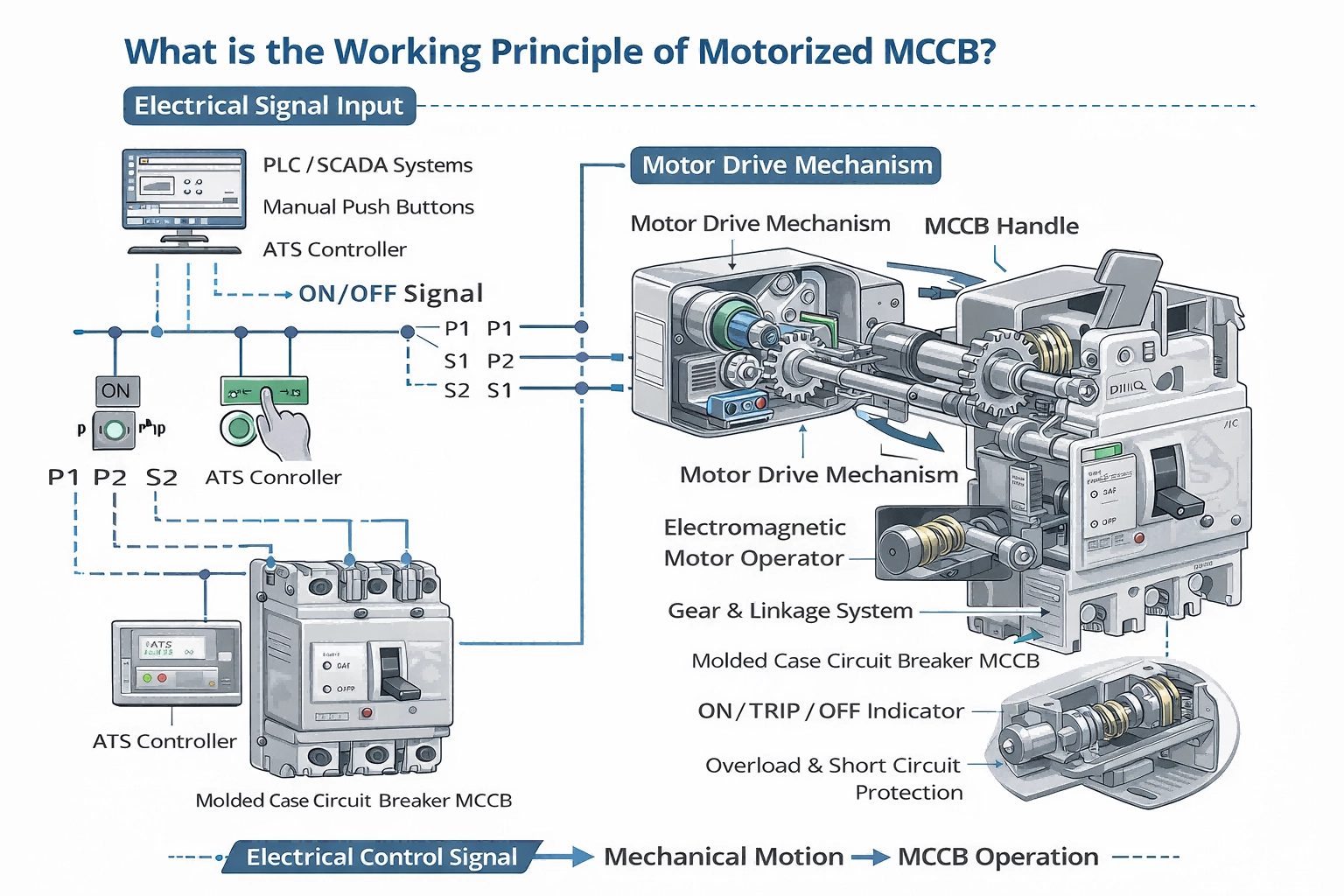
How to Use a Motorized MCCB Circuit Breaker for Remote Control and ATS Systems
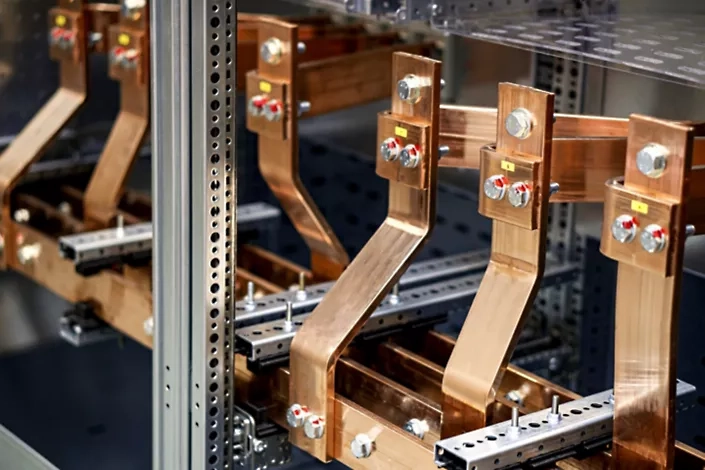
30-Day DIY Electrical Panel Cost-Saving Guide – Day 3

30-Day DIY Electrical Panel Cost-Saving Guide – Day 2
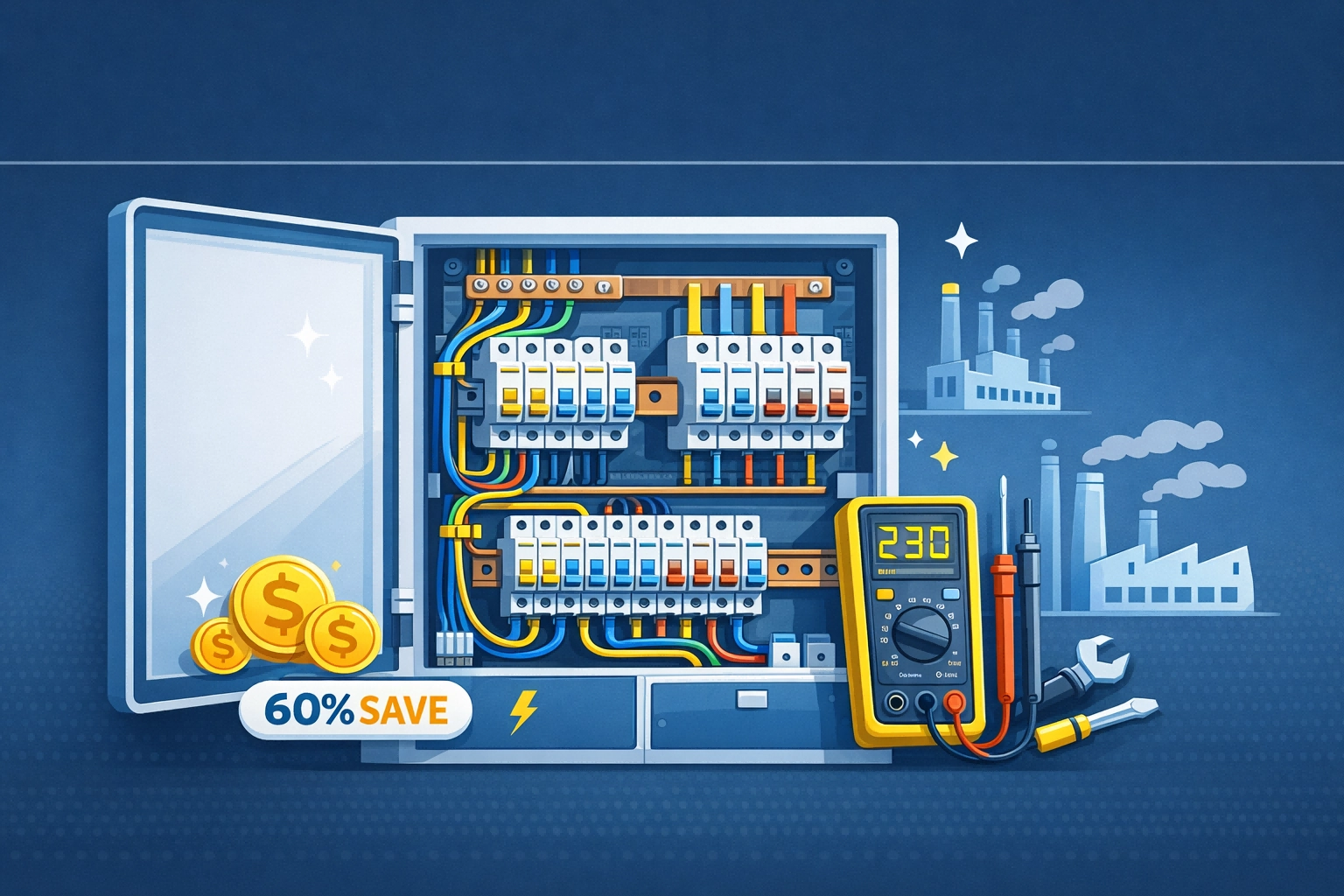
How to Build Your Own Electrical Panel and Save Up to 60% on Costs
Solar Controller with MPPT (Basic Model)
What happens if the system is installed incorrectly?
The controller features comprehensive electronic protection and self test functions to reduce the risk of damage caused by incorrect wiring or system faults.
Photovoltaic DC circuit breaker DC MCB
What systems is this DC breaker used for?
It is mainly used in solar photovoltaic systems, DC distribution boxes and battery storage systems.
NLDM1 Molded Case Circuit Breaker(MCCB)
What is the rated voltage of the M1 / NLDM1 MCCB?
The rated operating voltage is AC 400V, with insulation voltage up to 1000V.
STE18-RF Prepaid IC Card Energy Meter
What is the maximum current supported by this meter?
The STE18-RF prepaid meter typically supports a basic current of 5A and a maximum current of up to 100A, making it suitable for most residential and small commercial applications.
Three-phase power meter
Does it support harmonic analysis and multi-tariff energy measurement?
Yes, it supports 2–31 harmonic analysis and multi-tariff energy measurement.
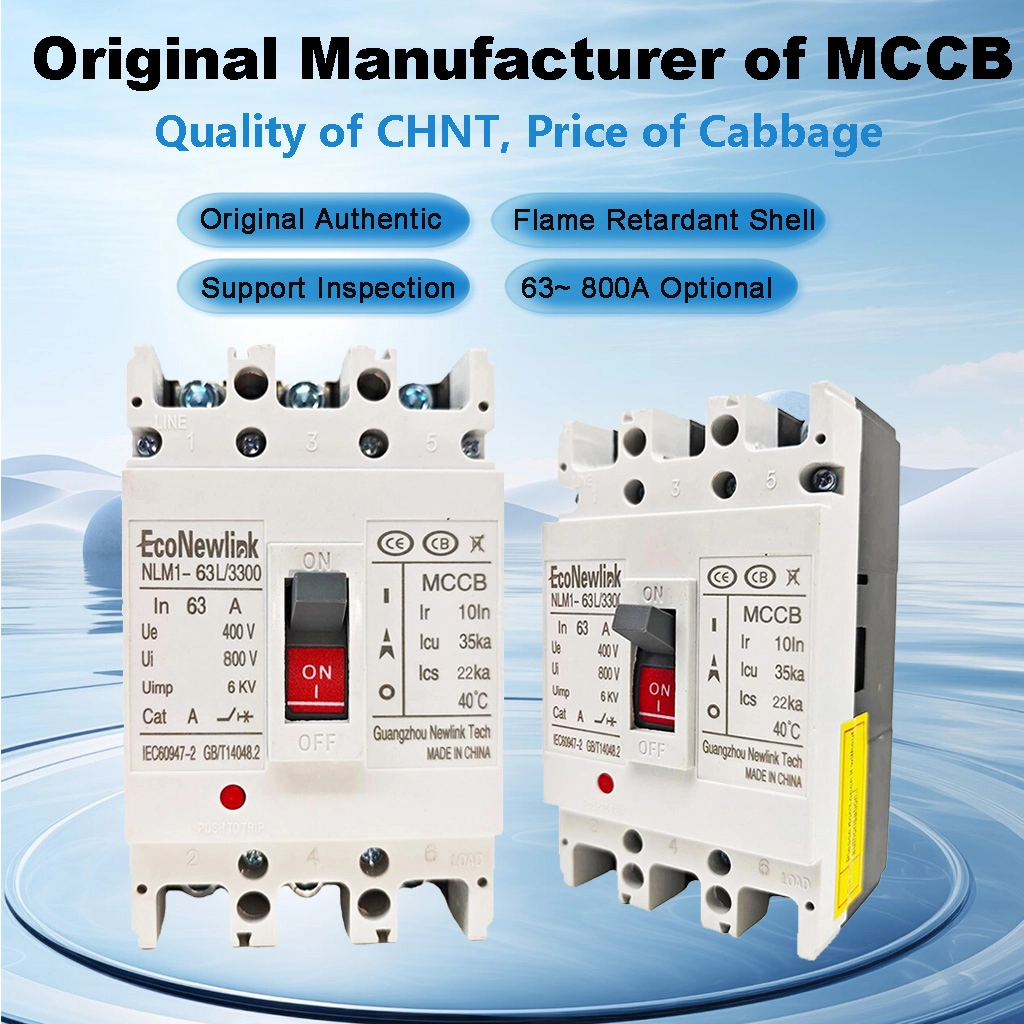
M1 / NLDM1 Series Moulded Case Circuit Breaker MCCB Manufacturer | 400V–1000V | 10A–2000A | High Breaking Capacity
The M1 / NLDM1 Series moulded case circuit breaker (MCCB) is designed for AC power distribution up to 1000V and 2000A. It provides overload, short circuit and undervoltage protection with high breaking capacity, compact design and modular accessories. Ideal for industrial, commercial and motor protection applications.
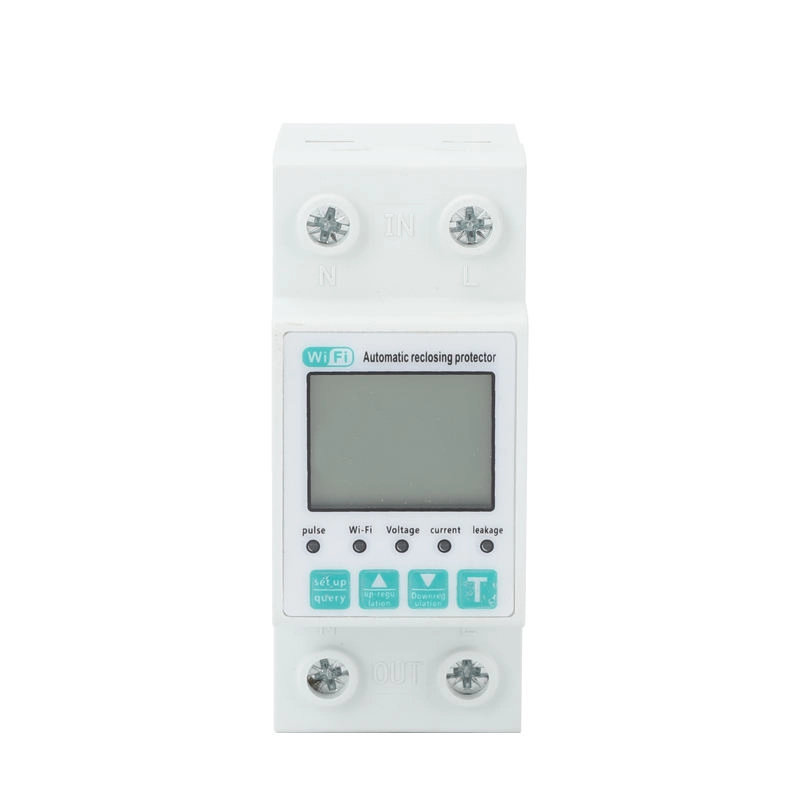
Tuya WiFi Smart Recloser 63A Single Phase kWh Meter with Timer, Earth Leakage, Over/Under Voltage and Overcurrent Protection
This Tuya WiFi smart recloser combines energy metering, timer control and multiple electrical protections in one compact device. It supports remote monitoring through the Smart Life or Tuya app, allowing users to check power data, set schedules and manage circuits conveniently. Designed for single-phase systems, it helps improve electrical safety and energy management in residential, commercial and light industrial applications.
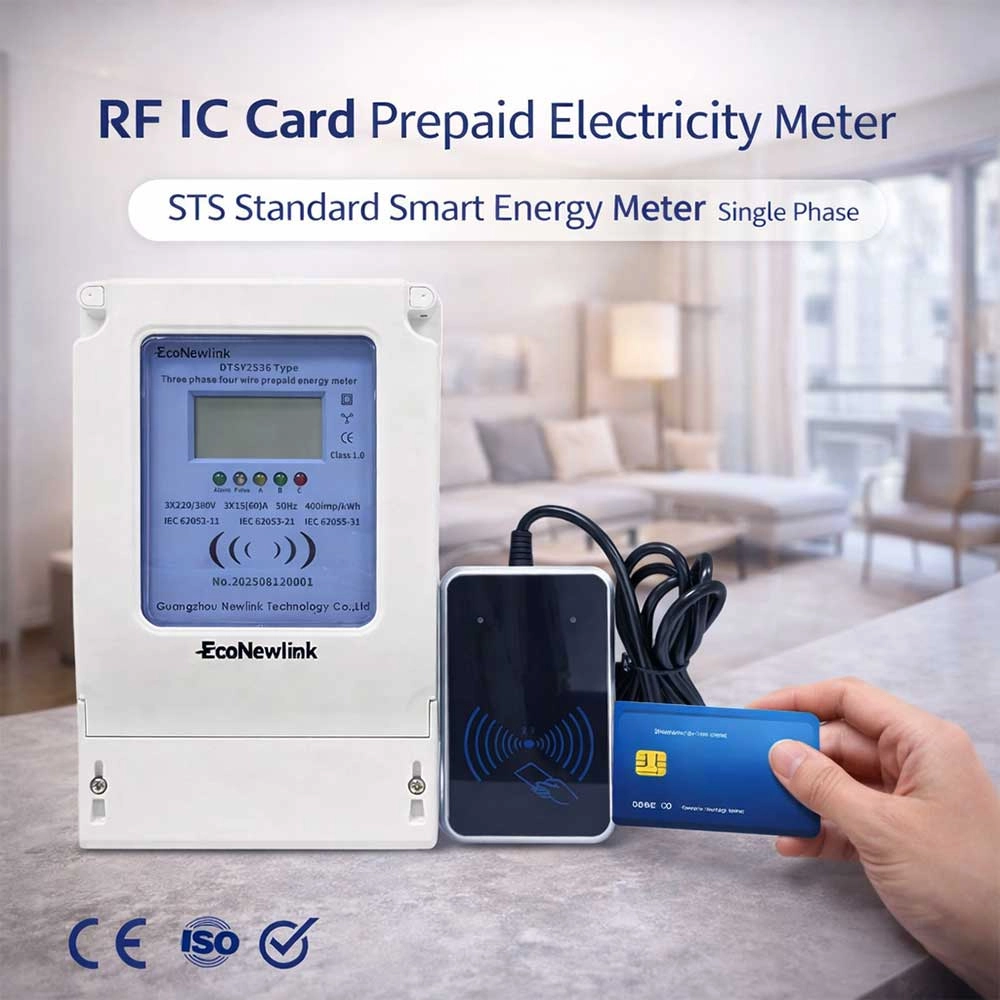
STE18-RF Prepaid IC Card Energy Meter – STS Compliant RF Smart Electricity Meter for Secure Prepaid Power Management and Vending System Integration
The STE18-RF Prepaid IC Card Electricity Meter is an STS-compliant smart energy meter designed for secure and efficient prepaid power management. Using reliable RF IC card communication, the meter enables accurate electricity data storage, token-based credit management, and seamless integration with vending systems or handheld units. Its modular plug-and-play architecture supports flexible smart metering deployment while ensuring stable performance, tamper protection, and offline operation without continuous network connectivity.
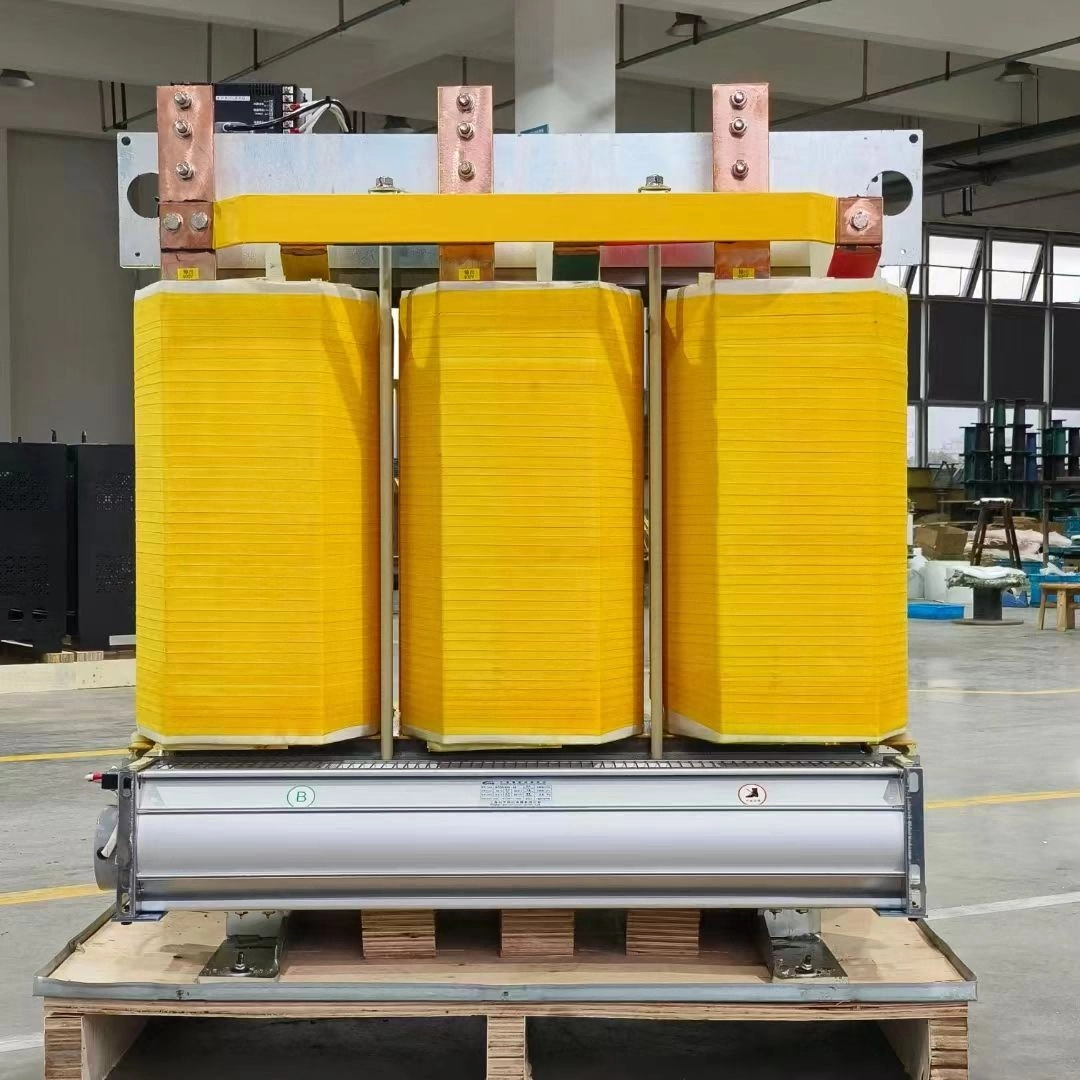
EcoNewlink Three phase transformer 25kVA Dry Type Isolation Energy Efficient Industrial
The three-phase dry-type isolation transformer is designed to provide safe, stable, and efficient power distribution for industrial and commercial applications. By electrically isolating the primary and secondary circuits, it effectively protects sensitive equipment from voltage fluctuations, electrical noise, and grounding issues, ensuring reliable system performance.
Built with high-quality insulation materials and advanced manufacturing processes, this dry-type transformer offers excellent thermal performance, low loss, and long service life without the need for oil cooling. Its environmentally friendly and fire-resistant design makes it ideal for indoor installations such as switchgear systems, control panels, data centers, factories, and commercial buildings.
With a compact structure and flexible configuration options, the transformer can be customized for different voltage levels, capacities (kVA), and installation requirements. It supports stable operation in demanding environments while reducing maintenance costs and improving overall energy efficiency.
This three-phase isolation transformer is widely used in power distribution systems, renewable energy projects, automation systems, and critical infrastructure where safety, reliability, and power quality are essential.
Request More Information or Subscribe for Updates
Thank you for reading our article!
If you would like more detailed information, have specific questions, or want to stay updated with the latest articles and guides, please fill out the form below.
Our team will get back to you with tailored information and resources.
Powering the Future with Smart, Safe Solutions
EcoNewlink delivers cutting-edge intelligent power products and solutions to ensure safety, efficiency, and reliability in your power distribution systems.
Contact
Email: nali@newlink.ltd
WhatsApp:
Address: No.76 Chuangyu road, Zengcheng District, Guangzhou, China

 WhatsApp
EcoNewlink
EcoNewlink