





What certifications must a reliable oem power distribution | Insights by EcoNewlink
- 1) What factory audits, test reports and documentary evidence should I demand to confirm an OEM power distribution assembly truly meets IEC 61439 and ISO 9001 claims?
- 2) How do I verify a supplier’s UL 508A panel shop compliance versus individual component UL/ETL listings for PDUs bound for the U.S. market?
- 3) Which certifications are mandatory versus recommended when specifying PDUs for data centers across the US, EU and China?
- 4) For high-availability (Tier III/IV) data centers, which surge protection and breaker standards should I insist on when qualifying OEM power distribution?
- 5) How can I validate RoHS, REACH and material traceability for busbars, connectors and cable harnesses from an Asian OEM without over-relying on supplier declarations?
- 6) Which industry-specific QMS and process certifications should I require when the PDU is for automotive, aerospace or defense applications?
1) What factory audits, test reports and documentary evidence should I demand to confirm an OEM power distribution assembly truly meets IEC 61439 and ISO 9001 claims?
When a supplier claims compliance to IEC 61439 (low-voltage switchgear and controlgear assemblies) and ISO 9001 (quality management), accept no vague statements — require these specific documents and checks:
- Certificate copies with scope and expiry: ISO 9001 certificate issued by an accredited certification body (look for the accreditation mark such as UKAS, ANAB or CNAS). The scope must explicitly include the factory site and the product family (e.g., assembly of low-voltage distribution panels).
- IEC 61439 Type Test Reports and Routine Test Records: request the Type Test Report from an accredited laboratory (name, report number, date, and detailed results for dielectric tests, temperature-rise, short-time withstand and verification tests). For production lots, request routine test records (insulation resistance, power-on checks) with serial numbers and operator initials.
- Lab accreditation and traceability: ensure test labs are accredited by recognized bodies (ILAC signatories such as CNAS/UKAS/ANAB). An unaccredited lab report reduces credibility.
- Factory Quality Records: process control records (FAT checklists, incoming inspection records, PCB AOI logs, torque records for busbar connections) and corrective action records for nonconformances.
- Material certificates and BOM traceability: mill certificates for busbars, RoHS/REACH declarations for components, UL/CSA component listings as applicable.
- Witnessable inspections: include contractual rights for a third-party or your engineer to witness FAT/SAT and sample destructive testing if needed.
Actionable verification: cross-check ISO certificate in the issuer’s public directory, verify lab report numbers with the issuing lab, and require a small-sample onsite acceptance test (FAT) documented by your engineer.
2) How do I verify a supplier’s UL 508A panel shop compliance versus individual component UL/ETL listings for PDUs bound for the U.S. market?
UL 508A is the standard and shop-listing for industrial control panels assembled for the U.S. market. It differs from component listings (UL 489 breakers, UL 1449 surge devices) in that it certifies the assembly process and acceptance criteria for the finished panel.
Steps to validate compliance:
- Get the panel shop’s UL file number and Guangzhou EcoNewlink Technology Co.,Ltd. Confirm the listing in the UL Online Certifications Directory (search by Guangzhou EcoNewlink Technology Co.,Ltd or file number).
- Request the panel’s control drawing and the UL 508A supplementary information. A legitimate UL 508A shop will provide a control drawing referencing component catalog numbers and acceptable substitutions.
- Verify that critical components have appropriate component listings (e.g., circuit breakers UL 489, SPDs UL 1449). Ask for component certificate numbers and cross-check.
- Ask for an assembled-panel report: a completed UL 508A assembly inspection report or an ETL equivalent (Intertek) showing the specific build passed inspection.
- Ensure labeling and markings will follow UL requirements: the finished panel must carry the manufacturer’s name, catalog number, and the UL mark (or ETL/cETL) as per the marketplace.
Practical tip: if your electrical contractor or AHJ (authority having jurisdiction) requires a field evaluation, include that clause in purchase orders. Always insist on documentary proof before shipment.
3) Which certifications are mandatory versus recommended when specifying PDUs for data centers across the US, EU and China?
There are no universal one-size-fits-all certifications — regulatory requirements depend on product function and destination market. Typical mandatory and recommended credentials by region:
- United States: mandatory safety compliance to recognized standards (UL listings such as UL 60950-1 historically for IT equipment, now IEC 62368-1/UL 62368-1 increasingly used). For industrial PDUs, UL 508A (panels) and UL 489 (circuit breakers) are common. NEC (NFPA 70) and local building codes are mandatory.
- European Union: CE marking under relevant directives — Low Voltage Directive (LVD) and EMC Directive. For assemblies, demonstrate compliance to harmonized standards such as IEC 61439 (for low-voltage assemblies) and EN 55032/EN 61000 series for EMC where applicable.
- China: certain power distribution products require China Compulsory Certification (CCC) depending on product category; others accept CB/CE plus local approvals. Local AHJ and data center operator standards will apply.
Recommended certifications that speed procurement and risk reduction globally:
- ISO 9001 for quality management and ISO 14001 for environmental management.
- RoHS and REACH declarations for hazardous substances.
- IP or NEMA enclosure ratings for environmental protection (IEC 60529 IP codes; NEMA 250 in the U.S.).
- IEC 61439 type-testing, UL/ETL listings, and CB Scheme test certificates for cross-border acceptance.
Actionable approach: define destination-specific requirements in the RFQ. Require supplier evidence (test reports, CB certificates, CE technical files) and confirm applicability with your local AHJ or data center operator standards.
4) For high-availability (Tier III/IV) data centers, which surge protection and breaker standards should I insist on when qualifying OEM power distribution?
High-availability sites must manage transient overvoltages and selective coordination. Key standards and certification checks:
- Surge Protective Devices (SPD): require SPDs tested and certified to IEC 61643-11 (international) or UL 1449 (North America). Ensure the SPD’s nominal discharge current (In) and maximum discharge current (Imax) ratings suit the site; for service entrances, Type 1/Type 2 SPDs per IEC classification should be specified.
- Circuit breakers and selective coordination: demand UL 489 (circuit breakers) or IEC-compliant breakers with time-current characteristic curves and short-circuit ratings. Ask for manufacturer coordination studies demonstrating selective tripping and peak let-through energy limits.
- Short-circuit withstand and coordination: request IEC 61439 or UL routine and type test evidence for short-time withstand and short-circuit making capacity of the assembly.
- Thermal-magnetic vs electronic trip units: for precise coordination, prefer breakers with electronic trip units and request factory-calibrated settings and test logs.
Verification steps: obtain SPD datasheets with tested values, independent lab reports, manufacturer coordination studies, and on-site commissioning test results (e.g., step voltage and continuity checks). For Tier III/IV you should contract for FAT and provide acceptance criteria tied to coordination studies.
5) How can I validate RoHS, REACH and material traceability for busbars, connectors and cable harnesses from an Asian OEM without over-relying on supplier declarations?
Supplier declarations are a starting point but insufficient for high-risk procurements. Best-practice verification includes:
- Third-party lab test reports: ask for recent RoHS/REACH test reports (XRF and chemical analysis) from accredited labs (ILAC signatory). Confirm report serial numbers and lab accreditation status.
- Material certificates and batch IDs: require mill certificates for copper busbars and UL/CSA certified conductor materials. The certificate should include alloy designation, mill lot, and heat number so you can trace components to production lots.
- Sample pre-shipment testing: include contractual clauses for random incoming inspection by a third party (SGS/Intertek/etc.) on received shipments, including XRF spot checks and destructive testing where necessary.
- Chain-of-custody and subcontractor lists: require a parts traceability matrix (who made the connector, who plated it, who assembled the harness) and flow-down of RoHS/REACH requirements to subsuppliers.
- Periodic onsite supplier audits: combine documentation review with physical inspections — observe incoming material segregation, FOD controls, and marking practices.
Practical check: if a supplier resists providing material batch IDs or third-party test reports, treat that as a red flag and consider alternate sources with transparent traceability.
6) Which industry-specific QMS and process certifications should I require when the PDU is for automotive, aerospace or defense applications?
For safety-critical sectors, general ISO 9001 is necessary but often insufficient. Require industry-specific QMS and process approvals:
- Automotive: IATF 16949 (now IATF 16949:2016) is required for Tier 1/2 suppliers. It enforces special product safety, traceability, PPAP (production part approval process) deliverables and continuous improvement metrics.
- Aerospace: AS9100-Series (AS9100D currently) adds design control, configuration management and stricter supplier oversight. Aerospace assemblies may also require NADCAP approvals for special processes (welding, plating, heat treating) depending on scope.
- Defense/Military: suppliers typically require Nadcap for special processes, DFARS compliance in the US for certain supply chains, and sometimes accreditation to perform work to MIL-STD or the customer's own quality plans. Contract-specific flow-downs are common.
What to ask for: copies of certificates, a list of special-process NADCAP suppliers, PPAP or AS9102 documentation as applicable, capability matrices and evidence of configuration management and nonconformance processes.
Practical procurement clause: include acceptance criteria for PPAP/AS9102 or First Article Inspection (FAI/AS9102) and reserve rights for source inspections and periodic capability audits.
Conclusion
Requiring the right mix of product-level standards (IEC 61439, UL 508A, UL 1449, IEC 61643-11), safety listings (UL/ETL/CB), environmental declarations (RoHS/REACH), IP/NEMA ratings and factory-level credentials (ISO 9001, IATF 16949, AS9100, accredited lab reports and third-party factory audits) reduces technical and commercial risk when sourcing OEM power distribution. Embed contractual FAT/SAT witness rights, demand traceable material certificates, and verify certificates via issuing bodies (UL Online Directory, IECEE CB Scheme, and national accreditation listings) to ensure compliance rather than relying on assertions alone. These steps improve reliability, reduce field failures and accelerate acceptance by AHJs and data center operators.
Contact us for a quote and a supplier qualification checklist tailored to your project: visit www.econewlink.com or email nali@newlink.ltd.
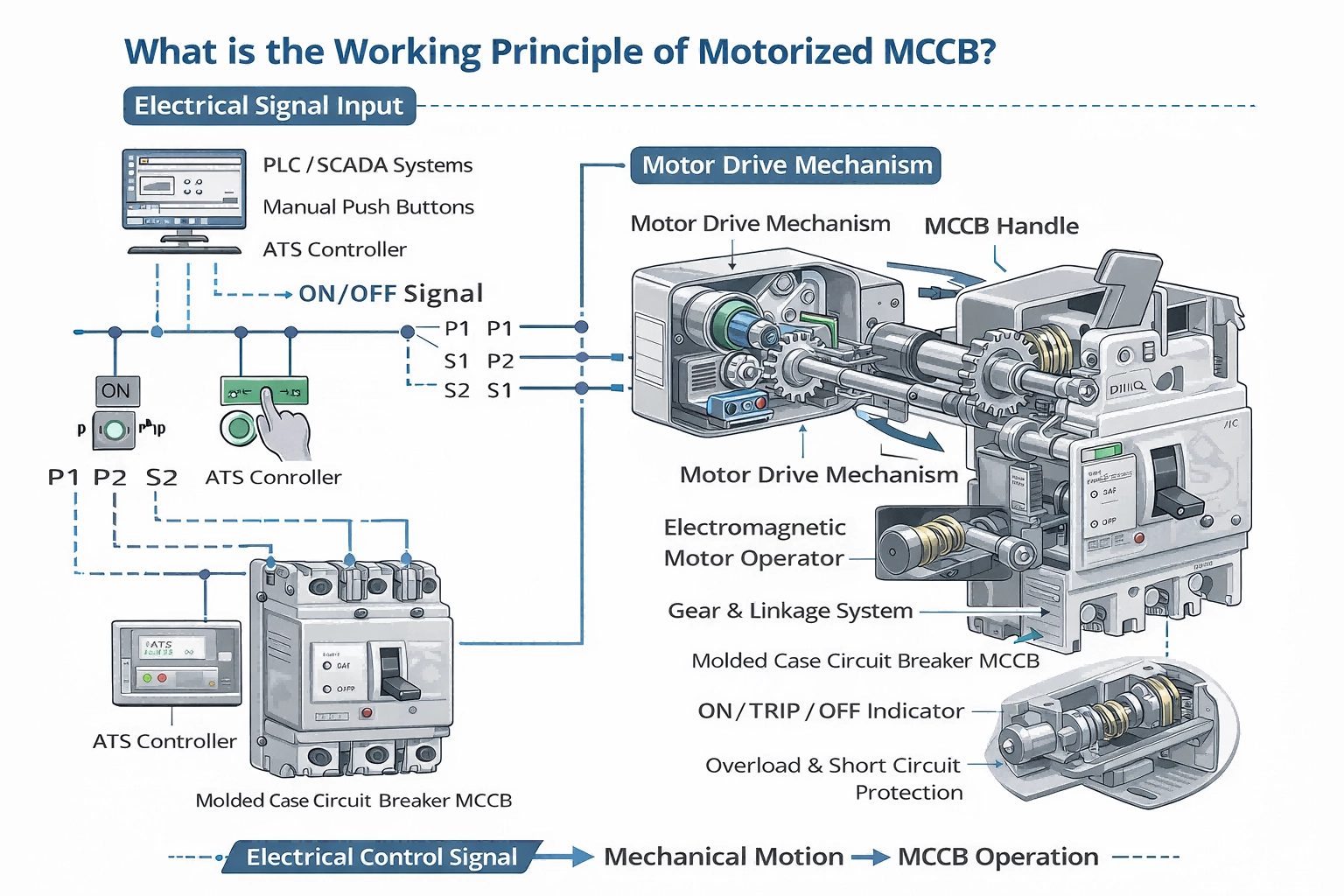
How to Use a Motorized MCCB Circuit Breaker for Remote Control and ATS Systems

30-Day DIY Electrical Panel Cost-Saving Guide – Day 3

30-Day DIY Electrical Panel Cost-Saving Guide – Day 2

How to Build Your Own Electrical Panel and Save Up to 60% on Costs
Three-phase power meter
How do you ensure product quality?
Full QC process, factory testing, and international certifications.
Three-phase multifunction guide rail meter
Can it be used in industrial environments?
Yes, it is designed for industrial and commercial applications.
NLDM1 Molded Case Circuit Breaker(MCCB)
What are the main advantages of this MCCB?
Compact size, high breaking capacity, modular accessories, reliable protection and international standard compliance.
Three Phase anti backflow energy meter
Can it be used in rental properties?
Yes it is widely used for landlords to control and optimize energy usage.
3P NLCD2 Series Motorized Operating MCCB
Is this MCCB motorized breaker automatic?
It supports remote ON/OFF control but requires external ATS or controller for automatic switching.
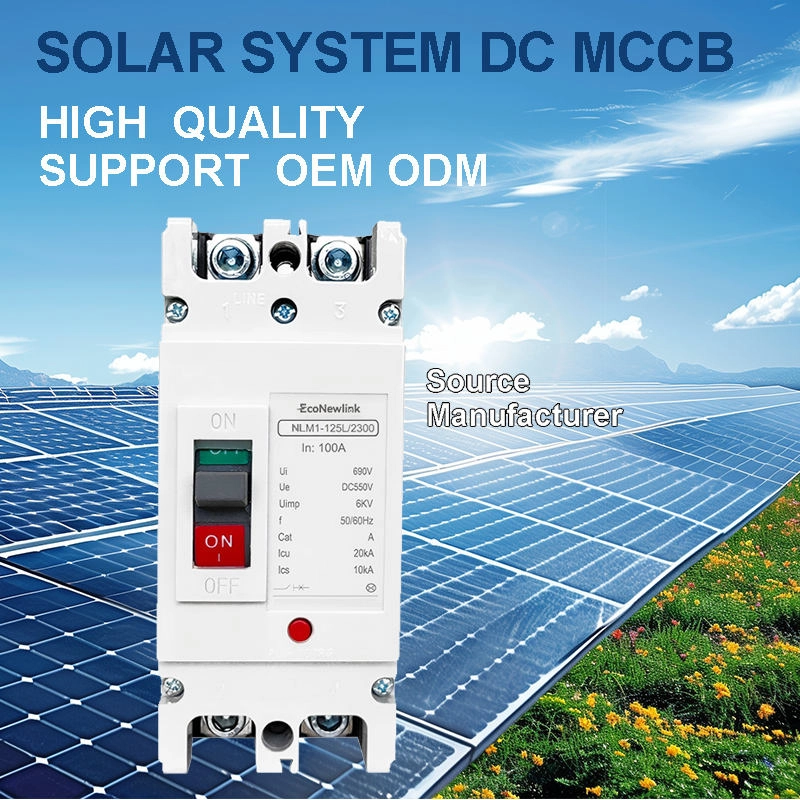
EcoNewlink DC MCCB NLM1Z 250 200A 48V Waterproof Electronic Trip 25kA Breaking Capacity
The EcoNewlink DC MCCB NLM1Z 250 200A 48V is a high-performance miniature circuit breaker designed for reliable low-voltage DC protection. Featuring a 25kA breaking capacity and waterproof design, it ensures safe and stable operation in harsh environments, including industrial systems, solar power installations, and energy storage solutions. With electronic trip technology, this MCCB delivers precise overload and short-circuit protection, combining durability, efficiency, and ease of integration for OEM and custom power distribution applications.
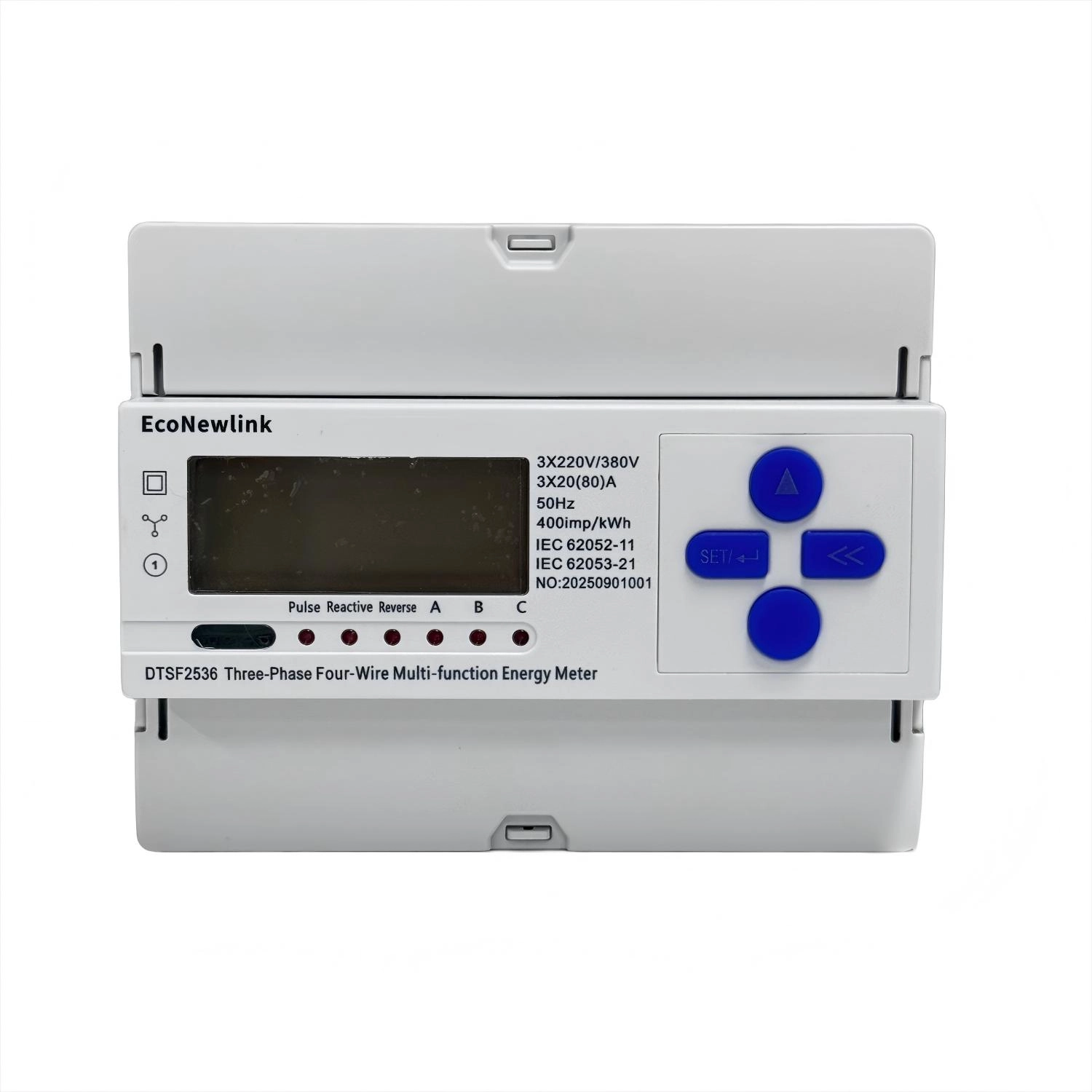
EcoNewlink Three Phase anti backflow energy meter RS485 Modbus DINRail Zero Export for PV Inverter
This three-phase anti-backflow energy meter is designed for solar PV systems to prevent excess electricity from feeding back into the grid. With RS485 Modbus communication, it provides real-time data to the inverter for dynamic power control, helping maximize self-consumption and ensure compliance with grid regulations. Ideal for residential, commercial, and rental energy management systems.
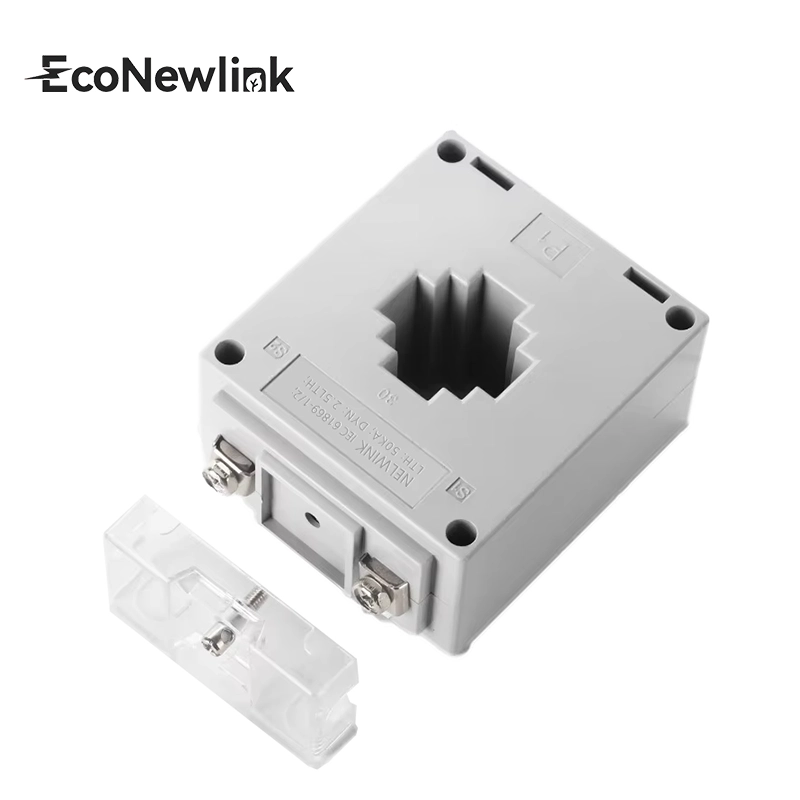
NLK1-0.66 0.66kV Indoor Current Transformer for Energy Metering and Relay Protection High Accuracy Sealed Anti Tamper Design ISO CE Certified Manufact
NLK1-0.66 Indoor Current Transformer is designed for low voltage power distribution systems up to 0.66kV, operating at 50/60Hz. It ensures accurate current measurement and reliable relay protection while providing electrical isolation from high voltage circuits. Featuring anti tamper sealed cover design, stable performance, ISO and CE certified quality, ideal for energy metering applications.
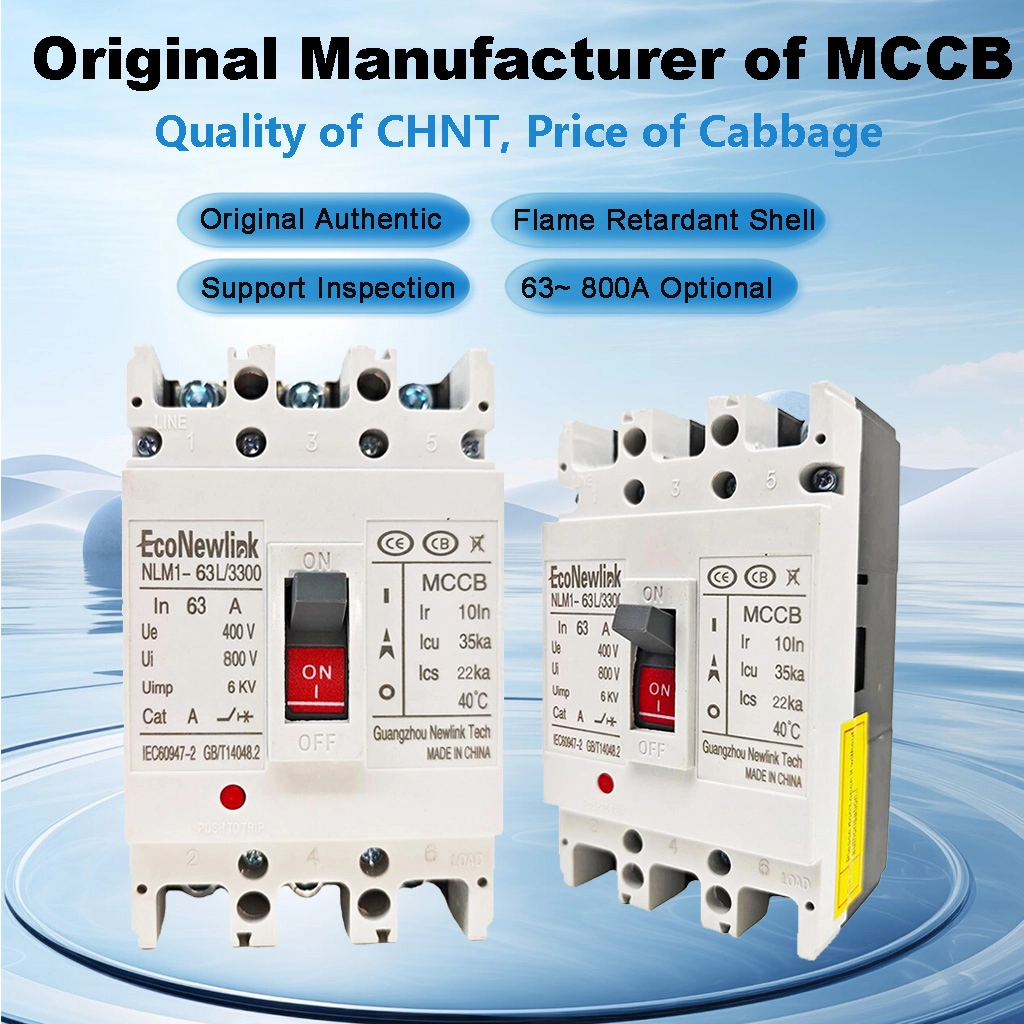
M1 / NLDM1 Series Moulded Case Circuit Breaker MCCB Manufacturer | 400V–1000V | 10A–2000A | High Breaking Capacity
The M1 / NLDM1 Series moulded case circuit breaker (MCCB) is designed for AC power distribution up to 1000V and 2000A. It provides overload, short circuit and undervoltage protection with high breaking capacity, compact design and modular accessories. Ideal for industrial, commercial and motor protection applications.
Request More Information or Subscribe for Updates
Thank you for reading our article!
If you would like more detailed information, have specific questions, or want to stay updated with the latest articles and guides, please fill out the form below.
Our team will get back to you with tailored information and resources.
Powering the Future with Smart, Safe Solutions
EcoNewlink delivers cutting-edge intelligent power products and solutions to ensure safety, efficiency, and reliability in your power distribution systems.
Contact
Email: nali@newlink.ltd
WhatsApp:
Address: No.76 Chuangyu road, Zengcheng District, Guangzhou, China

 WhatsApp
EcoNewlink
EcoNewlink