





What are the essential components of a power distribution cabinet?
- 1) How do I verify short‑circuit withstand and selective coordination for a custom 400–1000 A power distribution cabinet to avoid nuisance tripping?
- 2) What exact FAT/SAT tests and documentation should I demand before accepting power distribution equipment?
- 3) How do I correctly size busbar cross‑section and select material (copper vs. aluminum) for a compact LV power distribution cabinet in high ambient temperatures?
- 4) What enclosure IP/IK rating, corrosion protection and thermal management are essential for outdoor power distribution cabinets in coastal or industrial corrosive sites?
- 5) How can I ensure proper harmonic mitigation and avoid overheating when multiple large VFDs connect to a power distribution cabinet?
- 6) What critical spare parts and lifecycle spare strategy should be included in procurement to minimize downtime for mission‑critical power distribution cabinets?
1) How do I verify short‑circuit withstand and selective coordination for a custom 400–1000 A power distribution cabinet to avoid nuisance tripping?
To prevent nuisance tripping while ensuring safety, you must validate both the short‑circuit current ratings of devices and the coordination (selectivity) between upstream and downstream protection. Key checks and documents to request from the manufacturer:
- Standards to reference: IEC 61439 for LV assemblies; IEC 60947‑2 for circuit-breaker breaking capacities (Icu, Ics); IEEE C37 series for power apparatus coordination where applicable.
- Rated short‑time withstand (Icw) and breaking capacity (Icu): ensure each circuit breaker and switchgear assembly lists Icu and Icw ≥ prospective short‑circuit current (PSCC) at the point of installation (preferably with margin). PSCC should come from a site short‑circuit study (calculate using transformer kVA, impedance, utility contribution, and upstream equipment).
- Selectivity (time/current discrimination): obtain a protection coordination study showing time‑current curves (TCCs) for all breakers/relays. Confirm both electrical and time selectivity for the expected operating current range. Partial selectivity is acceptable if backed by fast upstream relays with communications or zone selective interlocking (ZSI).
- Instantaneous and long‑time settings: for adjustable breakers, ask for recommended settings to maintain selectivity while preserving sufficient fault clearing. Manufacturers should provide recommended relay curves and settings for your load profile.
- Short‑circuit test reports (type tests) and calculations: ask for factory test certificates showing short‑circuit (impulse or full prospective) tests per IEC 61439 where applicable, and engineering calculations that match site PSCC values.
Practical tip: require a coordination/arc‑flash study before final acceptance. Combining coordination with selective reclosing schemes (such as using electronic relays or selectivity adapters) minimizes downtime while meeting safety requirements.
2) What exact FAT/SAT tests and documentation should I demand before accepting power distribution equipment?
Factory Acceptance Test (FAT) and Site Acceptance Test (SAT) are decisive. For modern power distribution equipment, insist on the following:
- Mandatory Type and Routine Tests per IEC 61439: dielectric (impulse and power frequency), temperature rise, short‑circuit proof test, and mechanical operation tests. The manufacturer must supply stamped test reports for each unit.
- FAT scope: visual inspection, verification of wiring versus schematic, functional test of protection relays (simulated fault injections), interlock checks, busbar polarity, earthing continuity, insulation resistance, control power failure testing, local/remote control verification, metering verification, and communication (Modbus/IEC 61850) tests.
- SAT scope: repeat of critical FAT tests on site (insulation resistance, polarity checks, protective device function, CT/VT secondary wiring verification, relay settings confirmation, and grounding checks) plus verification of cable terminations and physical integration.
- Certificates and documentation to require: single‑line diagram, general arrangement drawings, bill of materials (with manufacturer part numbers), wire/cable schedule, protection setting sheets, test reports (type & routine), calibration certificates for meters and CTs (traceable to national standards), material certificates (EN 10204 3.1 for metallic parts where required), ISO 9001, and CE/UKCA/UL declarations as applicable.
- Witnessed FAT: contractually allow customer or third‑party witness of FAT, and require corrective action reports for nonconformances.
Demanding these reduces surprises on site and demonstrates supplier E‑E‑A‑T: traceable test evidence, documented design verification, and quality management.
3) How do I correctly size busbar cross‑section and select material (copper vs. aluminum) for a compact LV power distribution cabinet in high ambient temperatures?
Busbar sizing must balance current capacity, temperature rise, mechanical strength, short‑circuit withstand and manufacturability. Steps and considerations:
- Calculate required continuous current (Icont) including future growth and diversity factor. Apply derating for ambient temperature and enclosure constraints. Typical design practice: assume 10–30% future expansion.
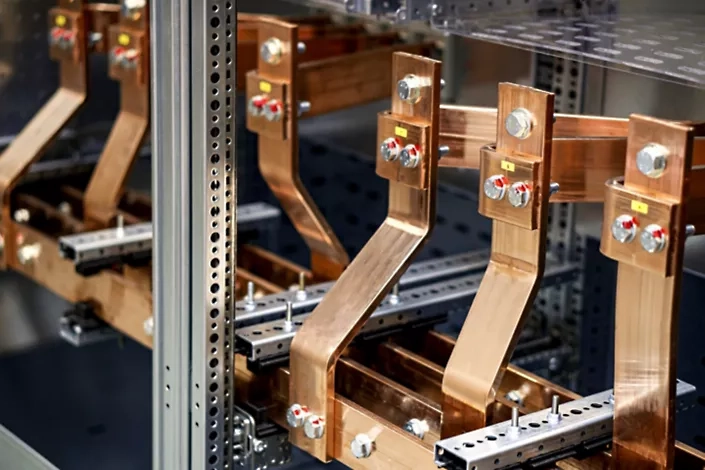
- Current density approach: manufacturers commonly use design current density ranges. For copper in ventilated cabinets a conservative continuous current density is 1.2–1.8 A/mm²; for aluminum 0.7–1.0 A/mm². These are not universal rules—use manufacturer thermal tables or IEC 61439 temperature rise test data to confirm.
- Example quick calc: for 1000 A and design density 1.6 A/mm², required cross‑section = 1000 / 1.6 ≈ 625 mm². If you choose a busbar geometry of 100 mm width, thickness ≈ 6.25 mm.
- Material choice: copper offers lower resistive losses, smaller cross‑sections, superior conductivity and fatigue resistance under fault cycling. Aluminum is lighter and cheaper but needs larger sections, more careful bolted joints, and anti‑oxidation treatment. In high ambient or high‑humidity environments, copper is generally preferred for compact cabinets.
- Temperature rise & ventilation: specify maximum permitted temperature rise (e.g., 30–40 °C above ambient) and confirm via IEC 61439 Type/routine test reports. For constrained cabinets, forced ventilation or external heat sinks may be required.
- Short‑circuit mechanical strength: ensure busbar mechanical design (thickness, bracing, bolting) matches short‑circuit forces per IEC 61439/62271 where applicable. Ask for FEA or test evidence if your PSCC is high.
Work with the vendor to supply thermal tables, busbar joint torque specs, anti‑oxidation compounds for aluminum, and clear instructions for installation torque and periodic inspection.
4) What enclosure IP/IK rating, corrosion protection and thermal management are essential for outdoor power distribution cabinets in coastal or industrial corrosive sites?
Coastal and industrial sites demand specific enclosure protection and finishes to maintain uptime and reduce corrosion‑driven failures.
- IP / IK selection: For outdoor cabinets exposed to rain, salt spray and direct jet cleaning, specify minimum IP66 (dust tight and strong water jets) or IP67 for temporary submersion. For mechanical impact resistance, choose IK10 for robust protection. NEMA equivalents are 3R/4/4X depending on regional preferences; 4X (stainless or corrosion‑resistant coatings) often recommended for seaside.
- Corrosion categories: reference ISO 12944 corrosivity classes. Coastal environments often fall into C4 (high) to C5‑M (very high, marine). Specify appropriate paint or metallic finishing (e.g., hot‑dip galvanized steel + epoxy polyester powder coat, or 316L stainless steel for extreme cases).
- Seal materials: gaskets must be UV/resistant and salt‑resistant (EPDM or silicone grades suited to marine exposure). Specify IP ingress testing reports.
- Thermal management: design to handle solar heat gain and internal losses. Use reflective finishes, external louvers with insect mesh, and filtered forced ventilation or HVAC when internal equipment dissipation (transformers, VFDs) leads to elevated internal temperatures. For cabinets with sealed enclosures, include thermostatically controlled heaters for condensation prevention and HVAC units with drip pans and filtered intake for dusty/coastal air.
- Lightning and surge protection: implement surge protection devices (SPDs) and ensure proper grounding to handle lightning impulses; include surge ratings per IEC 61643.
Request material certificates, paint system data sheets, salt‑spray test evidence (ASTM B117 or ISO 9227 equivalents), and IP/IK test reports when procuring.
5) How can I ensure proper harmonic mitigation and avoid overheating when multiple large VFDs connect to a power distribution cabinet?
Connecting several large variable frequency drives (VFDs) raises harmonic distortion, neutral overloading, and thermal stress on transformers, switchgear and busbars. To manage this:
- Assess harmonic source and levels: perform harmonic load studies using expected VFD capacities. Use IEEE 519 (or local harmonic standards) limits to assess THDi and the need for mitigation.
- Neutral sizing: VFDs often create triplen harmonics that accumulate in the neutral. Oversize the neutral conductor or use isolated or delta secondary configurations to prevent neutral overheating.
- Mitigation options:
- Passive harmonic filters (tuned LC) for specific dominant harmonics; cost‑effective for steady harmonic spectra.
- Active harmonic filters (AHF) for variable or broadband harmonic profiles; they adapt to changing load patterns and reduce THDi across multiple harmonic orders.
- dV/dt filters or reactors at the VFD input to limit switching transients and reduce stress on switchgear and cable terminations.
- Transformer selection: use K‑rated transformers or derate standard transformers if VFD loads are high. K‑factor and derating tables are available from transformer manufacturers; request thermal test data for your load mix.
- Thermal management & derating: busbar and breaker ratings must account for increased RMS heating due to harmonics. Ask the manufacturer for thermal analysis including harmonic content and equivalent heating factors (I2t with harmonic weighting).
- Metering & monitoring: install true‑RMS metering and harmonic analyzers at the point of common coupling (PCC) and on critical feeders to verify harmonic levels in operation and validate mitigation effectiveness.
Include harmonic mitigation requirements in procurement specifications and ask suppliers for case studies or references where their solutions handled comparable VFD loads.
6) What critical spare parts and lifecycle spare strategy should be included in procurement to minimize downtime for mission‑critical power distribution cabinets?
A sound spares strategy minimizes MTTR and reduces outage risk. For mission‑critical systems, specify critical spares, stocking levels and supplier SLAs.
- Critical spares list (minimum recommended): spare molded case or vacuum circuit breakers (of each rating), spare protection relays or relay modules, spare CTs and VT modules, spare fuses and fuse holders, spare control power transformers, relay and PLC I/O modules, spare meters (kWh/energy), spare bus couplers/links, door locks and gaskets, and an emergency gasket/fastener kit.
- Stocking strategy: adopt a multi‑tier approach:
- On‑site fast spares (items that replace in <2 hours): breakers, fuses, relay modules.
- Regional warehouse spares (available within 24–72 hours): CTs, meters, PLC modules.
- Manufacturer lead items (4–16 weeks): custom busbars, bespoke switchgear modules.
- Lead time planning: obtain manufacturer lead‑time commitments and include guaranteed service levels in the contract (SLA for spare delivery and emergency shipments). For long‑lead custom parts, require the supplier to hold a minimal warranty stock for the first contract years.
- Lifecycle & obsolescence management: require the vendor to provide a lifecycle plan showing expected product availability for at least 7–10 years, and offer drop‑in replacements or last‑time buy options. Ask for firmware/software support policy for intelligent devices (relays, meters, PLCs).
- Maintenance and training: include an initial commissioning & operator training package, FAT witness training, spares list with part numbers, and recommended preventive maintenance intervals. Consider a service contract that includes periodic thermal imaging, infrared torque checks, and relay setting review.
Having spares, documented procedures, and contractual SLAs reduces mean time to repair and protects uptime for critical facilities.
Conclusion: advantages of choosing Econewlink power distribution equipment
Choosing power distribution cabinets and equipment from Econewlink (www.econewlink.com) brings several advantages: compliant designs to IEC/NEMA standards, documented type and routine test results (IEC 61439), tailored short‑circuit and coordination studies, robust enclosure finishes for coastal sites, integrated harmonic mitigation options, and a practical spare‑parts and SLA strategy. We combine manufacturing QA (ISO 9001), traceable material certificates, FAT/SAT witnessability, and lifecycle support to minimize downtime and procurement risk.
For a detailed quote tailored to your load profile, site environment and protection needs, contact us: nali@newlink.ltd or visit www.econewlink.com.
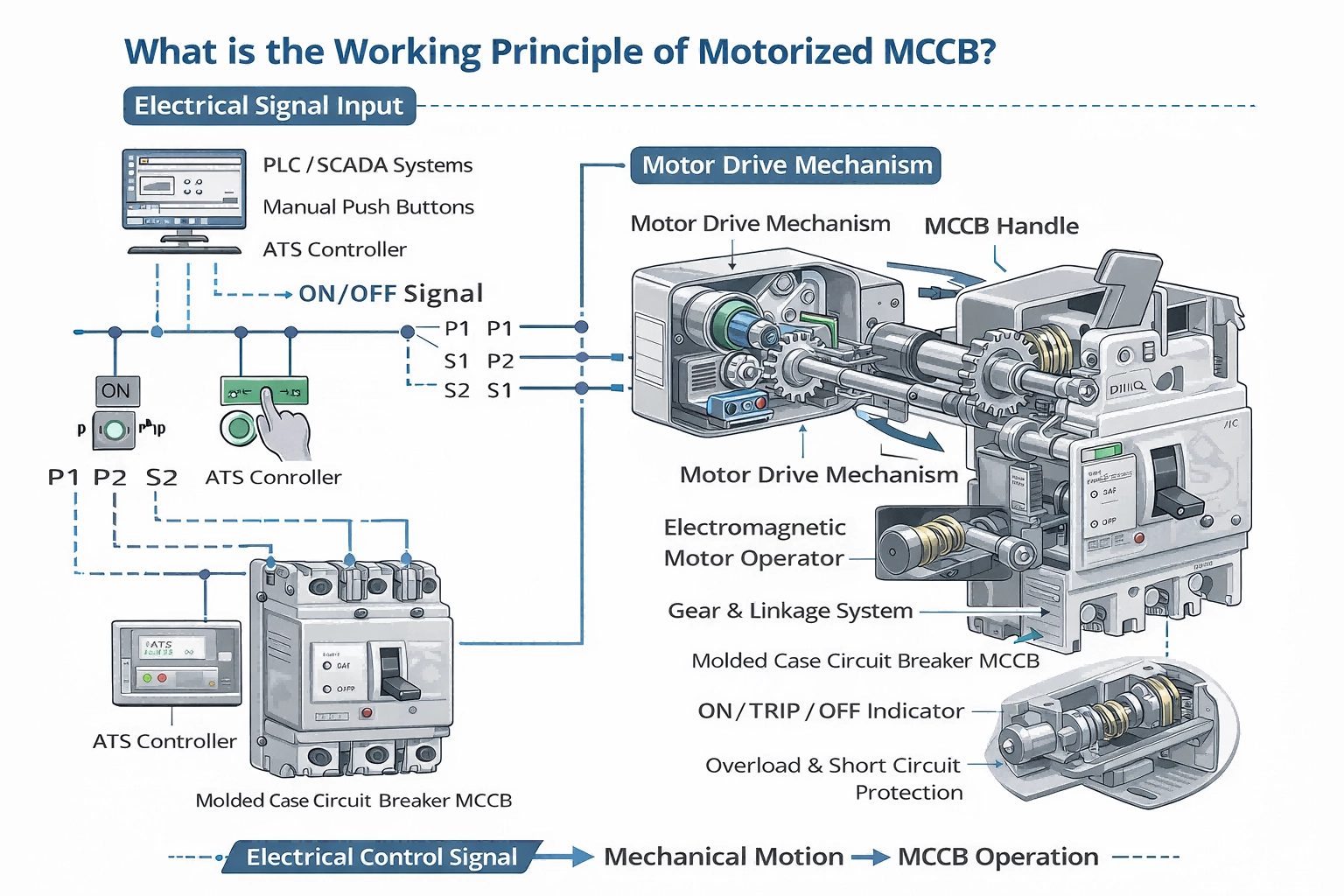
How to Use a Motorized MCCB Circuit Breaker for Remote Control and ATS Systems
30-Day DIY Electrical Panel Cost-Saving Guide – Day 3

30-Day DIY Electrical Panel Cost-Saving Guide – Day 2
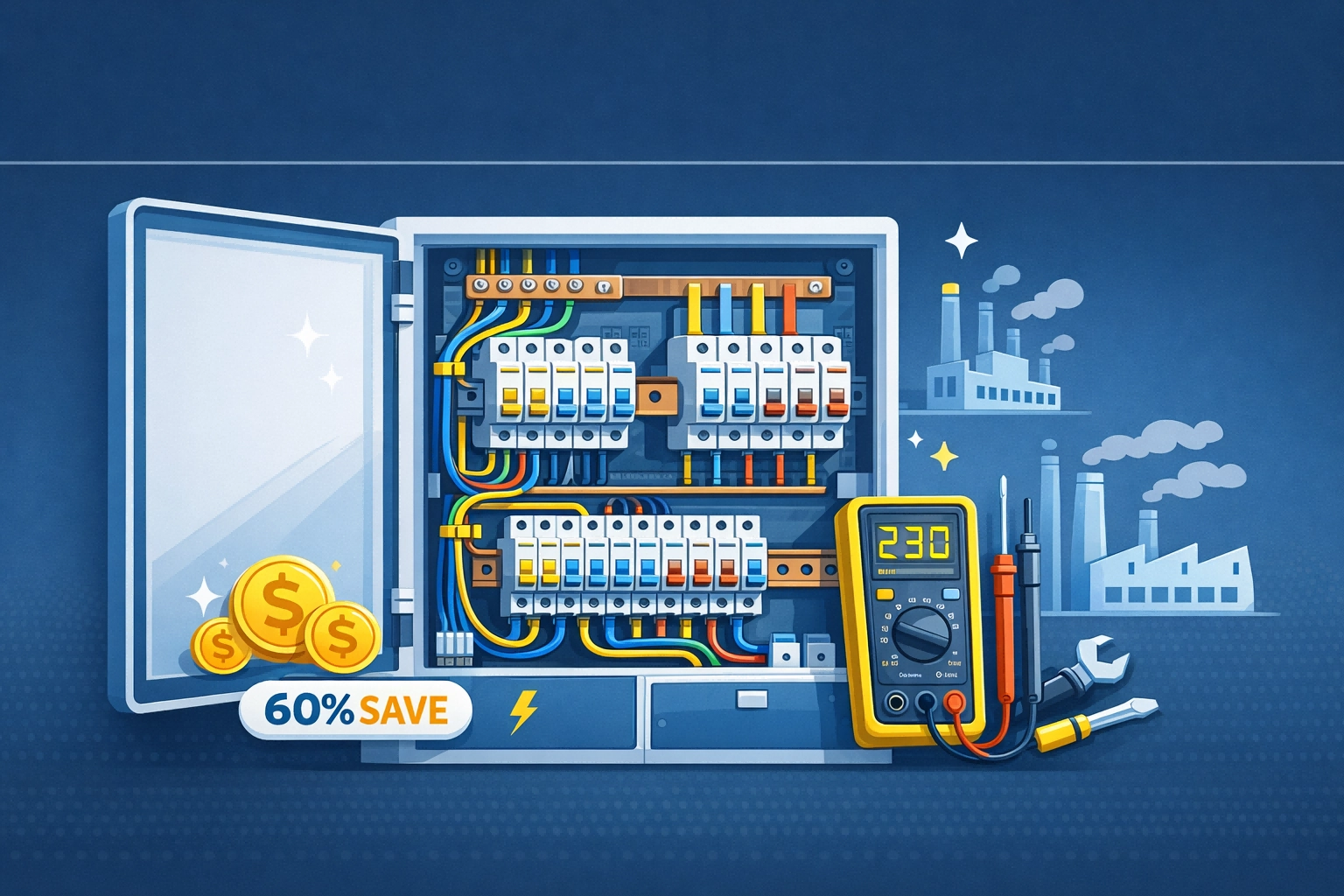
How to Build Your Own Electrical Panel and Save Up to 60% on Costs
Three-phase power meter
What is the lead time?
Mass production takes 【30】 days; samples take 【10】 days.
MCCB NLECB-250
Does it support global certifications?
Yes, it complies with ISO, CE, RoHS and GRS standards and can be supplied for international markets.
Energy Meter Single-Phase Ammeter
Does this meter support communication?
Yes, RS485 communication with MODBUS-RTU protocol is available as an optional feature.
Photovoltaic DC circuit breaker DC MCB
What systems is this DC breaker used for?
It is mainly used in solar photovoltaic systems, DC distribution boxes and battery storage systems.
Tuya WiFi Smart Recloser
How is the breaker installed?
The device supports standard 35mm DIN rail installation, commonly used in electrical distribution boxes.
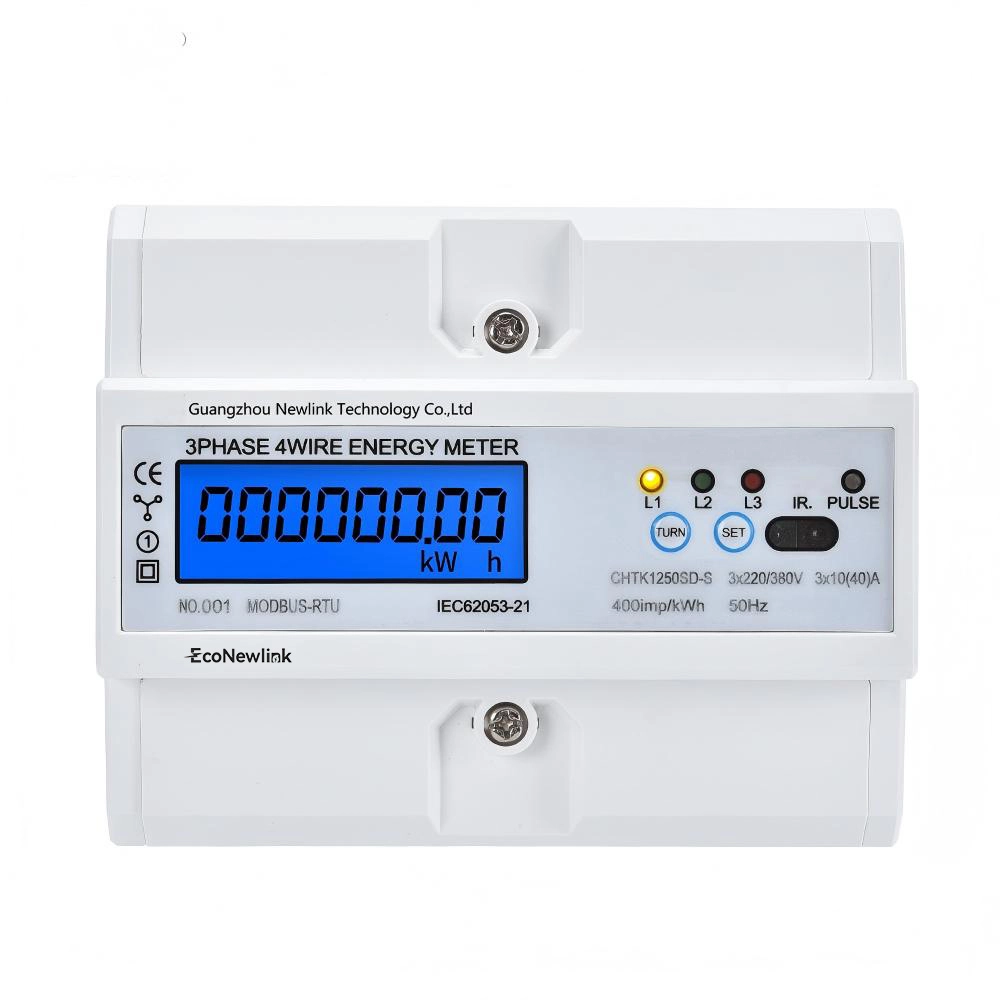
Three-Phase Four-Wire Multifunction Electronic DIN Rail Energy Meter Manufacturer with CE Certification
The Three-Phase Four-Wire Multifunction Electronic DIN Rail Energy Meter is a compact and high-accuracy smart meter designed for modern power monitoring systems. It features RS485 communication, pulse output, and a clear LCD display. With easy DIN rail installation and CE certification, it is ideal for industrial, commercial, and energy management applications.
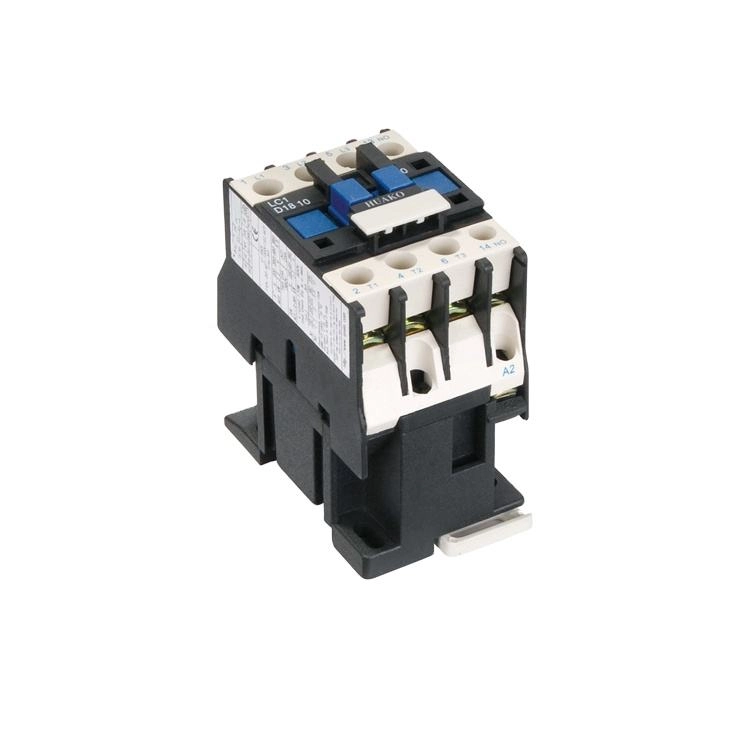
LC1 (CJX2) 220V Single Pole 2 Pole 3P 4 Pole Electrical Contactor Magnetic AC DP Definite Purpose Contactor
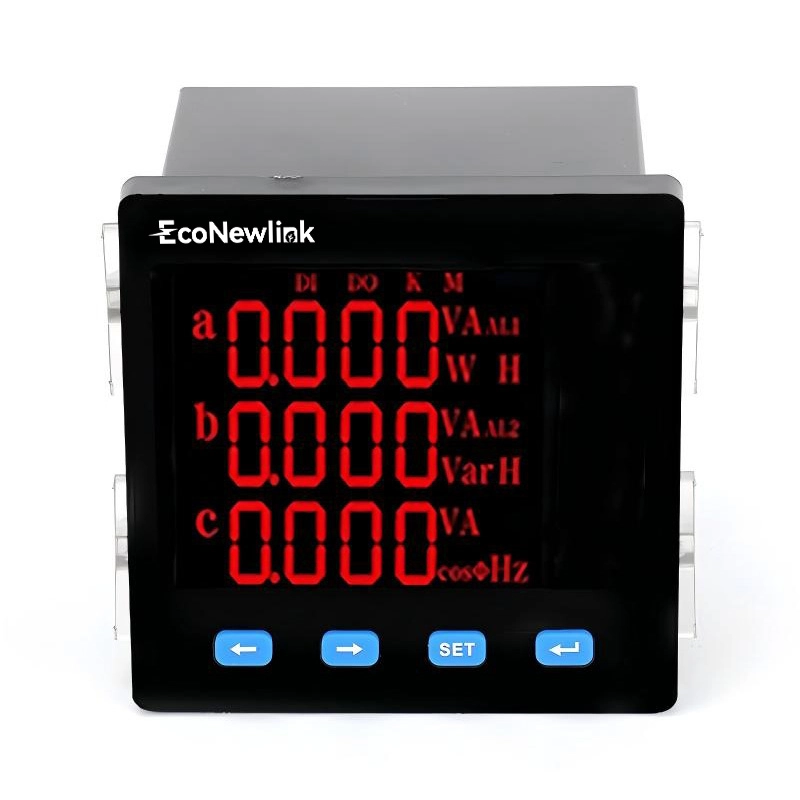
EcoNewlink 3 phase energy meter RS485 Modbus multifunctional power meter DIN rail kWh
The EcoNewlink Three-Phase Multifunctional Power Meter is engineered for complex industrial power distribution systems. Featuring a user-friendly interface, robust anti-interference performance, and reliable RS485 communication, it delivers real-time, high-accuracy energy data. Certified to CE, GRS, and RoHS standards, this meter is available for factory-direct bulk supply and deep OEM/ODM customization to ensure long-term system stability.
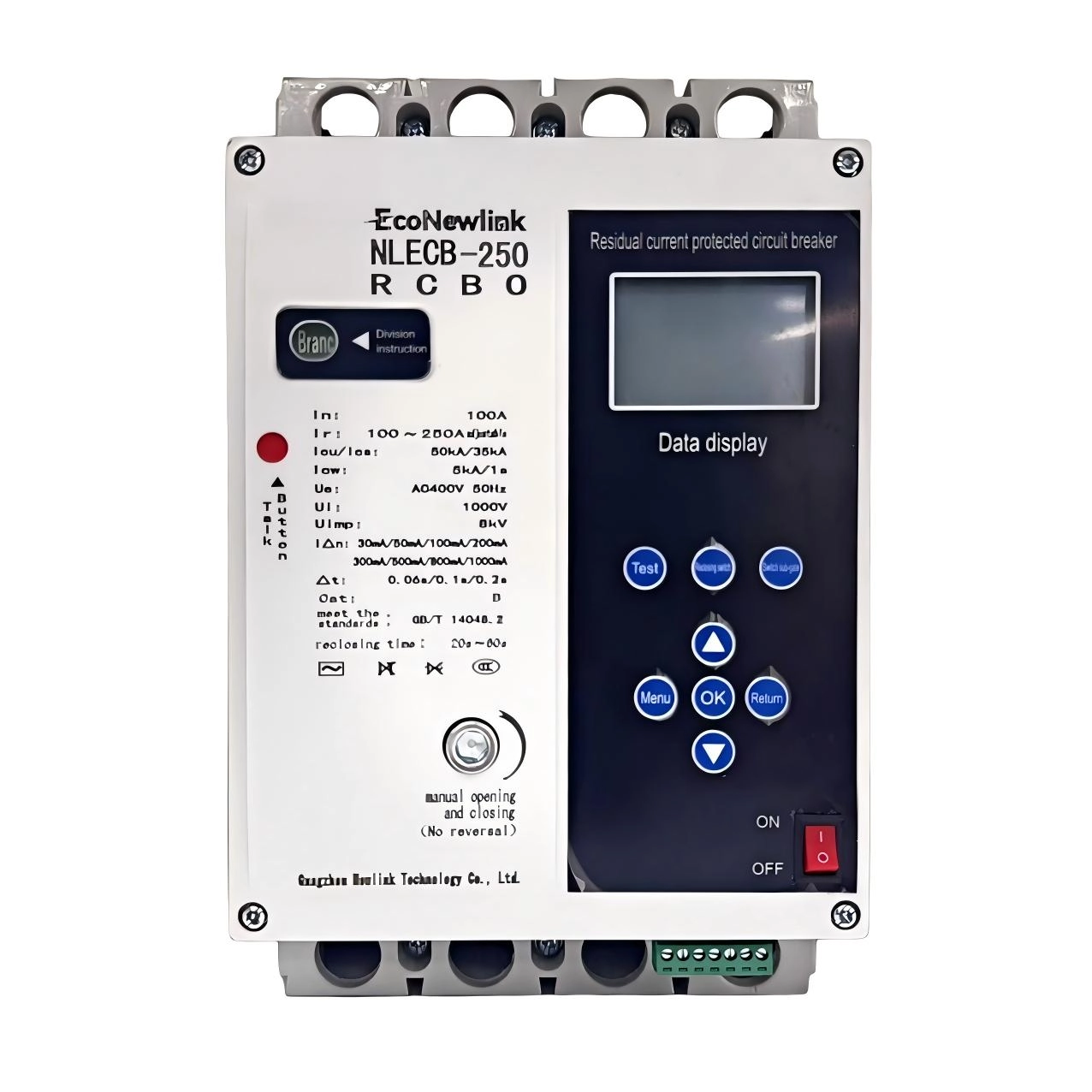
NLECB Automatic Reclosing ECB Circuit Breaker for Overload, Short-Circuit & Leakage Protection
This photovoltaic automatic reclosing circuit breaker (ECB) is designed for solar and low-voltage power distribution systems. It provides automatic reclosing functionality and comprehensive protection, including overload, short-circuit, and leakage protection, ensuring stable and reliable operation in harsh environments.
It solves common pain points in solar and smart power systems, such as manual reset issues, system downtime, and safety risks caused by unstable grid conditions. The waterproof design enhances durability and extends product life in outdoor installations.
Key advantages include high reliability, improved safety, reduced maintenance time, and automatic fault recovery. The product complies with international standards and certifications including ISO, CE, RoHS, and GRS, making it suitable for global markets.
OEM and customization services are available to support brand differentiation and specific engineering requirements.
Request More Information or Subscribe for Updates
Thank you for reading our article!
If you would like more detailed information, have specific questions, or want to stay updated with the latest articles and guides, please fill out the form below.
Our team will get back to you with tailored information and resources.
Powering the Future with Smart, Safe Solutions
EcoNewlink delivers cutting-edge intelligent power products and solutions to ensure safety, efficiency, and reliability in your power distribution systems.
Contact
Email: nali@newlink.ltd
WhatsApp:
Address: No.76 Chuangyu road, Zengcheng District, Guangzhou, China

 WhatsApp
EcoNewlink
EcoNewlink