





pwm vs. mppt solar charge controllers: which is best for industrial off-grid systems? | Insights by EcoNewlink
- How do I correctly size an MPPT controller for large industrial battery banks (48V, 96V or higher) and multi‑string PV arrays?
- What are the real‑world efficiency and energy‑gain differences between PWM and MPPT in industrial climates with high heat, dust, and partial shading?
- How can I ensure reliability and long life for MPPT controllers in harsh industrial sites (dust, high heat, vibration)? What component and enclosure specs should I require?
- What electrical component specifications and test points should I demand from suppliers to avoid early failures (MOSFET ratings, capacitor ESR, coil saturation specs)?
- Can PWM be used with long DC cable runs at industrial sites? What are the cable sizing and safety trade‑offs compared with high‑voltage MPPT architectures?
- How do I calculate total cost of ownership (TCO) for choosing MPPT vs PWM in a 50 kW+ industrial off‑grid project? What payback assumptions should I use?
How do I correctly size an MPPT controller for large industrial battery banks (48V, 96V or higher) and multi‑string PV arrays?
Sizing an MPPT for industrial off‑grid use requires three linked checks: continuous current rating, maximum PV input voltage, and thermal / altitude derating. Use real electrical values and manufacturer limits rather than rule‑of‑thumb labels.
1) Continuous current. Calculate controller current from maximum array power under STC (Ppv_max) divided by nominal battery voltage (Vbat_nom):
Adjusted charge current (A) = Ppv_max (W) / Vbat_nom (V).
Add a safety margin (recommend 1.10–1.25) to allow short bursts, future expansion, and measurement error. Example: 30 kW array into 48 V battery: I = 30,000 / 48 = 625 A; specify controller(s) rated for ≥688 A at continuous duty (use parallel controllers or DC bus architecture). Never specify controllers at precisely the calculated peak—industrial practice oversizes by 10–25%.
2) PV open‑circuit voltage. Ensure array Voc at the coldest site temperature stays below controller max DC input. Use the panel Voc at STC and the panel temperature coefficient (typical mono‑Si ~ −0.30%/°C). Calculate:
Voc_cold = Voc_stc * .
Example: Voc_stc 45 V, coeff −0.003/°C, T_cold −20°C → Voc_cold = 45 ≈ 45 1.135 = 51.1 V. Multiply by number of panels in series and verify against controller rating. In practice keep a design margin (5–10%) below controller max input to avoid borderline operation.
3) Thermal and altitude derating. Manufacturers publish derating curves: controllers lose power handling ability with rising ambient temperature and altitude (reduced convective cooling). For critical industrial sites ask for the controller’s continuous current rating at the expected ambient (e.g., 50°C) and at site elevation. If the vendor only lists 25°C ratings, request a derating table or choose a higher‑rated device.
4) System architecture. For >100 kW arrays use centralized MPPT stacks or multiple trackers feeding a DC bus with current sharing. For battery voltages above typical controller product lines, consider high‑voltage MPPT (e.g., 600–1000 VDC array input with step‑down to battery bus) to reduce cable losses and simplify combiner design.
Practical checklist to give to suppliers: continuous current at site ambient and elevation, max DC input voltage, guaranteed conversion efficiency curve vs irradiance, thermal management specification, and parallel/current‑share capability and protection coordination.
What are the real‑world efficiency and energy‑gain differences between PWM and MPPT in industrial climates with high heat, dust, and partial shading?
MPPT controllers use a DC‑DC converter to operate the PV array at its maximum power point; PWM controllers effectively pull the PV down to battery voltage. The real‑world advantage of MPPT depends on system voltage mismatch, irradiance, temperature, and shading.
Typical energy gain ranges: MPPTs commonly harvest 5–30% more energy than PWM in real sites. Lower gains (5–10%) occur when PV string voltage is already very close to battery voltage or during very hot, low‑voltage conditions. Higher gains (15–30%) occur when array voltage is substantially higher than battery (multiple modules per string), in cool climates (higher Voc), or under variable irradiance and partial shading where the MPPT can track changing maxima.
Temperature: Cold increases panel Voc (roughly −0.25 to −0.35%/°C), increasing MPPT benefit because the array operates farther above battery voltage. High ambient temperatures reduce Voc and thus can reduce MPPT relative advantage, but MPPT still typically outperforms PWM unless the panel and battery voltages are matched.
Partial shading and mismatch: MPPT controllers with per‑string MPP optimization or distributed MPPT units retain much higher harvest than a single PWM on a combined string. PWM cannot exploit mismatched strings or shaded modules.
Dust and soiling: Both controllers are affected equally by reduced irradiance, but MPPT’s ability to optimize operating voltage yields relatively better energy capture in degraded conditions.
When specifying systems, ask vendors for measured energy‑yield curves and in‑field test reports (yearly kWh yield vs baseline) for a comparable site type; do not rely solely on efficiency numbers in datasheets.
How can I ensure reliability and long life for MPPT controllers in harsh industrial sites (dust, high heat, vibration)? What component and enclosure specs should I require?
Industrial reliability depends on electrical design, thermal management, component selection, and environmental protection.
Key procurement requirements:
Enclosure and ingress protection: minimum IP65 for dusty outdoor installations; IP66–67 where water jets or temporary immersion are possible. Specify corrosion‑resistant finishes (stainless hardware, powder coat) and optional salt‑spray test reports for coastal sites.
Thermal design: ask for thermal drawings and temperature rise data. Prefer controllers using large external heat sinks, thermal vias on PCBs, or segregated high‑loss modules to avoid heat coupling to low‑voltage electronics. For fan‑cooled designs, require redundant fans and vibration‑rated bearings; for passive designs, specify maximum ambient for continuous operation.
Capacitors and passives: require low‑ESR capacitors rated 105°C (industrial grade) and specify expected lifetime at rated temperature. Use film capacitors for high ripple applications where feasible. Require coil/core materials with proven high AC current capability and low core losses.
Power semiconductors: require MOSFET / IGBT devices sized for at least 150% of peak operating current and to meet Rds(on) or conduction loss targets published in the product brief. Prefer components from Tier‑1 suppliers with traceable lot codes.
PCB and layout: specify copper weight (e.g., 2oz or higher) for power planes, thermal vias under power devices, and conformal coating when humidity/condensation is expected.
EMI/EMC and surge protection: require conducted and radiated emissions compliance to common industrial standards; include upstream surge arrestors (SPD) for PV input and battery terminals; include transient suppression (MOVs/TVS) sized to site lightning exposure and local transient levels.
Environmental testing: request supplier test reports for thermal cycling, humidity, vibration (IEC 60068 family or equivalent), and accelerated life testing. Request MTBF / FIT data and a failure‑analysis commitment.
Certifications and quality systems: require ISO 9001 manufacturing, lot traceability for critical components, and third‑party safety/EMC test reports when available.
Insist on replaceable wearable parts (fans, fuses) and accessible service documentation. For mission‑critical telecom, oil & gas, or remote industrial sites consider field‑replaceable power modules and remote telemetry reporting (SNMP/Modbus) for preventive maintenance.
What electrical component specifications and test points should I demand from suppliers to avoid early failures (MOSFET ratings, capacitor ESR, coil saturation specs)?
When procuring controllers for industrial use, specify measurable component-level parameters rather than broad marketing claims.
Minimum technical items to demand in the RFQ/Purchase Specification:
MOSFET/IGBT: vendor, part number range, maximum Vds (or Vce), continuous current rating, Rds(on) at 25°C and at 100°C, gate charge (Qg), and thermal resistance junction‑to‑case. Require derating (e.g., rated at least 1.5× expected VDS and 1.25–1.5× expected continuous current).
Inductors/coils: saturation current (Isat), DCR, core material and temperature rise at rated current, and thermal class. Provide peak and RMS current profiles expected in the controller.
Capacitors: type (electrolytic vs film), voltage rating, ripple current rating, ESR at 100 kHz and 20°C, life hours at 105°C. Prefer solid polymer or low‑ESR electrolytics plus film caps across DC link for longevity.
Connector and bus bars: current rating, material (tinned copper recommended), mechanical retention force, and torque specs. Require anti‑corrosion treatments for terminals.
PCB copper thickness and thermal via count for power stages; require thermal simulation or temperature map under full load.
Thermal compound and heatsink interface materials: specify thermal resistance max between junction and chassis.
Protection and sensing: accuracy and type for current shunts (±1% or better), battery voltage sensing accuracy, and isolation levels for control circuits.
Test points and acceptance tests: insist on factory test logs for each unit showing input/output voltage ranges, MPPT tracking test over a simulated IV curve, thermal imaging of hotspots under full load, EMI pre‑compliance reports, and burn‑in (e.g., 48–168 hours at elevated temperature) when required.
Including these specs in the purchase contract reduces ambiguity and shifts responsibility for measurable performance back onto the supplier.
Can PWM be used with long DC cable runs at industrial sites? What are the cable sizing and safety trade‑offs compared with high‑voltage MPPT architectures?
PWM controllers are electrically simple but force the PV to operate near battery voltage during charging; this means PV current equals charging current and cable currents can be high. For long runs, high currents cause large I2R losses and require very large conductors.
Cable sizing basics: voltage drop Vdrop = I R. Use conductor tables to pick cross‑section that keeps Vdrop under 2–3% of nominal system voltage for the run length. Example: 200 A at 48 V over 50 m one‑way with 50 mm2 copper (approx 0.000395 ohm/m) gives R ≈ 0.0198 Ω → Vdrop ≈ 200 0.0198 = 3.96 V (8.25%), unacceptable. You’d need much larger conductors or shorten runs.
Safety and short‑circuit currents: long runs can increase fault energy if not properly fused and protected. Fuse/coordinated protection must be placed at combiner boxes and at controller inputs.
MPPT advantage: by allowing higher PV string voltages (hundreds to >900 V depending on product), MPPT architectures reduce array current and therefore use much smaller conductors and lower I2R losses. This is why industrial arrays commonly use high‑voltage combiner strings feeding central or distributed MPPT units.
Practical guidance: for runs >25–30 m, evaluate high‑voltage stringing and MPPT controllers. If site constraints force low‑voltage DC, design for parallel MPPTs near the array (distributed MPPT) to keep cables short. Always size cables for the maximum potential PV short‑circuit current (Isc) and the charge current and include 125% or manufacturer recommended multipliers when placing protection.
How do I calculate total cost of ownership (TCO) for choosing MPPT vs PWM in a 50 kW+ industrial off‑grid project? What payback assumptions should I use?
TCO should include capital cost, expected annual energy yield, maintenance, expected failure/replacement costs, and the value of energy (either avoided diesel fuel, grid cost, or kWh value). Use site‑specific insolation and value assumptions; below is a conservative framework and worked example.
Framework:
Annual energy baseline (kWh) for a given array size = DC_rated_kW average_equivalent_full_sun_hours_per_day 365 * system_loss_factor (wiring, inverter, temperature). Use measured irradiance or PVGIS/NREL data for the site.
Expected MPPT energy uplift (%) relative to PWM — use conservative 10–15% for general industrial sites unless you have measured evidence for higher.
Annual O&M and failure cost differential — MPPT typically costs more and may have higher service cost if active cooling is used. Include expected controller replacement interval (e.g., 8–12 years for industrial products) and spare parts plan.
Worked example (illustrative):
Array: 50 kW DC, average 5 peak sun hours/day → annual baseline ≈ 50 5 365 = 91,250 kWh. Assume system losses net 0.85 → usable = 77,662 kWh.
MPPT uplift: 12% → extra = 9,319 kWh/year.
Energy value: If avoided cost = $0.10/kWh (diesel equivalent or utility), extra value = $932/year.
Cost High Quality: A suitable industrial MPPT solution and installation High Quality vs PWM = $6,000 (example). Simple payback = 6,000 / 932 ≈ 6.4 years.
Factor in maintenance and replacement: If MPPT reduces maintenance for genset runtime or reduces battery cycling through smarter charging, include avoided diesel and battery life extension for more accurate ROI.
Use this method with your site’s sun hours and energy value; in many industrial remote power cases where diesel cost is high or outages are very expensive, MPPT payback is typically 2–6 years; where grid energy is cheap and exposure to cold is low, payback may be longer.
Concluding paragraph summarizing the advantages of MPPT for industrial off‑grid systems:
MPPT controllers are generally the better choice for industrial off‑grid systems where arrays are stringed at higher voltages, sites have long cable runs, partial shading is possible, or maximizing energy yield is critical to reduce fuel, battery cycling, or lifecycle costs. Their higher initial cost is often offset by increased harvest (commonly 10–20% in mixed conditions), lower cable and BOS costs when used with high‑voltage strings, and better performance across varying temperatures and irradiance. For small, low‑power sites where PV module voltage equals battery voltage and budget is the primary constraint, PWM can still be acceptable, but for mission‑critical industrial installations specify MPPT units built to industrial component and environmental standards, request factory test logs, and include clear derating, thermal, and EMC requirements in procurement documents.
For a custom quotation, system architecture review, or component procurement checklist tailored to your site and local climate, contact us for a quote at www.econewlink.com or nali@newlink.ltd.
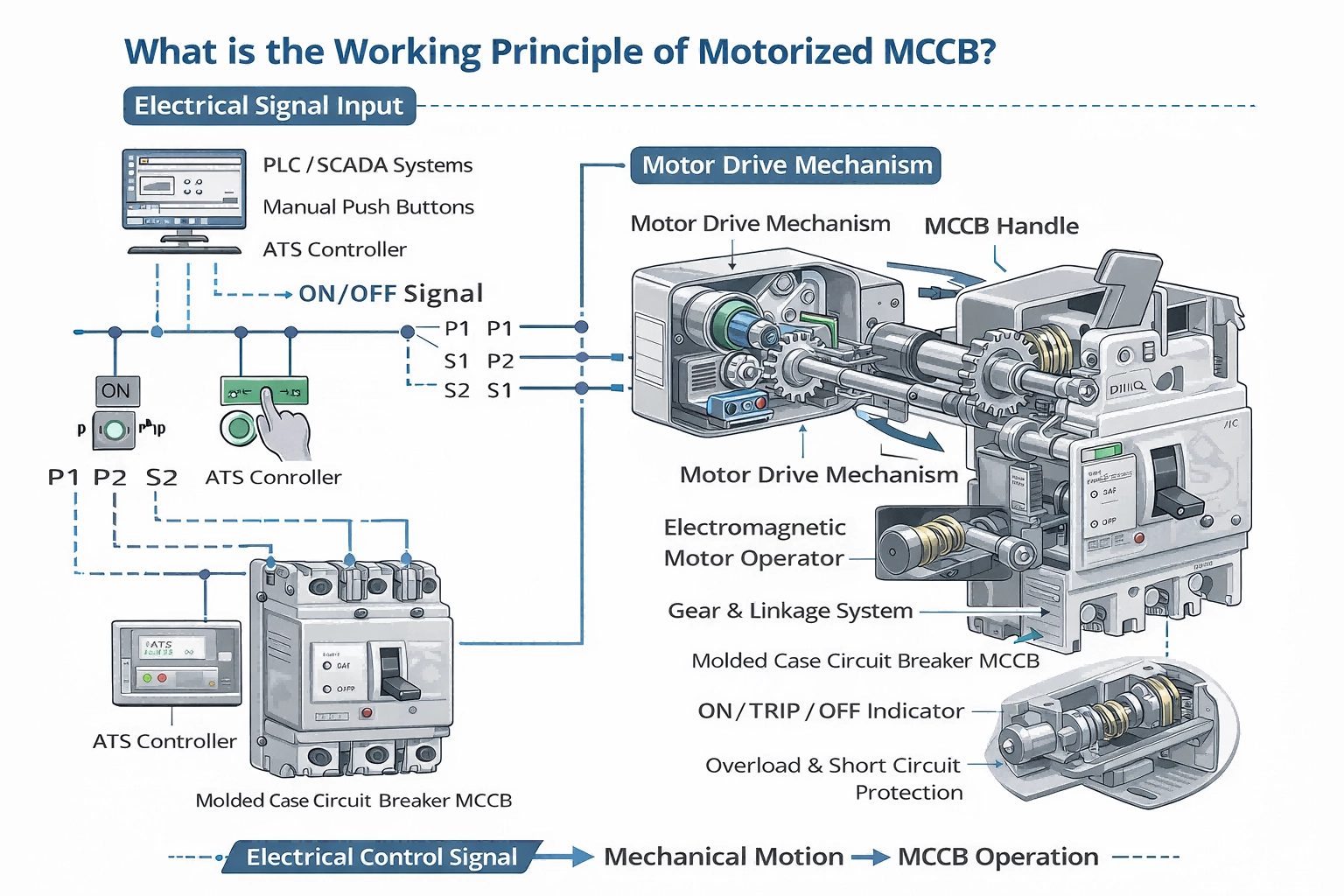
How to Use a Motorized MCCB Circuit Breaker for Remote Control and ATS Systems

30-Day DIY Electrical Panel Cost-Saving Guide – Day 3

30-Day DIY Electrical Panel Cost-Saving Guide – Day 2

How to Build Your Own Electrical Panel and Save Up to 60% on Costs
Three Phase anti backflow energy meter
What is the main function of this meter
It measures real-time power flow and works with the inverter to prevent electricity from feeding back into the grid.
LCD2 Series Motorized Operating MCCB
Can it operate manually if automation fails?
Yes, it includes AUTO / MANUAL dual-mode control.
OEM/ODM
What after-sales support do you provide for OEM customers?
We provide long-term after-sales support, including technical documentation, remote troubleshooting, spare parts supply, and continuous engineering assistance to ensure stable system performance throughout the product lifecycle.
Energy Meter Single-Phase Ammeter
What display types are available?
It supports both LED and LCD digital displays for different application needs.
Can it be used with a current transformer?
Yes, it supports CT input and allows programmable transformation ratio settings.
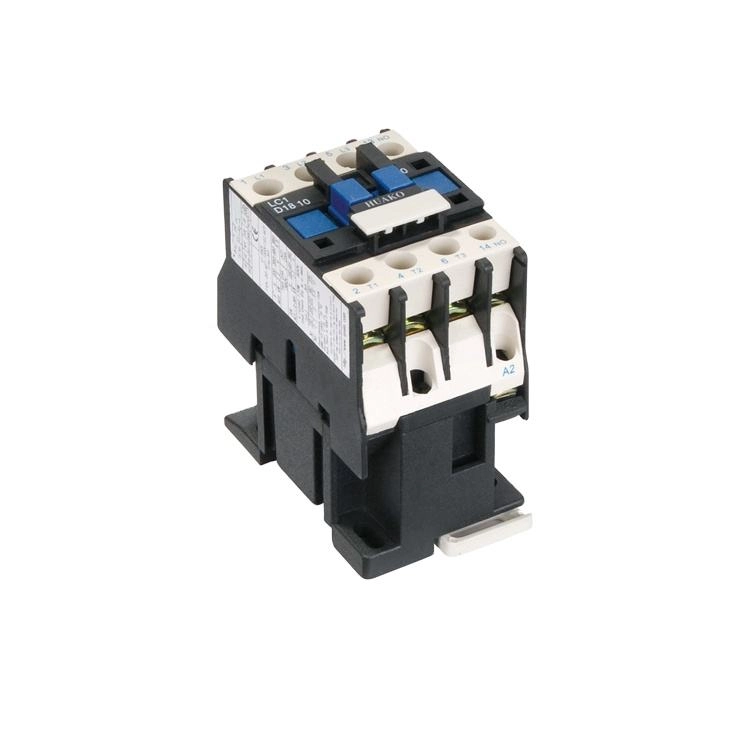
LC1 (CJX2) 220V Single Pole 2 Pole 3P 4 Pole Electrical Contactor Magnetic AC DP Definite Purpose Contactor
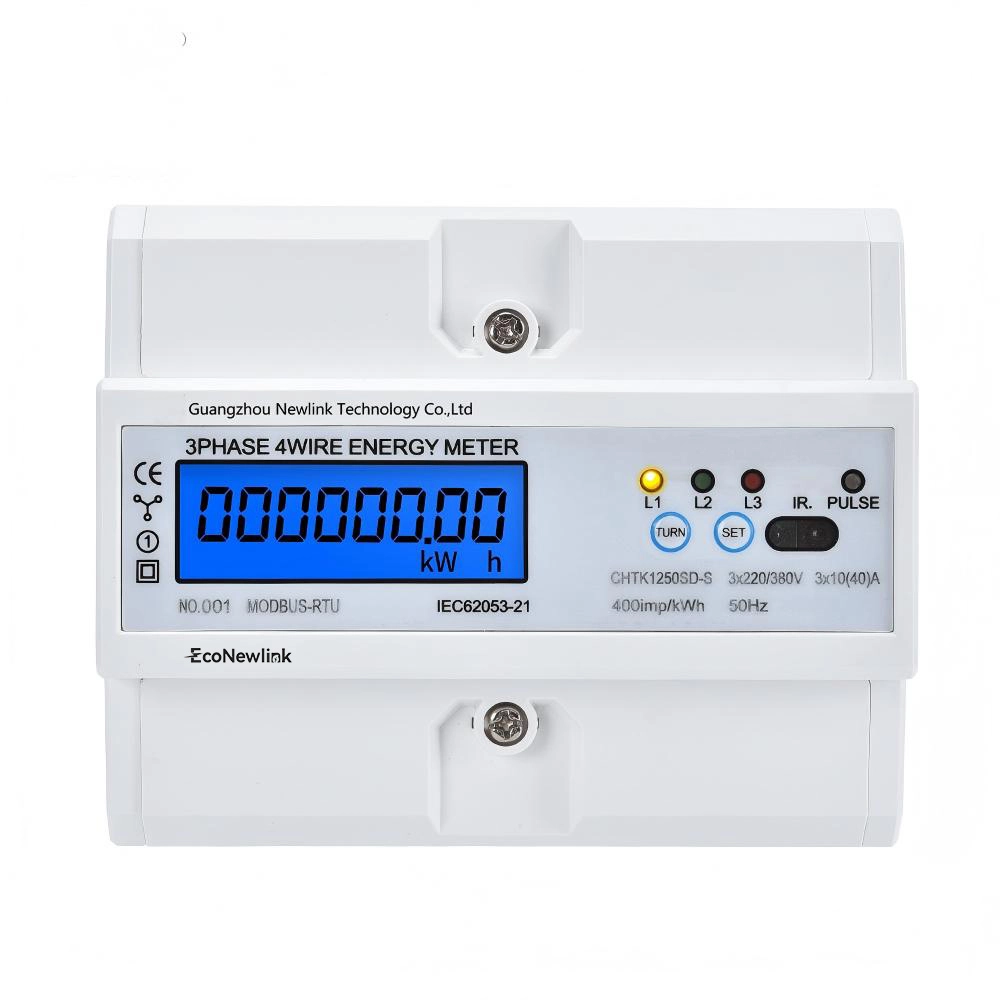
Three-Phase Four-Wire Multifunction Electronic DIN Rail Energy Meter Manufacturer with CE Certification
The Three-Phase Four-Wire Multifunction Electronic DIN Rail Energy Meter is a compact and high-accuracy smart meter designed for modern power monitoring systems. It features RS485 communication, pulse output, and a clear LCD display. With easy DIN rail installation and CE certification, it is ideal for industrial, commercial, and energy management applications.
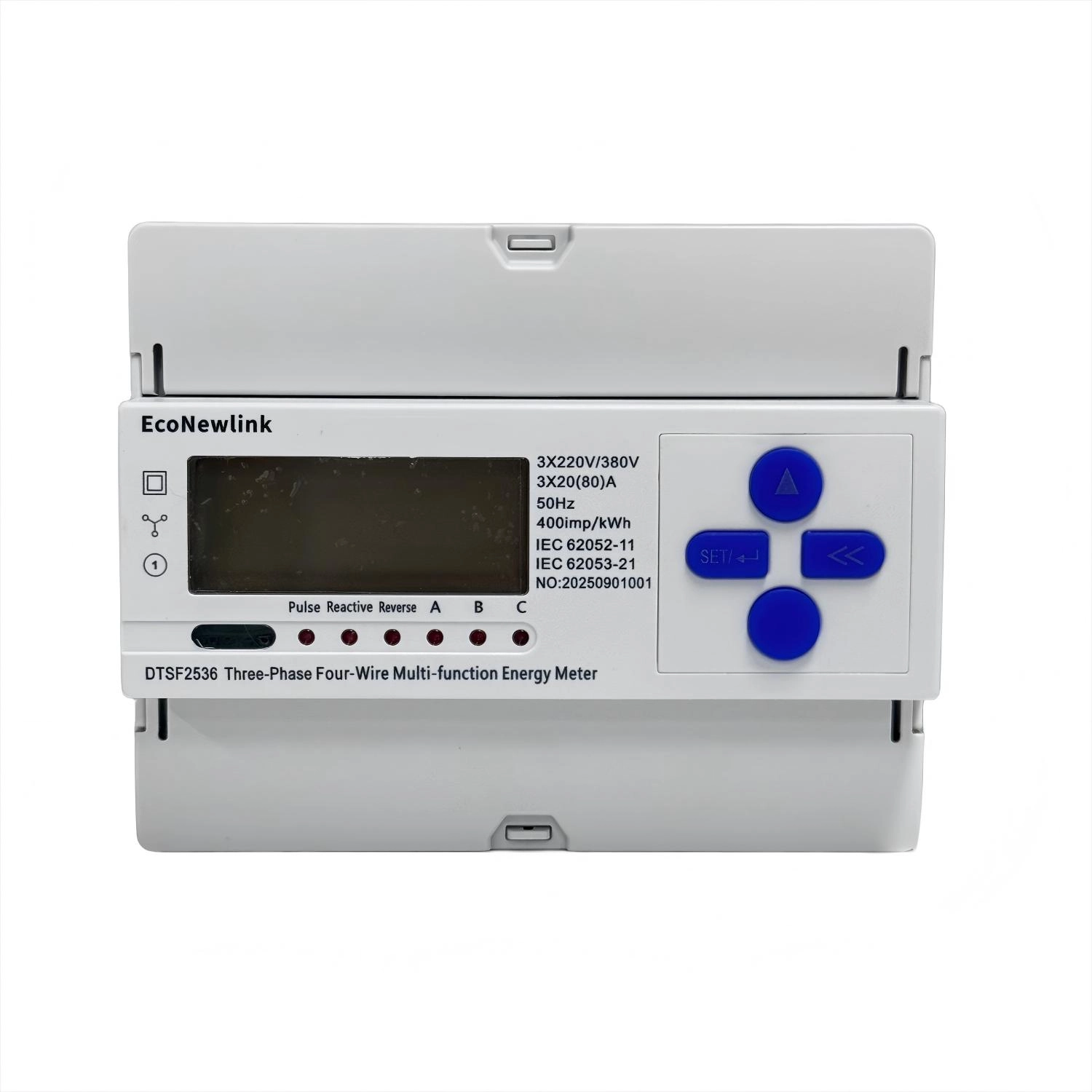
EcoNewlink Three Phase anti backflow energy meter RS485 Modbus DINRail Zero Export for PV Inverter
This three-phase anti-backflow energy meter is designed for solar PV systems to prevent excess electricity from feeding back into the grid. With RS485 Modbus communication, it provides real-time data to the inverter for dynamic power control, helping maximize self-consumption and ensure compliance with grid regulations. Ideal for residential, commercial, and rental energy management systems.
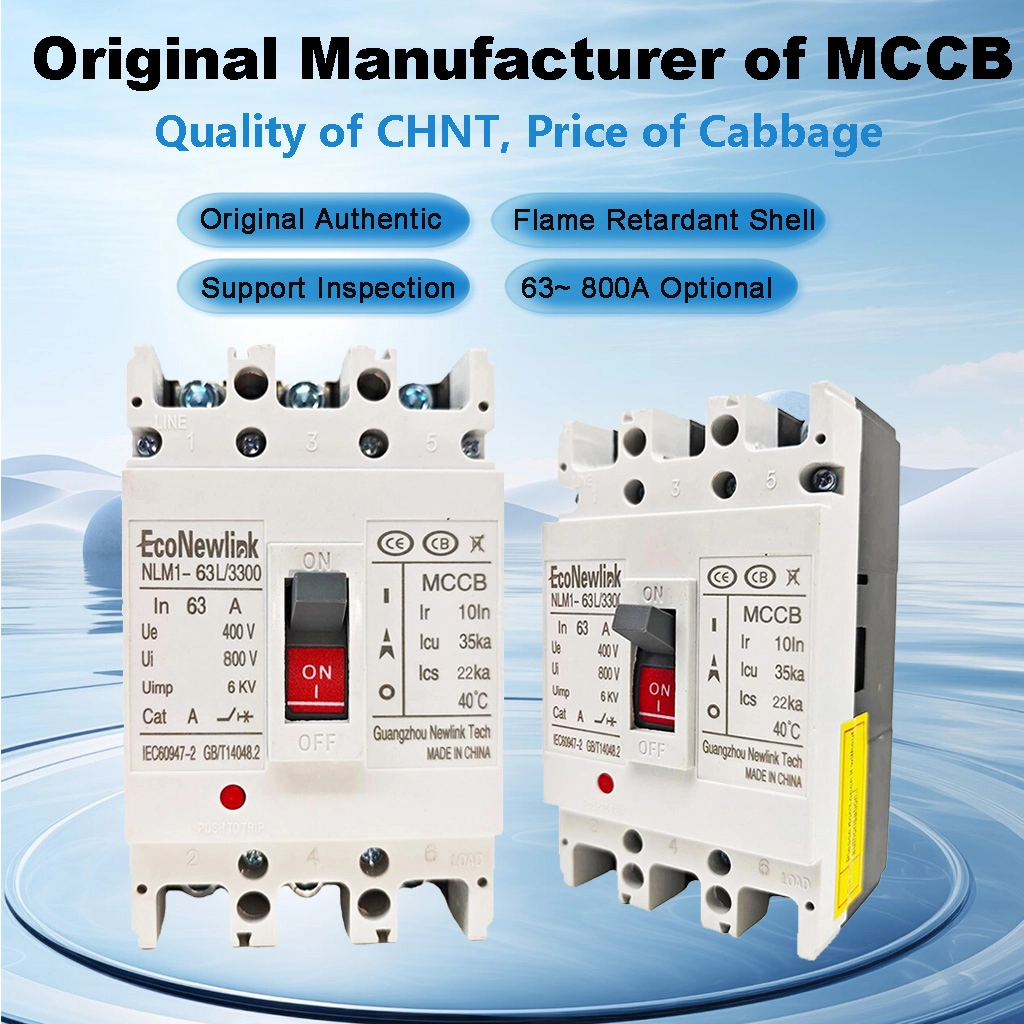
M1 / NLDM1 Series Moulded Case Circuit Breaker MCCB Manufacturer | 400V–1000V | 10A–2000A | High Breaking Capacity
The M1 / NLDM1 Series moulded case circuit breaker (MCCB) is designed for AC power distribution up to 1000V and 2000A. It provides overload, short circuit and undervoltage protection with high breaking capacity, compact design and modular accessories. Ideal for industrial, commercial and motor protection applications.
Request More Information or Subscribe for Updates
Thank you for reading our article!
If you would like more detailed information, have specific questions, or want to stay updated with the latest articles and guides, please fill out the form below.
Our team will get back to you with tailored information and resources.
Powering the Future with Smart, Safe Solutions
EcoNewlink delivers cutting-edge intelligent power products and solutions to ensure safety, efficiency, and reliability in your power distribution systems.
Contact
Email: nali@newlink.ltd
WhatsApp:
Address: No.76 Chuangyu road, Zengcheng District, Guangzhou, China

 WhatsApp
EcoNewlink
EcoNewlink