





Can i use the same indoor current transformer (ct) for both energy metering and relay protection? | Insights by EcoNewlink
- 1) Can I legally and safely connect one indoor CT secondary to both a revenue meter and a protective relay, and what wiring/protection measures are required?
- 2) What CT accuracy class and burden specifications are necessary if I want a single indoor CT to serve both energy metering and relay protection?
- 3) How does CT knee-point voltage and the excitation curve affect relay performance during high fault currents when the same CT is used for metering and protection?
- 4) If I use a CT with dual secondaries for metering and protection, what test certificates and factory tests must I request from the manufacturer?
- 5) What are the practical field failure modes and safety hazards observed when operators try to use one indoor CT for both metering and protection?
- 6) Are there industry-approved combined CTs designed for both functions, and how do I specify one for indoor switchgear purchases?
1) Can I legally and safely connect one indoor CT secondary to both a revenue meter and a protective relay, and what wiring/protection measures are required?
Short answer: do not simply tie a single CT secondary in parallel to feed a meter and a relay. Paralleling CT secondaries or sharing one secondary winding between metering and protection without the CT being explicitly designed for that purpose risks measurement error, protective relay malperformance and dangerous high voltages on open-circuited windings. Standards (IEC 61869-2 and IEEE C57.13) and best practice require either independently isolated secondary windings (dual-secondary CT), separate CTs, or a manufacturer-designed combined CT that is rated for both functions.
Key safety/wiring measures:
- Never open-circuit a CT secondary under primary excitation. If a secondary fuse opens, the CT primary will generate dangerously high secondary voltage.
- If you must supply a meter and relay from one CT, use a CT with dual isolated secondary windings produced for that purpose. Each winding must be dedicated and appropriately fused and burden-limited for its device.
- Do not parallel secondary windings unless the CT and the vendor explicitly permit it; paralleling causes mismatch, heating and incorrect ratio errors.
- Follow wiring practices: short secondary leads, use equipotential bonding, and install CT secondary shorting links when the instrument is disconnected for maintenance.
Practical implication for purchasers: specify whether you need dual secondaries, list the loads (meter VA, relay VA) and protection fusing, and require factory documentation showing the CT is designed to feed both circuits safely.
2) What CT accuracy class and burden specifications are necessary if I want a single indoor CT to serve both energy metering and relay protection?
Metering and protection have different accuracy and burden requirements. Revenue metering typically demands high accuracy at normal currents (examples: class 0.1, 0.2, 0.5 or IEC 0.2S, 0.5S), with low rated burdens (1–5 VA common for analog meters or electronic meters designed for CTs). Protection CTs require a specified accuracy under high secondary currents (expressed as protection class 5P10, 5P20, 10P10, etc., or accuracy limit factor (ALF) in IEC terms) and must maintain ratio accuracy during fault currents without saturating.
If you intend one CT to serve both, the CT must either:
- Be constructed with separate secondary windings: one winding with a metering accuracy class and low burden rating, the other winding as a protection winding with required ALF and knee-point characteristics; or
- Be a combined-class CT that the manufacturer certifies for both purposes (e.g., a CT specified 0.2/5P10 or similar), and whose test certificates demonstrate both metering accuracy at rated burdens and protection accuracy up to the specified ALF.
When specifying, give the vendor explicit numbers: primary rating (e.g., 400 A), secondary (1 A or 5 A), metering accuracy class and burden (e.g., 0.5 at 5 VA), protection class and ALF (e.g., 5P10 or ALF 10), and the expected secondary wiring burden (relay VA + cable VA). If the relay burden increases the total VA above the metering design burden, metering accuracy will be degraded.
3) How does CT knee-point voltage and the excitation curve affect relay performance during high fault currents when the same CT is used for metering and protection?
Knee-point voltage (Uk) and the excitation (magnetization) curve describe when a CT core begins to saturate. For protection CTs supplying high fault currents to relays, a high knee-point voltage means the CT will not saturate under the transient voltages induced by high primary currents, so the relay receives accurate secondary current information during the fault.
Why this matters when sharing a CT: a metering core optimized for low-burden, high-accuracy operation at normal currents often has a much lower knee-point and limited excitation capability. If that same winding is expected to supply a protective relay during high fault currents, the CT can saturate early, causing the relay to under-read fault currents or see distorted secondary waveforms—potentially failing to trip fast or at all.
Procurement tip: for protection applications specify Uk and request the actual excitation curve (magnetization curve) and ALF tests from the manufacturer per IEC 61869-2. Ensure the CT’s Uk and ALF meet the relay manufacturer’s input requirements and the system’s maximum prospective fault current. If relays require high knee-point CTs (for example when using distance or differential protection), do not use a metering-only CT.
4) If I use a CT with dual secondaries for metering and protection, what test certificates and factory tests must I request from the manufacturer?
When buying CTs intended to feed both metering and protection via dual secondary windings, you must demand detailed factory test documentation to prove both windings perform to their specifications. At minimum request:
- Type test and routine test reports traceable to the order, showing ratio error and phase displacement at specified currents and burdens (including the combined burden of meter+relay wiring).
- Excitation (magnetization) curve for the protection winding and the calculated knee-point voltage (Uk) per IEC 61869-2 or IEEE tests.
- Accuracy Limit Factor (ALF) or protection class test showing ratio error at high multiples of In (e.g., up to 10× or 20× In depending on spec).
- Short-time thermal rating (Ith and duration, e.g., kA for 1 s) and dynamic/peak withstand (Icw) values appropriate to your switchgear fault level.
- Insulation tests – power-frequency withstand and impulse tests if required for the indoor insulation coordination level of your switchgear.
- Winding resistance and polarity checks, and a calibration/certificate showing traceability to national standards.
Ask for factory witness testing or third-party witnessed reports if the CTs are critical to revenue and protection. Require the vendor to declare compliance with IEC 61869-2 (current transformers) and, where applicable, IEEE C57.13.
5) What are the practical field failure modes and safety hazards observed when operators try to use one indoor CT for both metering and protection?
Common practical failures and hazards include:
- CT saturation under fault currents leading to relay non-operation or delayed tripping (a protection hazard).
- Degraded metering accuracy due to excessive burden from relay circuits or parallel loading—this creates revenue loss or non-compliant invoices.
- High voltage on open CT secondary if a meter-side fuse blows or a meter is removed while the primary is energized—this is an electrocution and equipment insulation hazard.
- Thermal overheating when CT secondary windings carry unbalanced or unexpected loads from multiple devices; this may reduce CT life or cause mechanical damage.
- Interference and measurement error due to long secondary leads and poor grounding that affect both meter and relay performance.
Field mitigation: use separate or dual isolated windings, secure secondary fusing schemes with interlocks (preventing CTs from being energized while secondaries open), shorting terminal blocks for maintenance, and ensure secondary runs are short and properly screened. Training and procedures are as important as hardware.
6) Are there industry-approved combined CTs designed for both functions, and how do I specify one for indoor switchgear purchases?
Yes—manufacturers offer combined or dual-purpose CTs and CTs with dual isolated secondaries specifically designed to meet both metering and protection requirements. These may be labeled with combined classes (for example a metering accuracy plus a protection ALF rating) or delivered as multi-winding CTs. However, not every CT marketed as combined meets both functions in every system—specification is essential.
How to specify:
- Start with system inputs: list primary rating (e.g., 800 A), required secondary (1 A vs 5 A), prospective short-circuit current at CT location, and relay input requirements.
- Define metering needs: revenue accuracy class (e.g., 0.2S) and maximum allowable burden (VA) at rated current.
- Define protection needs: protection class (e.g., 5P10 or ALF 10), required knee-point voltage (Uk) if using relays requiring high knee-point, and short-time thermal rating (Ith) matching fault level.
- Ask for dual secondary windings if meters and relays must be isolated. Specify whether secondary outputs should be 1 A or 5 A (1 A is increasingly common for electronic energy meters but confirm relay compatibility).
- Request full IEC 61869-2 test reports, ratio & phase displacement tables, excitation curves, short-time withstand data, insulation testing, and a calibration certificate traceable to a national metrology lab.
- Specify mechanicals for indoor mounting (busbar type, window size, terminal arrangement, IP rating for indoor installations) and environmental conditions (ambient temperature, altitude).
Useful procurement clause: CT shall be tested and certified to IEC 61869-2. CT shall have dual isolated secondary windings: winding A for revenue metering Class 0.5 at X VA burden; winding B for protection meeting 5P10 with ALF=10 and knee-point Uk ≥ Y V. Short-time thermal rating Ith ≥ prospective fault current for 1s. Factory test reports and calibration certificate are required with shipment. Replace X and Y with system-specific numbers.
Concluding summary — advantages of correct CT application and selection: Properly selecting separate CTs or a manufacturer-certified dual-secondary/combined CT avoids measurement error, ensures reliable relay operation under fault conditions, reduces safety hazards (open-circuit voltages), and helps meet revenue and protection standards. Correct specification and test documentation (IEC 61869-2 / IEEE C57.13 compliance, excitation curves, ALF, Ith, insulation tests) are essential for safe, accurate and certifiable installations.
For a tailored quote and help specifying indoor CTs that meet both metering and protection needs, contact us at www.econewlink.com or email nali@newlink.ltd.
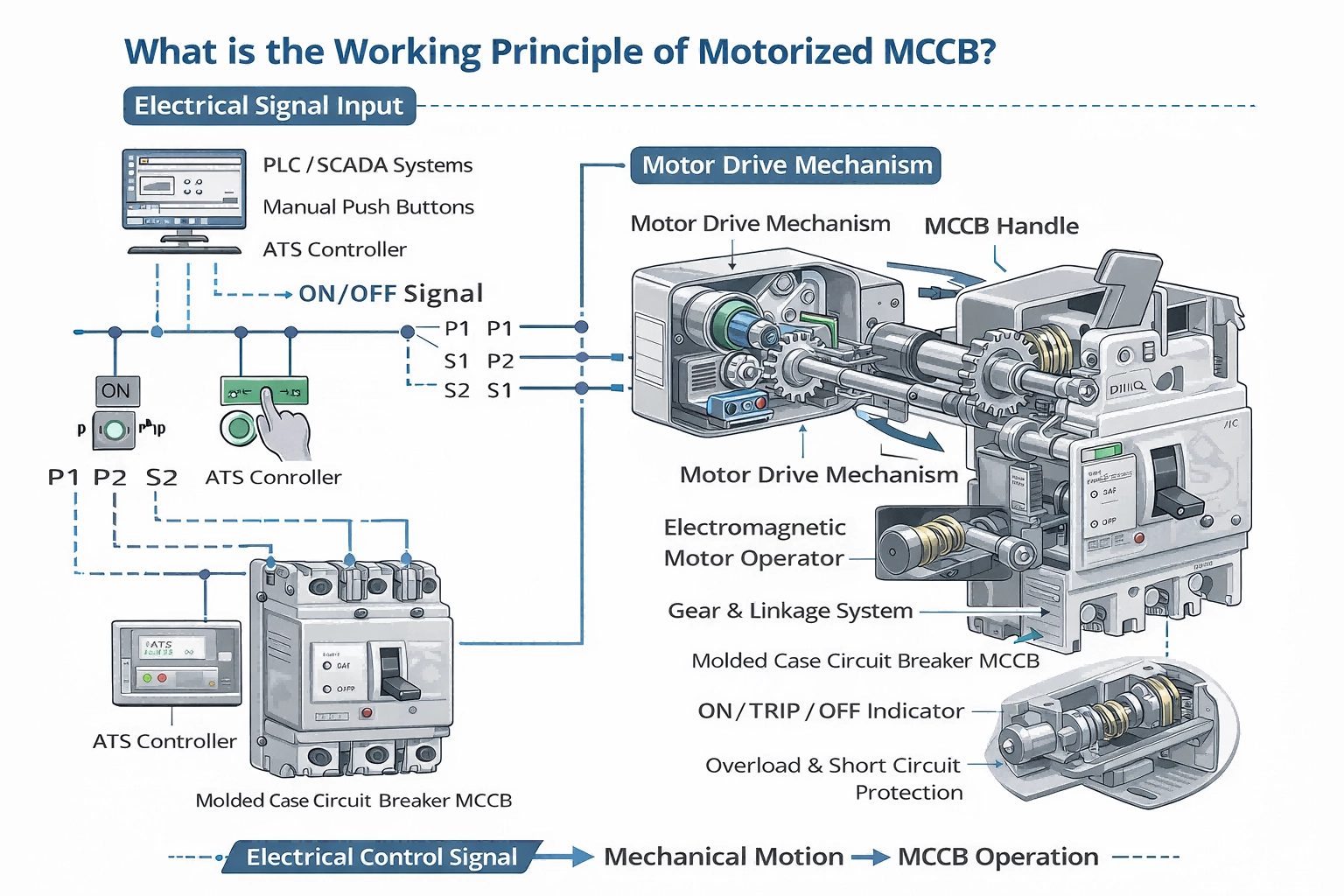
How to Use a Motorized MCCB Circuit Breaker for Remote Control and ATS Systems
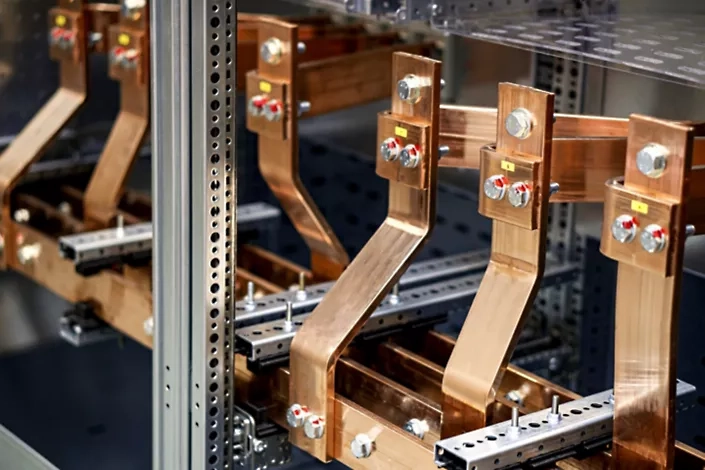
30-Day DIY Electrical Panel Cost-Saving Guide – Day 3
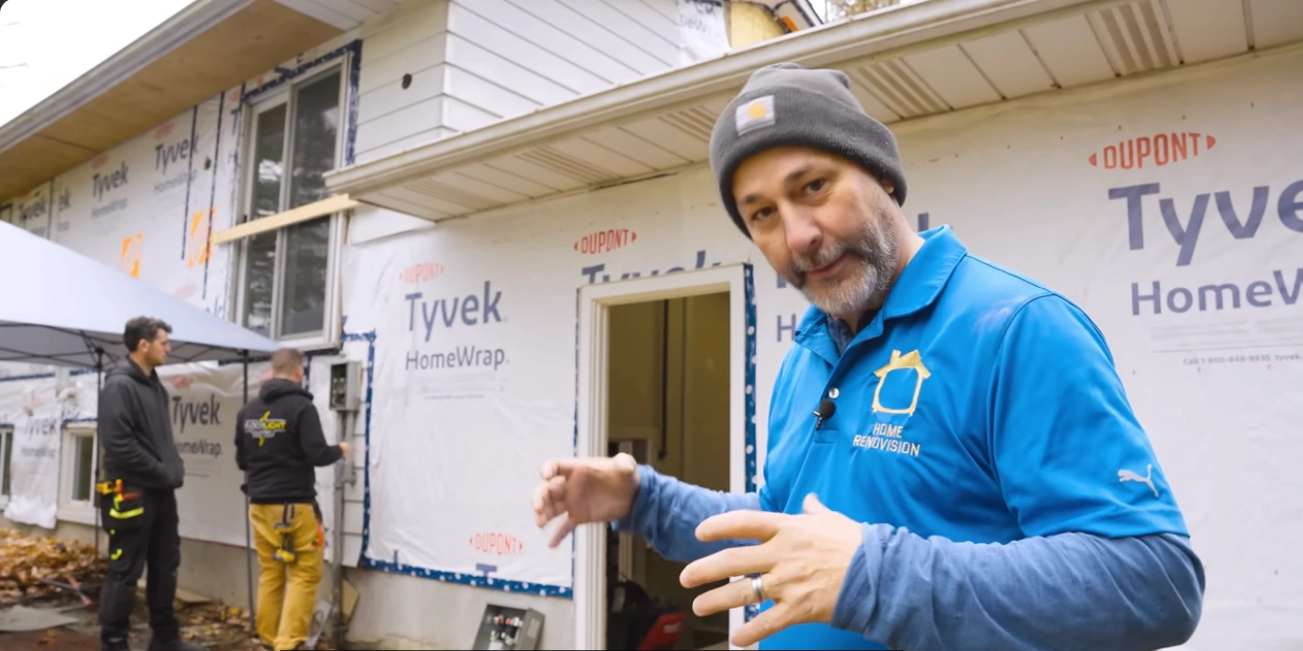
30-Day DIY Electrical Panel Cost-Saving Guide – Day 2
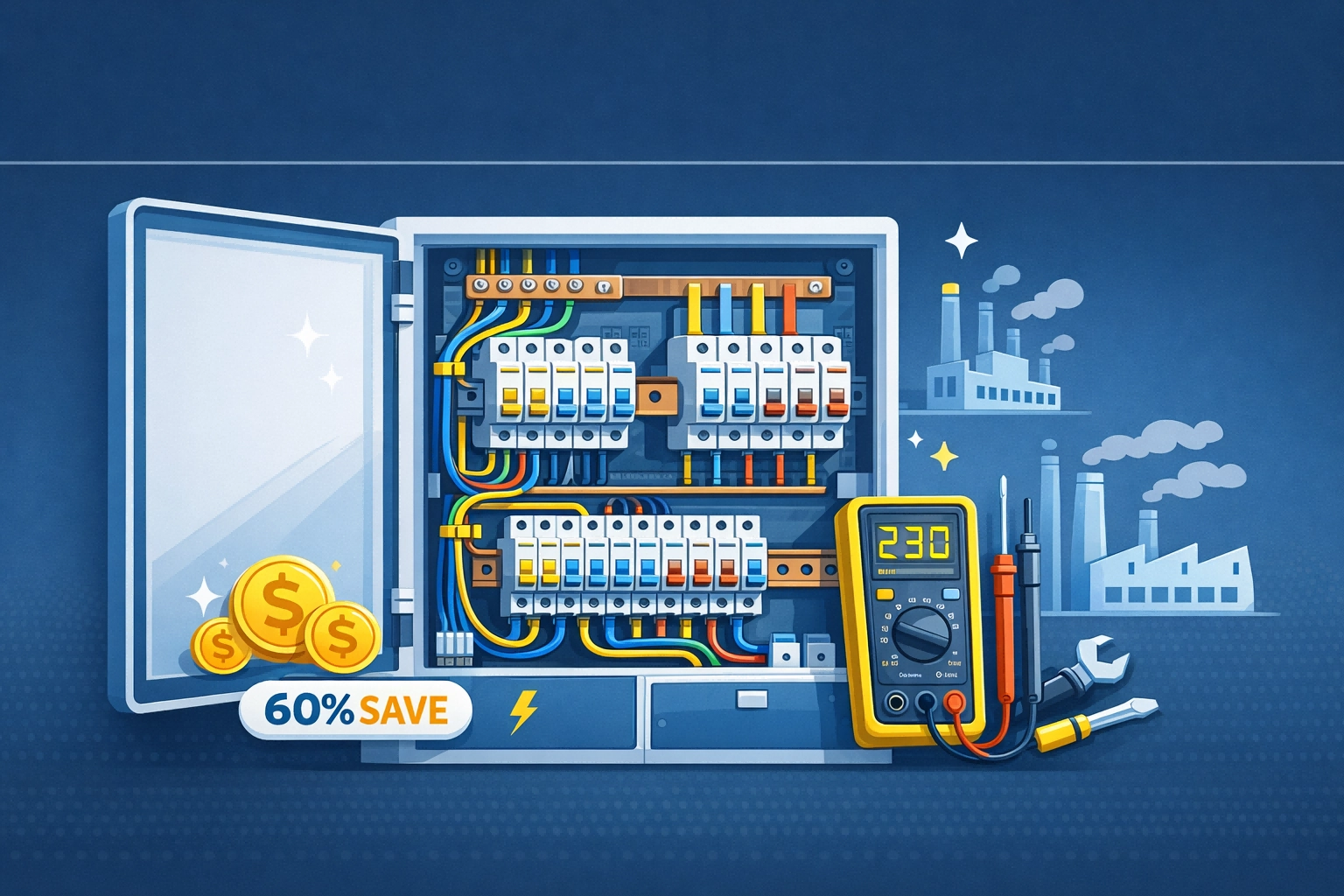
How to Build Your Own Electrical Panel and Save Up to 60% on Costs
Logistics
Do you offer DDP (Delivered Duty Paid) shipping service?
Yes, we can provide DDP shipping solutions, especially for regions such as:
- Europe
- Southeast Asia
- Middle East
- North America
Under DDP terms:
- We handle shipping, customs clearance, and import duties
- Customers receive goods directly without extra charges
This is ideal for clients who want a hassle-free, door-to-door delivery experience.
Service
What certifications does EcoNewlink hold?
EcoNewlink products are manufactured in compliance with international standards and hold certifications such as:
- CE Certification (EU compliance)
- RoHS Certification (environmental safety)
- GRS Certification (Global Recycled Standard for sustainable materials)
These certifications ensure our products meet global market access requirements and environmental regulations.
LCD2 Series Motorized Operating MCCB
What industries commonly use it?
Power distribution, industrial automation, EV charging, renewable systems, and grid infrastructure.
3P NLCD2 Series Motorized Operating MCCB
Is it suitable for harsh environments?
Yes, it operates from -5°C to +40°C with humidity up to 90%.
MCCB NLECB-250
Is OEM customization available?
OEM services are available for branding, labeling, parameters and packaging to support distributors and project requirements.
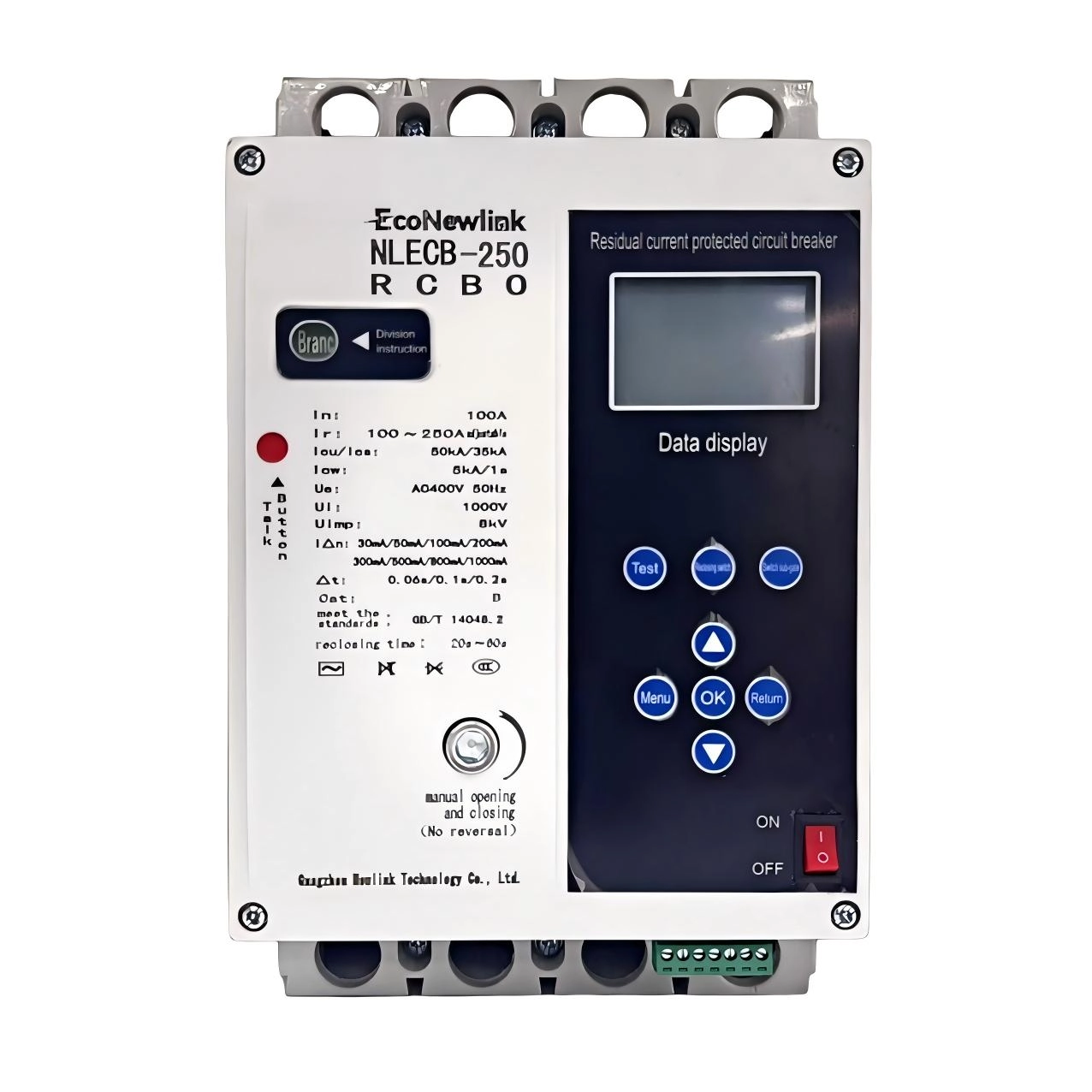
NLECB Automatic Reclosing ECB Circuit Breaker for Overload, Short-Circuit & Leakage Protection
This photovoltaic automatic reclosing circuit breaker (ECB) is designed for solar and low-voltage power distribution systems. It provides automatic reclosing functionality and comprehensive protection, including overload, short-circuit, and leakage protection, ensuring stable and reliable operation in harsh environments.
It solves common pain points in solar and smart power systems, such as manual reset issues, system downtime, and safety risks caused by unstable grid conditions. The waterproof design enhances durability and extends product life in outdoor installations.
Key advantages include high reliability, improved safety, reduced maintenance time, and automatic fault recovery. The product complies with international standards and certifications including ISO, CE, RoHS, and GRS, making it suitable for global markets.
OEM and customization services are available to support brand differentiation and specific engineering requirements.
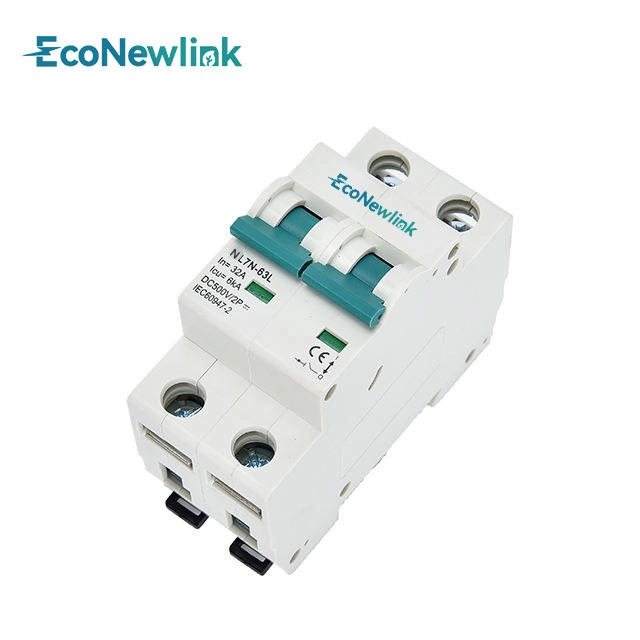
Breaking Capacity Dual Power Manual Transfer Isolating Switch Interlock MCB
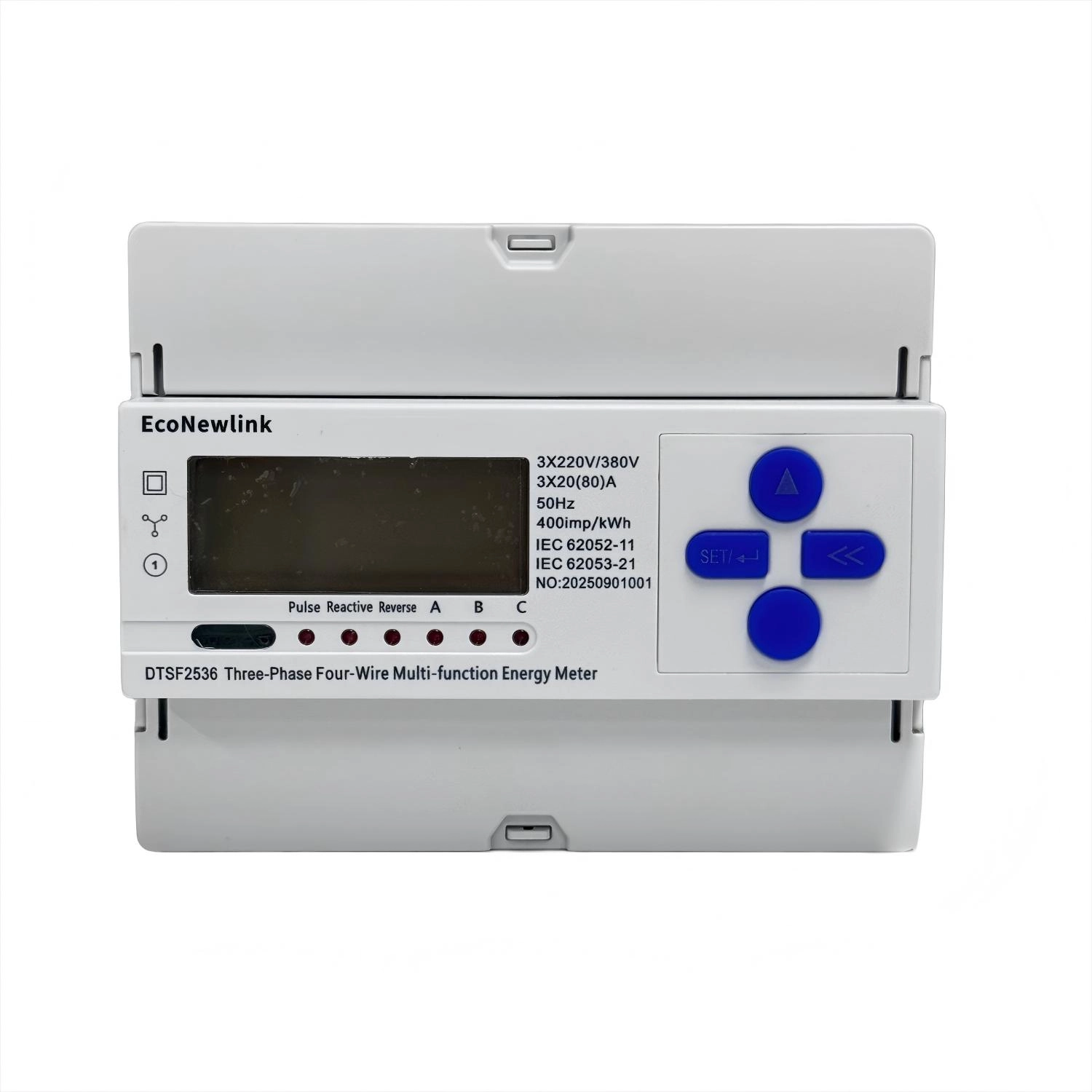
EcoNewlink Three Phase anti backflow energy meter RS485 Modbus DINRail Zero Export for PV Inverter
This three-phase anti-backflow energy meter is designed for solar PV systems to prevent excess electricity from feeding back into the grid. With RS485 Modbus communication, it provides real-time data to the inverter for dynamic power control, helping maximize self-consumption and ensure compliance with grid regulations. Ideal for residential, commercial, and rental energy management systems.
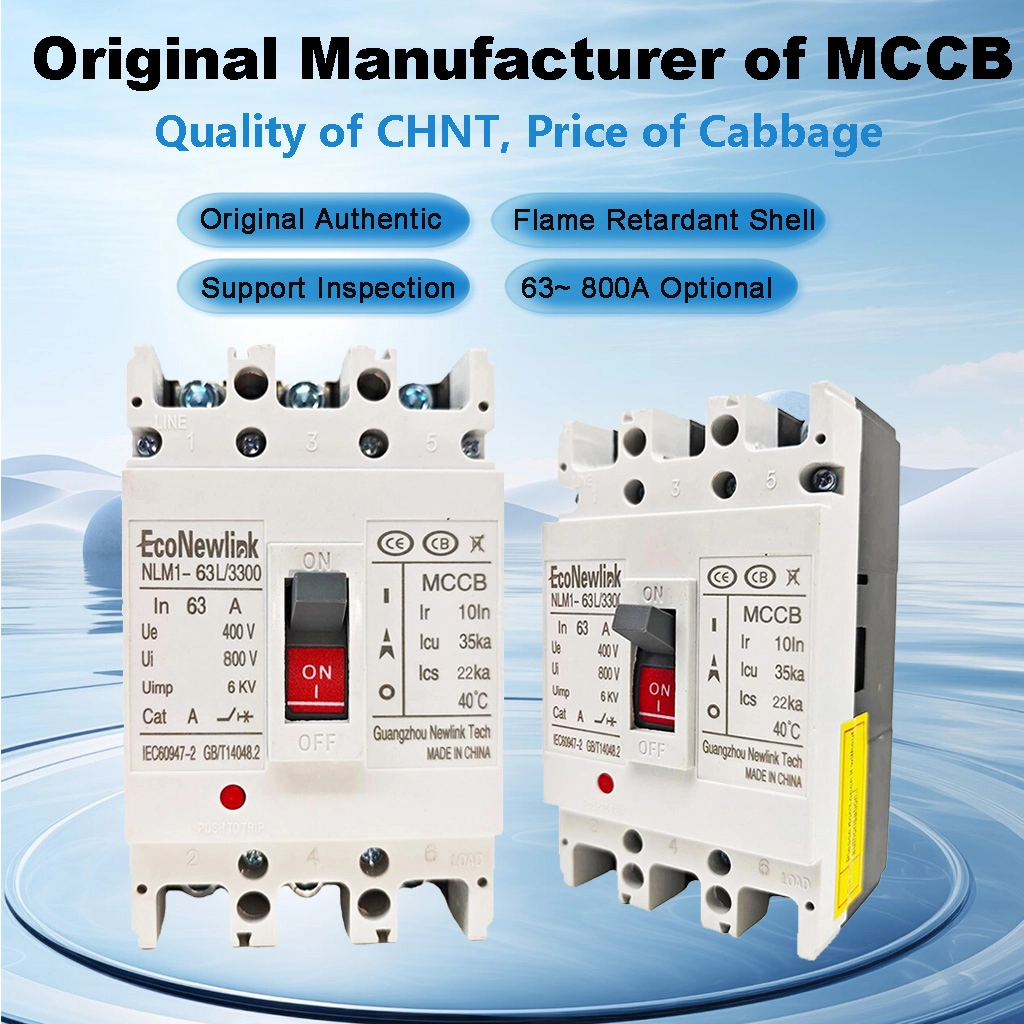
M1 / NLDM1 Series Moulded Case Circuit Breaker MCCB Manufacturer | 400V–1000V | 10A–2000A | High Breaking Capacity
The M1 / NLDM1 Series moulded case circuit breaker (MCCB) is designed for AC power distribution up to 1000V and 2000A. It provides overload, short circuit and undervoltage protection with high breaking capacity, compact design and modular accessories. Ideal for industrial, commercial and motor protection applications.
Request More Information or Subscribe for Updates
Thank you for reading our article!
If you would like more detailed information, have specific questions, or want to stay updated with the latest articles and guides, please fill out the form below.
Our team will get back to you with tailored information and resources.
Powering the Future with Smart, Safe Solutions
EcoNewlink delivers cutting-edge intelligent power products and solutions to ensure safety, efficiency, and reliability in your power distribution systems.
Contact
Email: nali@newlink.ltd
WhatsApp:
Address: No.76 Chuangyu road, Zengcheng District, Guangzhou, China

 WhatsApp
EcoNewlink
EcoNewlink