





what is a hybrid solar inverter used for? | Insights by EcoNewlink
- How do I size a hybrid solar inverter to handle PV peak production plus startup surge of inductive loads (motors, pumps)?
- How can I verify compatibility between a hybrid inverter and a specific battery chemistry and BMS to ensure safe charging and expected cycle life?
- What are the real lifecycle cost and efficiency differences between AC-coupled and DC-coupled hybrid systems for retrofits versus new builds?
- How does a hybrid inverter enforce grid export limits and time-of-use arbitrage without violating anti-islanding and utility rules?
- What manufacturing and quality documentation should I demand from the inverter supplier to reduce field failures and ensure warranty support?
- How should I interpret hybrid inverter spec sheets—continuous vs peak power, PV input Voc/Imp, MPPT range, battery charge current, round-trip efficiency—and which tolerances matter for purchasing?
How do I size a hybrid solar inverter to handle PV peak production plus startup surge of inductive loads (motors, pumps)?
Sizing a hybrid solar inverter for real-world loads requires separating continuous (rated) power, PV array peak production, and transient surge needs. Hybrid inverters list a continuous AC output (e.g., 5 kW) and a short-term surge/peak rating (often 2–3× continuous for seconds). Inductive loads such as motors and pumps can require 3–7× starting current depending on motor type and starting method. Relying on surge rating alone is risky without battery support.
Best practice:
- Calculate continuous demand: sum all simultaneously running loads (kW).
- Identify largest motor/pump starting torque and locked-rotor current (LRA). Use the motor nameplate or pump manufacturer data to estimate inrush current.
- Confirm inverter peak/surge rating duration: many inverters provide 10 s or 30 s surge capability. If motor inrush lasts longer than the inverter specified surge window, the inverter will trip.
- Design battery buffer: size battery discharge current (A) and capacity (kWh) to supply the difference during startup. Example: a 5 kW inverter with 12 kW short-term surge (2.4×) may still need a battery capable of 6–10 kW discharge for safe startup of a large motor—verify C-rate and inverter continuous battery discharge rating.
- Respect PV limits: oversizing PV relative to inverter (PV-to-inverter ratio of 1.1–1.3) improves energy harvest but ensure PV Voc at coldest expected temperature remains below inverter maximum Voc.
- Account for derating: high ambient temperatures and altitude reduce continuous power. Ask suppliers for derating curves.
Purchase checklist for manufacturing buyers: request inverter peak power curve (time vs power), battery discharge current capability (continuous and peak), MPPT count and input limits (Voc, Isc), and manufacturer guidance on inductive loads. If frequent motor starts are expected, choose an inverter with higher surge capacity or specify soft‑start contactors/variable frequency drives (VFDs) upstream of the motor to reduce inrush.
How can I verify compatibility between a hybrid inverter and a specific battery chemistry and BMS to ensure safe charging and expected cycle life?
Compatibility is more than matching voltage. It requires harmonizing charge algorithms, communication/control protocols, and safety interlocks. Modern batteries (LFP, NMC, lead‑acid) require different charge voltages, charge profiles, and depth-of-discharge (DoD) management. The battery management system (BMS) must be able to control or be controlled by the inverter for safe operation.
Technical steps to verify compatibility:
- Confirm nominal system voltage (e.g., 48 V, 51.2 V) and allowable voltage window of inverter battery input.
- Ask for supported chemistries and built‑in charge profiles. If the inverter has only basic CC-CV charging tuned to lead-acid, it may degrade Li-ion cells.
- Verify communication protocols: common interfaces are CAN (CANopen), RS‑485 (Modbus RTU), or Ethernet (Modbus TCP/SunSpec). Request protocol documentation and sample registers to ensure the inverter and BMS can exchange SOC, cell imbalance, charge/discharge enable flags, and fault codes.
- Check charge/discharge current limits and C-rate compatibility. For example, a 10 kWh LFP battery rated 1C can accept 10 kW; if the inverter charges/discharges at 20 kW it will over-stress the battery unless current-limited by the BMS.
- Request factory validation: compatibility test reports, cycle-life tests with the chosen battery vendor, and any firmware profiles used.
Procurement tip: require a signed compatibility statement or firmware version list as part of the purchase order. For safety and warranty, prefer inverters and battery packs that adhere to industry communication standards (SunSpec, Modbus) or provide a validated integration kit.
What are the real lifecycle cost and efficiency differences between AC-coupled and DC-coupled hybrid systems for retrofits versus new builds?
Choice between AC- and DC-coupled architectures affects round-trip efficiency, capital cost, and retrofit complexity.
- DC-coupled systems (PV → charger → battery → inverter) avoid double conversion when charging battery directly from PV; typical round-trip efficiency is higher (often 88–92%) because PV power can be routed to charge battery without first being inverted to AC. This favors new builds where the inverter + battery system is designed together.
- AC-coupled systems (PV → grid-tied inverter → AC bus → hybrid inverter/charger) are easier for retrofits: you can add a hybrid inverter and battery to an existing string inverter. However, they incur extra conversion steps, reducing round-trip efficiency (commonly 80–86%) and potentially increasing losses during battery PV charging.
- Cost elements: DC-coupled may reduce BOS (balance-of-system) if a single hybrid inverter is used, but requires careful PV string design and higher-spec DC cabling. AC-coupled retrofit may be cheaper short-term since it uses existing inverters but can incur higher operating costs due to additional conversion losses and may reduce available self-consumption.
- Operational considerations: DC-coupled scales better for time-of-use arbitrage and peak shaving due to higher efficiency but may require more complex control and coordination with PV MPPTs.
Procurement guidance: for new commercial installations aiming at maximum energy throughput and lowest LCOE over 10–20 years, favor DC-coupled architecture with verified round‑trip efficiency data. For residential retrofit projects with minimal downtime, AC-coupled hybrid inverters are often more practical.
How does a hybrid inverter enforce grid export limits and time-of-use arbitrage without violating anti-islanding and utility rules?
Grid export control and anti‑islanding are critical — utilities and standards (IEEE 1547, UL 1741/SA) require safe disconnection and controlled export. Hybrid inverters implement setpoints and communication with meters to shape export and comply with local rules.
Key mechanisms:
- Zero-export or export-limited mode: inverter reduces AC output to keep power flow at the grid interconnection point under a set threshold.
- Real‑time meter feedback: many hybrid inverters integrate with a utility meter or CT clamp to measure point-of-common coupling (PCC) power and dynamically adjust PV/battery dispatch.
- Time-of-use (TOU) arbitrage: the inverter’s EMS schedules battery charge/discharge based on tariff signals, forecasted PV production, and export limits, prioritizing local load when export must be restricted.
- Anti‑islanding: compliance with UL 1741/IEEE 1547 requires the inverter detect loss of utility and cease exporting within defined timeframes. Export-limiting algorithms must not prevent the inverter from disconnecting when grid stability is lost. Ensure vendor provides test reports demonstrating compliance with local interconnection requirements.
Operational note: when enforcing export limits the inverter may curtail PV output, increase battery charging or dissipate surplus via dump loads. Ask for documented control modes, meter integration protocols, and real-world response times (ms) in vendor datasheets.
What manufacturing and quality documentation should I demand from the inverter supplier to reduce field failures and ensure warranty support?
For buyers and OEM purchasers, documentation is the first defense against field failures. Ask for the following as contract deliverables:
- Certifications: IEC 62109 (safety), UL 1741/IEEE 1547 (grid interconnection), CE, RoHS/REACH compliance, and any country‑specific approvals.
- Test reports: factory acceptance test (FAT) records, thermal cycling, HALT/HASS summaries, vibration and ingress protection (IP) test reports, and EMC/EMI compliance tests with measured results.
- Bill of Materials (BOM) and key component source verification: capacitor vendor, power semiconductor type (IGBT vs SiC MOSFET), transformer specification. Components with documented lifetimes (e.g., polymer capacitors vs electrolytic) indicate expected MTBF.
- Reliability metrics: MTBF/MTTR estimates, mean cycles to failure for mechanical relays/contactors, fan life (if active cooling), and specified operating temperature/humidity ranges.
- Firmware and cybersecurity: firmware versioning policy, signed firmware updates, secure remote update methods, and vulnerability disclosure policy.
- Warranty and service: warranty duration, throughput guarantees (kWh), battery cycle warranty linkage, RMA process, local spares availability, and typical lead times for replacement units.
- Integration support: communication protocol docs (Modbus/SunSpec/CAN), sample code or API, and commissioning procedures.
Contractual recommendation: include acceptance tests at site (SAT), minimum spare parts list, and penalties for late replacements. For manufacturing partnerships, require periodic factory audits and right-to-audit clauses to verify QA processes.
How should I interpret hybrid inverter spec sheets—continuous vs peak power, PV input Voc/Imp, MPPT range, battery charge current, round-trip efficiency—and which tolerances matter for purchasing?
Spec sheets can be misleading if you don’t interpret parameters together. Focus on these fields and their practical relevance:
- Continuous AC output (kW): the steady power the inverter can supply at rated ambient conditions. Check de-rating curves for temperature/altitude.
- Peak/surge power (kW and duration): useful for short motor starts; verify duration and duty cycle limits.
- PV input spec: Voc maximum (must exceed cold-weather Voc), Isc maximum per MPPT, recommended PV array size range and PV-to-inverter ratio.
- MPPT range and trackers: ensure Voc and Vmp fit your string design. Multiple MPPTs improve mismatch handling.
- Battery charge/discharge current (A and kW): peak and continuous values. Ensure battery C-rate compatibility.
- Round‑trip efficiency: combined inverter + battery energy efficiency. Ask for measured values, not just ideal numbers—real-world round‑trip commonly 80–92% depending on architecture and battery chemistry.
- THD and power quality: total harmonic distortion <3–5% for sensitive loads. Verify reactive power capability if needed.
- Response/transfer time for backup: <10 ms is desirable to avoid sensitive load interruptions; some hybrid inverters provide UPS-like seamless transitions.
- Communication and control: supported protocols, cloud services, local HMI, and remote OTA firmware support.
Purchasing tolerances: request guaranteed performance over the whole operating envelope (temperature, altitude), not just single-point efficiency numbers. Ask for FAT and site commissioning logs to validate claimed specs.
Conclusion: Advantages of hybrid solar inverters
Hybrid solar inverters combine PV conversion, battery charging/discharging, and grid interaction into a single energy management platform. For manufacturers and industrial buyers, advantages include improved self-consumption, backup power, export control for regulatory compliance, reduced generator runtime, and centralized monitoring. From a procurement viewpoint, look for validated battery compatibility, clear surge and derating curves, comprehensive QA documentation (FAT/HALT/MTBF), and communication protocols that fit your control architecture.
To get a tailored quote or discuss component-level manufacturing specifications and certifications, contact us for a quote: www.econewlink.com · nali@newlink.ltd
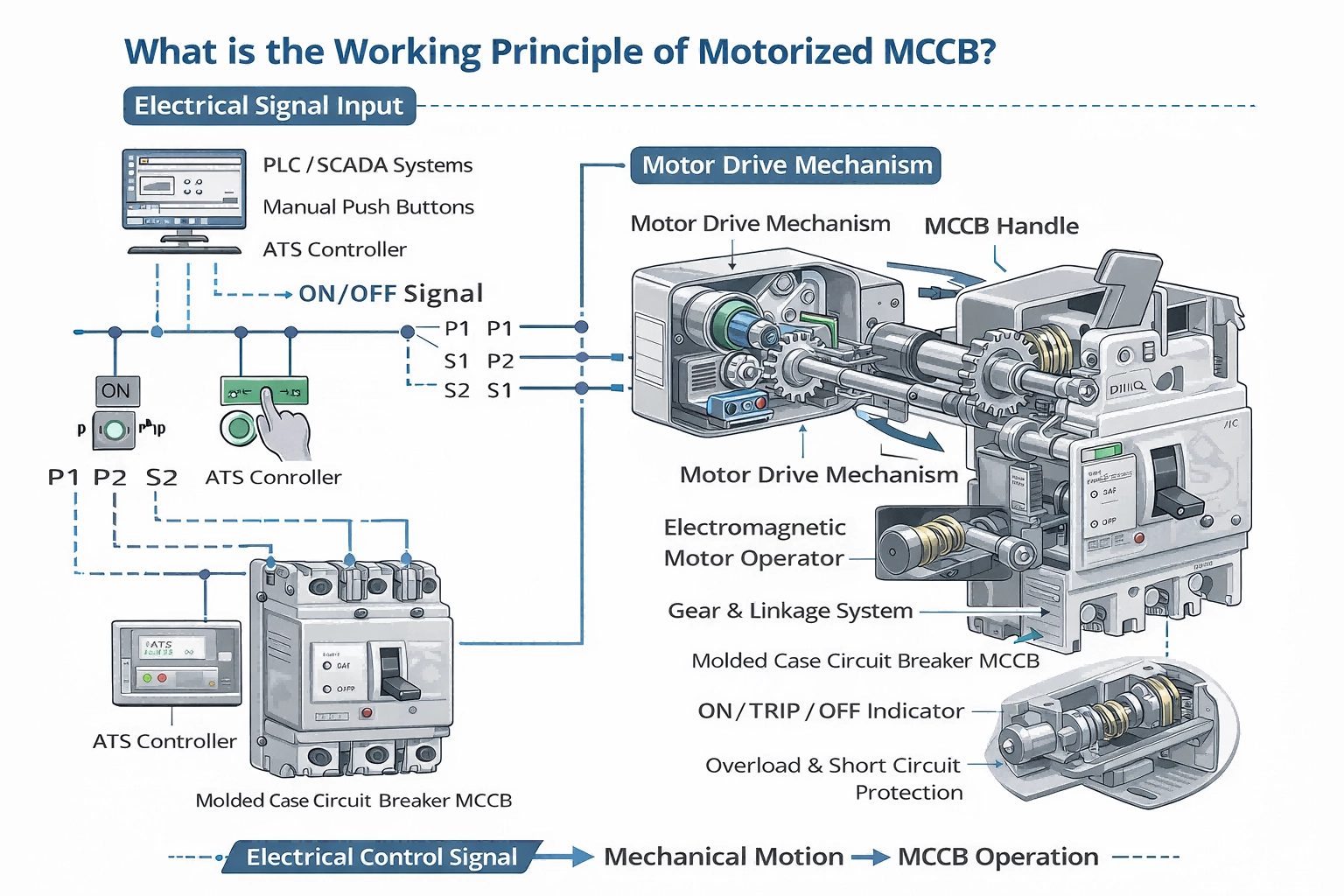
How to Use a Motorized MCCB Circuit Breaker for Remote Control and ATS Systems
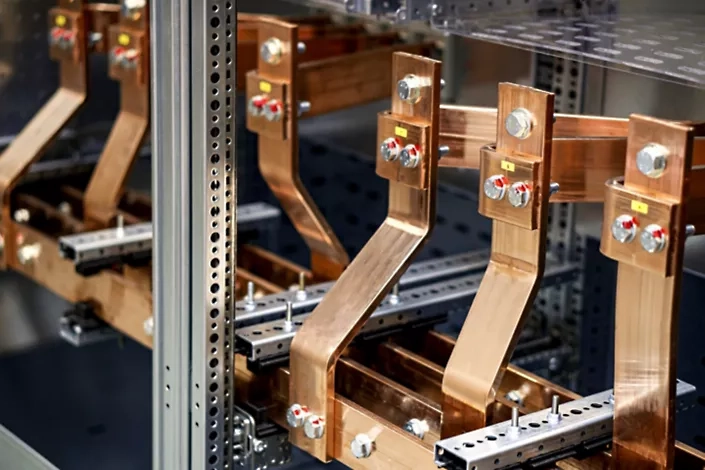
30-Day DIY Electrical Panel Cost-Saving Guide – Day 3

30-Day DIY Electrical Panel Cost-Saving Guide – Day 2

How to Build Your Own Electrical Panel and Save Up to 60% on Costs
Logistics
What is your typical order processing and delivery time?
Lead time depends on order quantity and customization level:
- Sample orders: 3–7 working days
- Standard orders: 7–15 working days
- OEM / customized orders: 20–45 days
With stable production capacity and efficient logistics coordination, we ensure on-time delivery and consistent supply chain performance.
Three Phase anti backflow energy meter
What is the main function of this meter
It measures real-time power flow and works with the inverter to prevent electricity from feeding back into the grid.
What happens if CT direction is wrong?
The system may detect power incorrectly and reduce inverter efficiency.
LCD2 Series Motorized Operating MCCB
What operating voltage does this model support?
Control voltage range: 100-240VAC / 100-220VDC.
NLDM1 Molded Case Circuit Breaker(MCCB)
What is a moulded case circuit breaker (MCCB)?
A moulded case circuit breaker is a low-voltage circuit breaker used to protect electrical circuits from overload and short circuit.
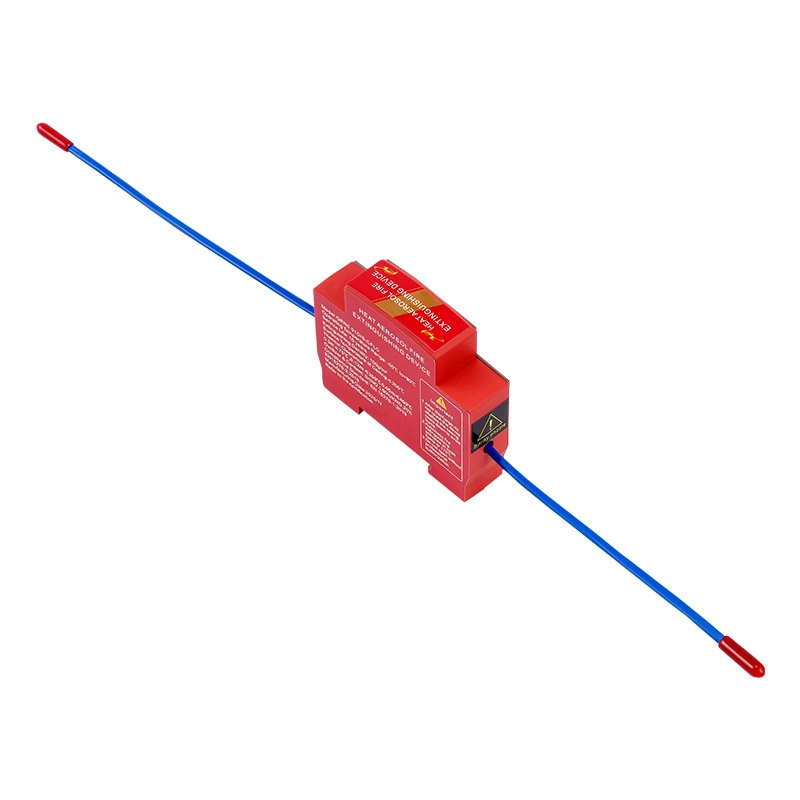
Distribution cabinet fire protection fire-fighting
Heat Aerosol FireExtinguishing Device
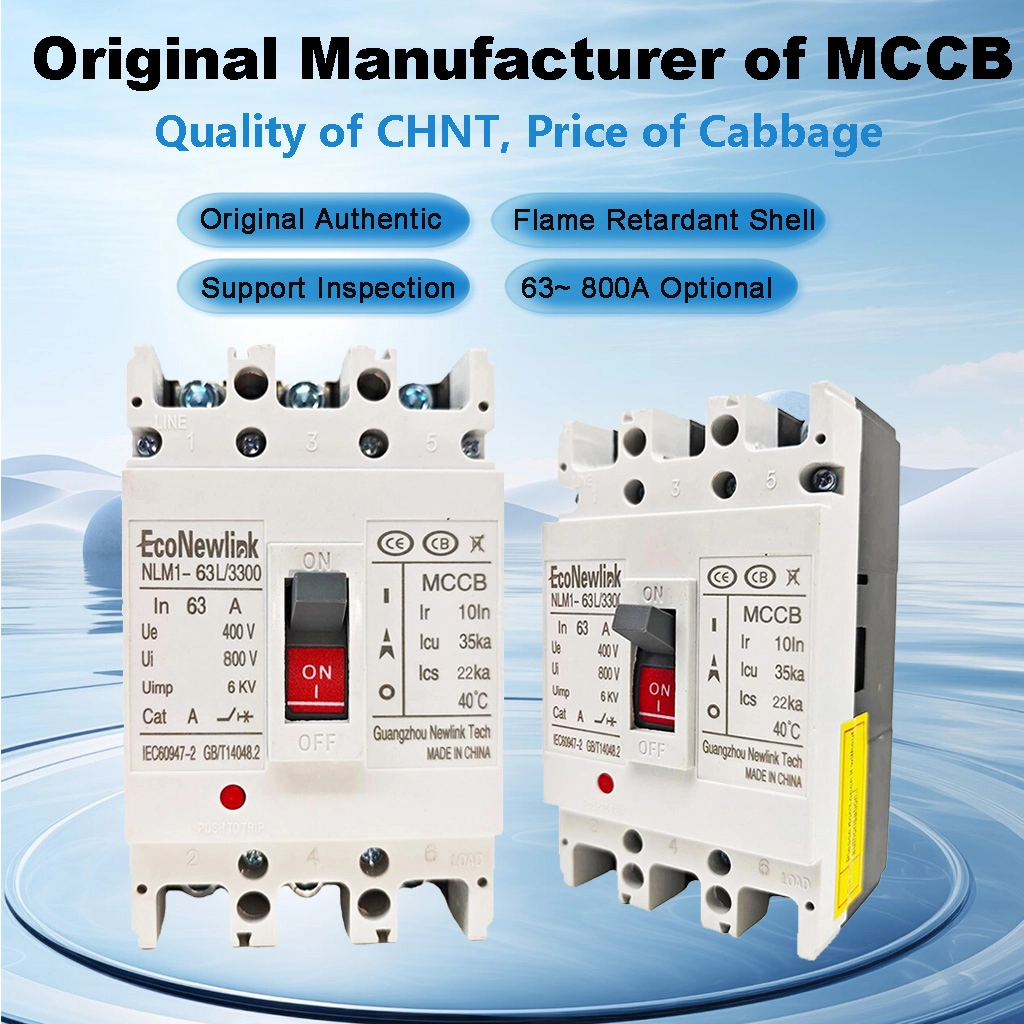
M1 / NLDM1 Series Moulded Case Circuit Breaker MCCB Manufacturer | 400V–1000V | 10A–2000A | High Breaking Capacity
The M1 / NLDM1 Series moulded case circuit breaker (MCCB) is designed for AC power distribution up to 1000V and 2000A. It provides overload, short circuit and undervoltage protection with high breaking capacity, compact design and modular accessories. Ideal for industrial, commercial and motor protection applications.
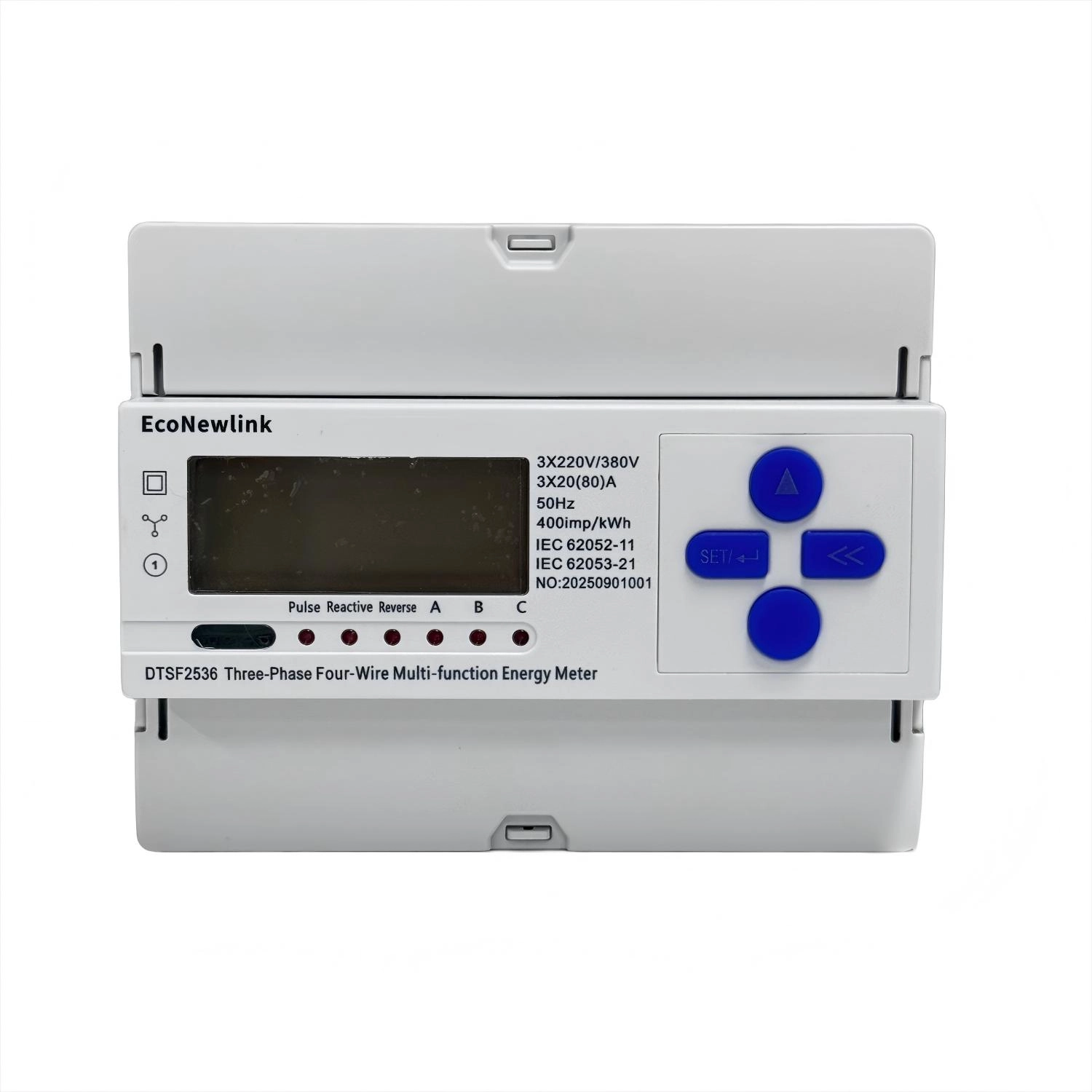
EcoNewlink Three Phase anti backflow energy meter RS485 Modbus DINRail Zero Export for PV Inverter
This three-phase anti-backflow energy meter is designed for solar PV systems to prevent excess electricity from feeding back into the grid. With RS485 Modbus communication, it provides real-time data to the inverter for dynamic power control, helping maximize self-consumption and ensure compliance with grid regulations. Ideal for residential, commercial, and rental energy management systems.
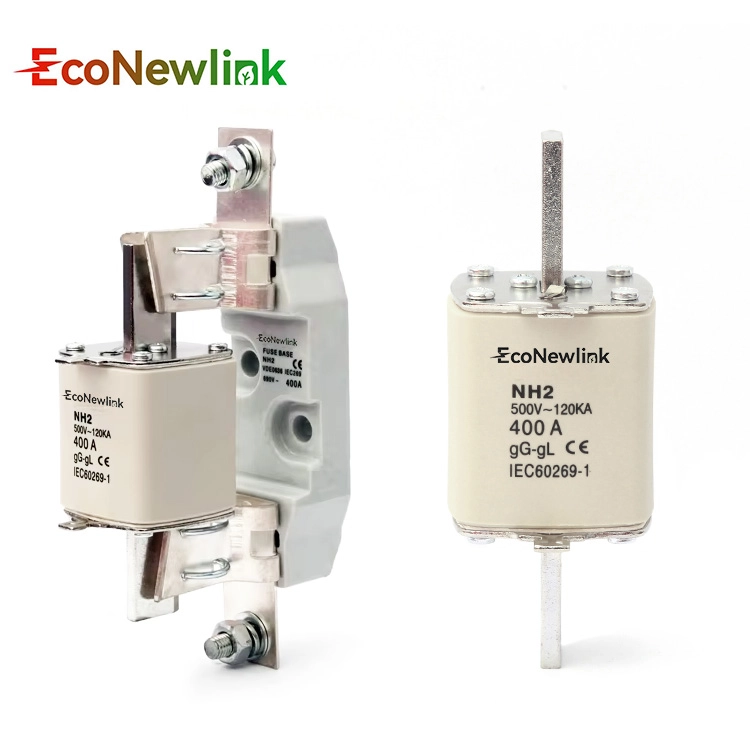
Low Voltage Ceramic Blade Fuse for Power Distribution Systems | High Breaking Capacity Industrial Protection Fuse Manufacturer
This low-voltage ceramic blade fuse is designed for reliable protection in power distribution systems and industrial electrical equipment. Built with a non-flammable ceramic body and high-purity quartz sand arc extinguishing medium, it delivers superior breaking capacity, high thermal conductivity, and excellent insulation performance. The high-strength melting tube structure ensures fast arc suppression, stable current interruption, and extended service life. Ideal for low-voltage switchgear, distribution panels, renewable energy systems, and industrial control cabinets requiring dependable circuit protection.
Request More Information or Subscribe for Updates
Thank you for reading our article!
If you would like more detailed information, have specific questions, or want to stay updated with the latest articles and guides, please fill out the form below.
Our team will get back to you with tailored information and resources.
Powering the Future with Smart, Safe Solutions
EcoNewlink delivers cutting-edge intelligent power products and solutions to ensure safety, efficiency, and reliability in your power distribution systems.
Contact
Email: nali@newlink.ltd
WhatsApp:
Address: No.76 Chuangyu road, Zengcheng District, Guangzhou, China

 WhatsApp
EcoNewlink
EcoNewlink