





Do you provide OEM/ODM services for custom power distribution solutions?
- 1. How do I determine the correct short-circuit rating and fault withstand for a custom low-voltage distribution board when OEM specifications vary?
- 2. What minimum FAT and type tests should I insist on for OEM-built switchgear to ensure IEC/UL compliance and avoid costly site rework?
- 3. How can I ensure OEM/ODM panels meet IP and corrosion resistance requirements for coastal or heavy industrial sites without overpaying?
- 4. What exact data and drawings must I provide to get accurate OEM/ODM quotes and prevent scope creep in custom power distribution design?
- 5. How do I evaluate and negotiate lead times, MOQ, and tooling/NRE costs for an ODM power distribution assembly when scaling production?
- 6. What warranty, spare parts strategy, and on-site support terms should I require in OEM contracts for critical power distribution equipment?
1. How do I determine the correct short-circuit rating and fault withstand for a custom low-voltage distribution board when OEM specifications vary?
Why it matters: Selecting an underspecified short-circuit rating causes component failure and fire risk; over-specifying dramatically increases cost and footprint. Many suppliers list breaker ratings but omit short-time and peak withstand values for busbars and enclosures.
How to specify it: Start with a site-level short-circuit study performed by an electrical engineer using the utility/source data (highest and lowest expected source X/R, available fault current at the service entrance). From that study determine:
- Prospective symmetrical fault current (Isym) at the incoming point.
- Short-time withstand current (Icw, typically 1s, 3s depending on region and protective device coordination) and peak withstand (Ipk).
What to require from the OEM/ODM:
- Type-test reports (or certificate) demonstrating busbar and assembly short-circuit withstand per IEC 61439 (for LV switchgear) or IEC 62271 (for HV).
- Rated breaking capacity (Icu) and making capacity (Icm) for circuit breakers, plus coordination curves.
- Manufacturer-supplied short-circuit calculation showing how busbar cross-section, connections (bolted/sleeved), and bolting torque were sized to meet Icw and Ipk.
Practical checklist:
- Specify minimum Icw and Ipk values in the Purchase Order and require supporting calculations.
- For ratings above typical LV switchgear limits (e.g., >4000–6300 A), confirm type-tested switchgear or third-party type-test certificates.
- Include coordination study to ensure upstream protection device clearing times limit thermal/mechanical stress.
2. What minimum FAT and type tests should I insist on for OEM-built switchgear to ensure IEC/UL compliance and avoid costly site rework?
Why it matters: Incomplete Factory Acceptance Testing (FAT) or missing type tests are frequent causes of delays and field rework. Many online answers list generic tests but not the specific acceptance criteria needed for procurement documents.
Essential tests and documentation to demand:
- Type tests (performed once per design variant): dielectric withstand, temperature-rise, short-circuit withstand, degree of protection (IP), functionality and mechanical operation—refer to IEC 61439 for low-voltage switchgear and UL 508A for industrial control panels.
- Routine tests (each unit): continuity and insulation resistance, power-on functional checks, phasing, control wiring verification, operation of breakers/relays, primary injection for protection verification where applicable.
- Factory Acceptance Testing (FAT) scope in the contract: witness by buyer or third-party, complete functional verification including relay settings, metering calibration, SCADA/communication testing (Modbus, IEC 61850 if used), and photographic/ video evidence of tests.
Acceptance criteria examples (use in PO):
- Insulation resistance: minimum 1 MΩ at rated voltage (or manufacturer standard per IEC).
- Temperature-rise: measured values shall not exceed limits defined in IEC 61439 at rated current and rated ambient (specify ambient, commonly 35°C).
- IP rating verification: ingress test reports or certificate per IEC 60529.
Tip: Include clear pass/fail criteria, witness rights, and requirement for stamped test reports (with instrument calibration certificates) in your purchase order to avoid disputes at site.
3. How can I ensure OEM/ODM panels meet IP and corrosion resistance requirements for coastal or heavy industrial sites without overpaying?
Why it matters: Incorrect enclosure protection causes accelerated corrosion or water ingress; over-specification to the highest class increases cost and weight unnecessarily.
How to balance cost and protection:
- Define the environment explicitly in procurement docs: indoor/outdoor, coastal (salt spray), humidity, chemical exposure, ambient temperature range, UV exposure.
- Specify IP rating required (for example IP54 for dust/water splashes indoors, IP65 for outdoor washdown, IP66 for strong jets). Use IEC 60529 definitions.
- For corrosion, specify ISO 12944 corrosion category (C3–C5-M). Coastal marine sites commonly require C5-M; industrial chemical sites may require specific coatings.
Materials and treatments to request:
- Galvanized or stainless-steel enclosures (304 for moderate, 316 for marine/chemical). Stainless reduces long-term maintenance in aggressive environments.
- Powder-coating with specified thickness, epoxy primer, or duplex systems for extended life; include salt spray test duration expectations or coating thickness in microns.
- Stainless or tin-plated copper busbar connections and marine-grade fasteners where corrosion is critical.
Cost control:
- Use standard IP/IP66 enclosures for field-exposed areas and lower-cost IP54 for protected indoor rooms.
- Modularize critical circuits into small IP-rated sub-panels so only vulnerable parts need higher-grade enclosures.
4. What exact data and drawings must I provide to get accurate OEM/ODM quotes and prevent scope creep in custom power distribution design?
Why it matters: Ambiguous RFQs are the leading cause of omitted features, price change orders, and schedule slippage.
Essential information to include in your RFQ/PO:
- Electrical data: single-line diagram, rated system voltage(s), frequency, maximum continuous current per feeder, available fault current at each incoming bus, power factor, harmonic content if present, and neutral earthing practice.
- Physical constraints: enclosure footprint limits, mounting style (floor, wall, pad), cable entry directions, duct/cable tray locations, and required clearances for maintenance.
- Functional requirements: incoming protection type, metering accuracy class, control and alarm points, remote communications (protocols and ports), SCADA interfaces, and required coordination/sequence of operations.
- Standards and certifications: list mandatory standards (IEC 61439, UL 508A), environmental classes (IP, ISO 12944), and required third-party testing bodies (e.g., TUV, UL). Also specify RoHS/REACH, ISO 9001 QMS expectations.
- Deliverables: detailed manufacturing drawings (GA and wiring), BOM with part numbers and alternates, FAT/test reports, user manual, installation and maintenance instructions, and spare parts list.
Procurement tip: Provide a reference PLC ladder logic or I/O list rather than vague “control logic” descriptions. Request a fixed scope proposal with line-item pricing for add-ons to control change orders.
5. How do I evaluate and negotiate lead times, MOQ, and tooling/NRE costs for an ODM power distribution assembly when scaling production?
Why it matters: Unexpected NRE (non-recurring engineering), tooling charges, and minimum order quantities can erase expected savings when scaling from prototype to production.
How to approach pricing and lead times:
- Ask suppliers to separate costs: engineering/NRE, tooling, sample/prototype, unit price at defined MOQ tiers, and price breaks for larger volumes.
- Negotiate prototype scope: accept a higher-cost one-off prototype to confirm fit/function, and then negotiate amortized tooling over a committed minimum purchase (e.g., 50–200 units depending on complexity).
- Lead-time planning: typical lead-times vary—prototyping 6–12 weeks; production runs commonly 8–16 weeks depending on component availability (switchgear, breakers, relays). Always confirm critical component lead times (e.g., high-power breakers, relays, PLCs) and secure them with deposits if long lead times exist.
Contractual protections:
- Include milestone-based payments tied to design freeze, sample approval, and shipment.
- Specify warranty start date (e.g., from shipment or first energization) and spare-parts pricing and lead-time commitments.
- Consider long-lead-item (LLI) buyouts or consignment stock agreements for critical parts to shorten production lead times.
6. What warranty, spare parts strategy, and on-site support terms should I require in OEM contracts for critical power distribution equipment?
Why it matters: Critical sites can’t tolerate long downtime. Many buyers accept generic warranties and later find spare parts and service performance inadequate.
Recommended contractual terms:
- Warranty: require at minimum a 12-month warranty from commissioning or 18 months from shipment for manufacturing defects; specify remedies (repair, replace, or credit) and clarity on labor and travel costs for on-site service.
- Spare parts: demand a documented spare-parts kit for each panel type, with recommended critical spare list (e.g., incoming breaker, control power transformer, protection relay, fuses, control modules). Specify guaranteed availability periods (commonly 5–10 years) and lead times.
- Service SLAs: define response times for phone support, remote diagnostics, and on-site support (e.g., phone support within 4 hours, onsite within 48–72 hours depending on site criticality). For mission-critical plants, require local stocking, advanced exchange, or guaranteed local technician dispatch.
- Training and documentation: include commissioning support, operator and maintenance training, as-built drawings, relay setting files, and spare parts identification manuals.
Risk mitigation:
- Include acceptance tests at commissioning before warranty start where possible.
- Ask for a parts obsolescence policy and component substitution approvals to avoid sudden EOL (end-of-life) issues.
Concluding summary — Advantages of OEM/ODM custom power distribution solutions
Custom OEM/ODM power distribution equipment lets you tailor low-voltage switchgear, MCCs, distribution panels, and PDUs to site-specific electrical characteristics, environmental conditions, and operational control requirements. Properly specified OEM/ODM work delivers optimized busbar sizing and short-circuit capability, verified type and routine testing (IEC 61439/UL 508A), right-sized IP and corrosion protection, and documented FATs that reduce commissioning risk. When procurement includes clear technical data, FAT witness rights, defined SLAs, and spare-parts commitments, custom solutions yield better lifecycle cost, improved uptime, and simplified maintenance compared with generic, off-the-shelf assemblies.
For detailed quotes, design review, or to arrange FAT witnessing, contact us at www.econewlink.com or email nali@newlink.ltd.
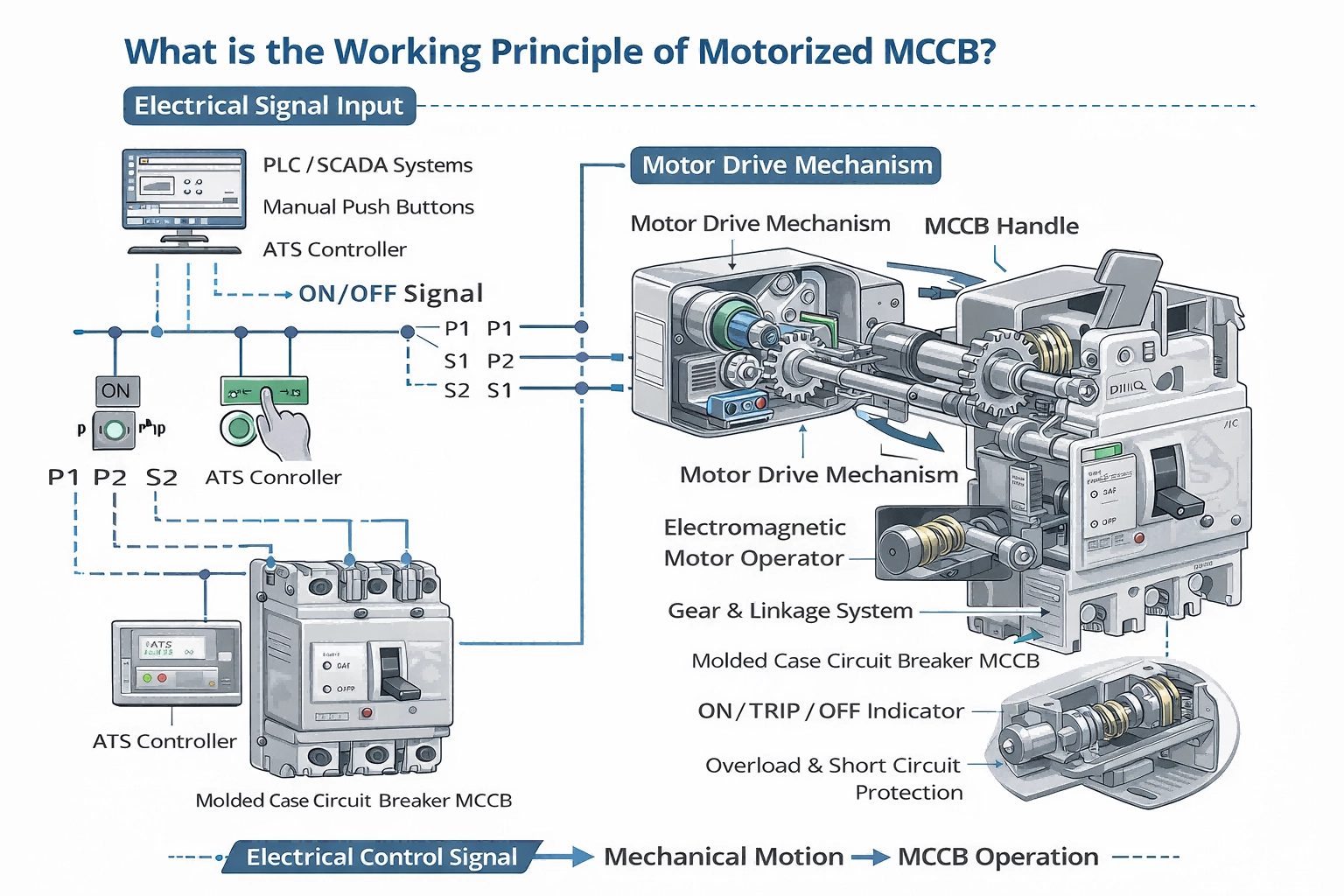
How to Use a Motorized MCCB Circuit Breaker for Remote Control and ATS Systems

30-Day DIY Electrical Panel Cost-Saving Guide – Day 3

30-Day DIY Electrical Panel Cost-Saving Guide – Day 2

How to Build Your Own Electrical Panel and Save Up to 60% on Costs
Solar Controller with MPPT (Basic Model)
How does the controller extend battery lifespan?
The optimized multi stage charging process and intelligent voltage regulation reduce stress on the battery and improve long term performance.
NLDM1 Molded Case Circuit Breaker(MCCB)
What are the main advantages of this MCCB?
Compact size, high breaking capacity, modular accessories, reliable protection and international standard compliance.
Three-phase multifunction guide rail meter
Does the meter have pulse output?
Yes, it provides electrical energy pulse output.
Logistics
How do you handle shipping risks and product safety?
We prioritize shipment safety through:
- Strong packaging standards
- Verified logistics partners
- Cargo tracking support
- Optional cargo insurance
In case of any issue, our team provides fast response and full support, ensuring your business operations are not affected.
STE18-RF Prepaid IC Card Energy Meter
Can the meter support different electricity tariffs?
Yes. The meter supports multi-tariff settings and time-of-use (TOU) billing, allowing utilities to apply different electricity rates during different time periods.
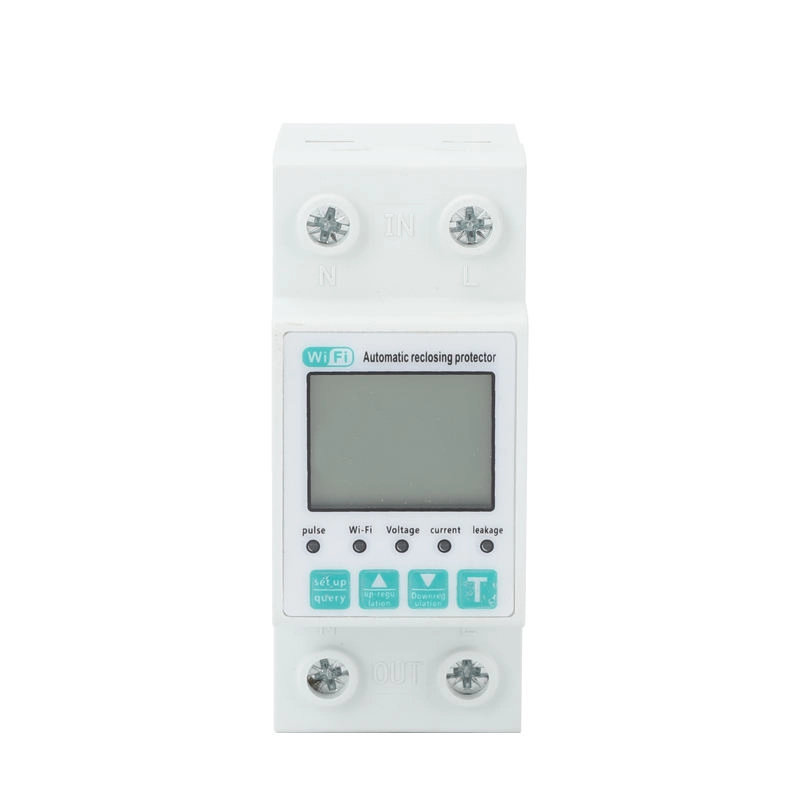
Tuya WiFi Smart Recloser 63A Single Phase kWh Meter with Timer, Earth Leakage, Over/Under Voltage and Overcurrent Protection
This Tuya WiFi smart recloser combines energy metering, timer control and multiple electrical protections in one compact device. It supports remote monitoring through the Smart Life or Tuya app, allowing users to check power data, set schedules and manage circuits conveniently. Designed for single-phase systems, it helps improve electrical safety and energy management in residential, commercial and light industrial applications.
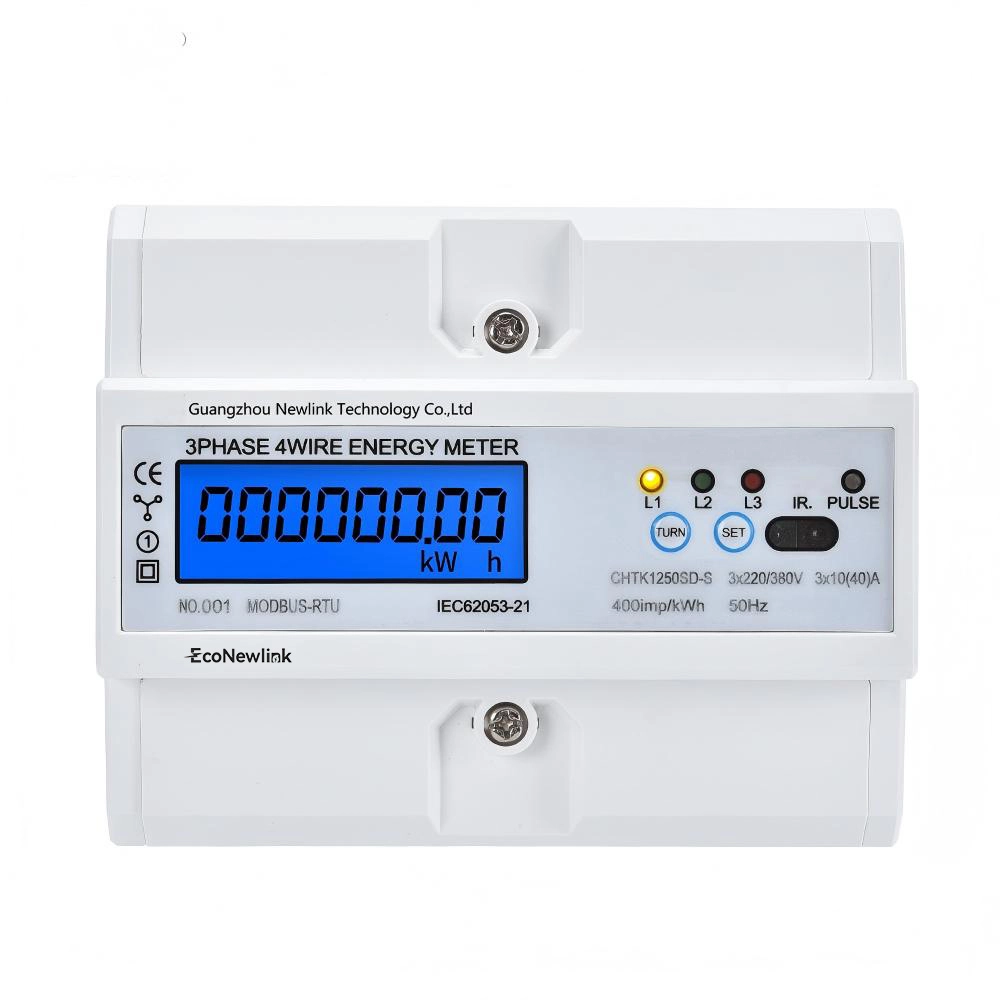
Three-Phase Four-Wire Multifunction Electronic DIN Rail Energy Meter Manufacturer with CE Certification
The Three-Phase Four-Wire Multifunction Electronic DIN Rail Energy Meter is a compact and high-accuracy smart meter designed for modern power monitoring systems. It features RS485 communication, pulse output, and a clear LCD display. With easy DIN rail installation and CE certification, it is ideal for industrial, commercial, and energy management applications.
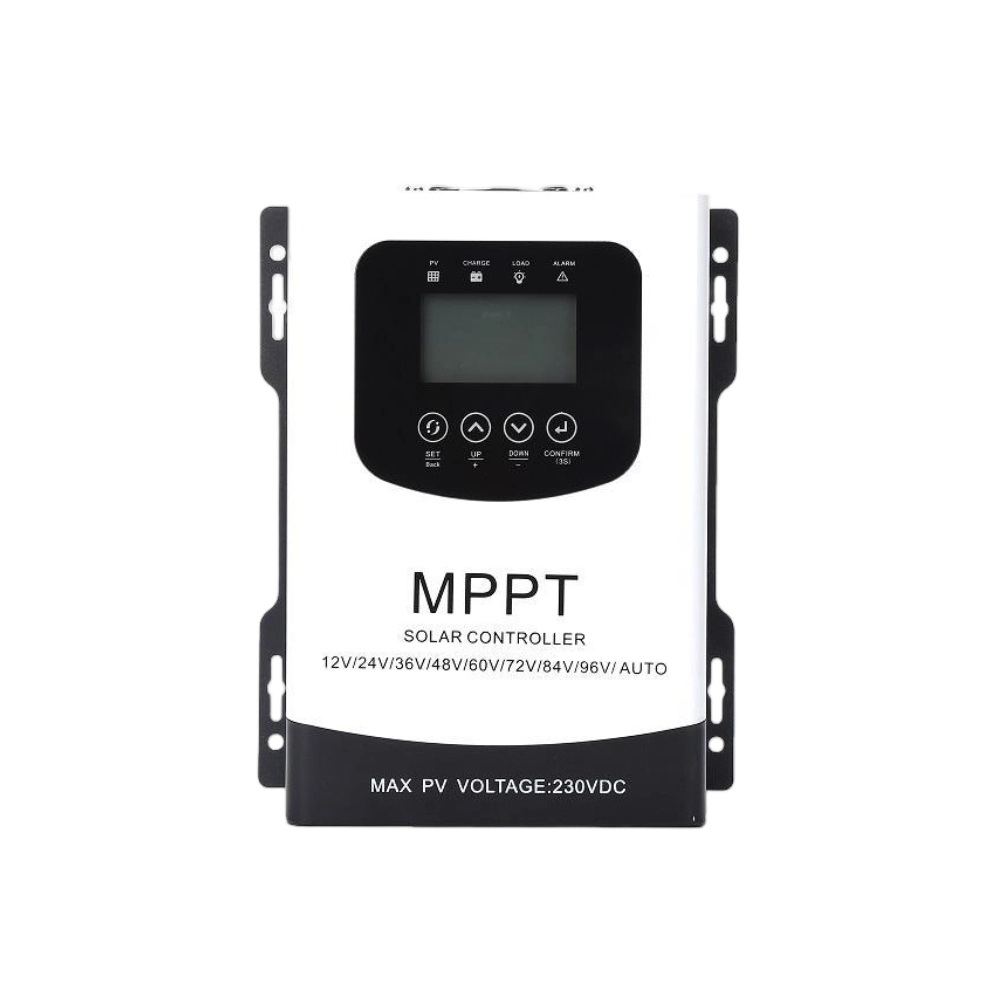
High Efficiency MPPT Solar Charge Controller for Off Grid Systems with 98% Tracking Battery Protection and RS485 Monitoring
This MPPT Solar Charge Controller is designed for off grid solar power systems, delivering up to 98% tracking efficiency to maximize photovoltaic energy utilization. It supports lead acid and lithium batteries with optimized multi stage charging to extend battery lifespan. Built in overcharge, over discharge, overload and short circuit protection ensure system safety, while the RS485 communication interface enables remote monitoring and intelligent energy management. Ideal for residential, telecom and small commercial solar applications.
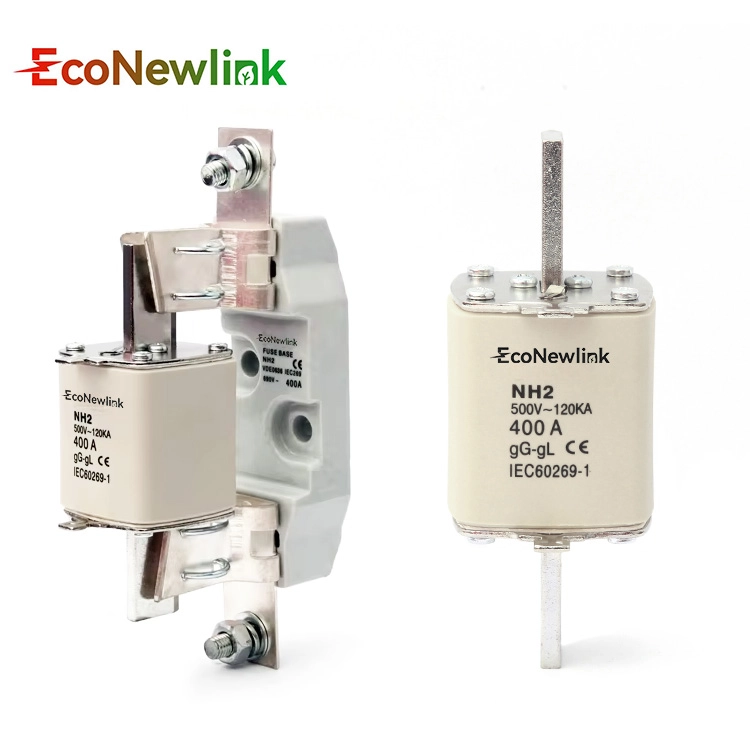
Low Voltage Ceramic Blade Fuse for Power Distribution Systems | High Breaking Capacity Industrial Protection Fuse Manufacturer
This low-voltage ceramic blade fuse is designed for reliable protection in power distribution systems and industrial electrical equipment. Built with a non-flammable ceramic body and high-purity quartz sand arc extinguishing medium, it delivers superior breaking capacity, high thermal conductivity, and excellent insulation performance. The high-strength melting tube structure ensures fast arc suppression, stable current interruption, and extended service life. Ideal for low-voltage switchgear, distribution panels, renewable energy systems, and industrial control cabinets requiring dependable circuit protection.
Request More Information or Subscribe for Updates
Thank you for reading our article!
If you would like more detailed information, have specific questions, or want to stay updated with the latest articles and guides, please fill out the form below.
Our team will get back to you with tailored information and resources.
Powering the Future with Smart, Safe Solutions
EcoNewlink delivers cutting-edge intelligent power products and solutions to ensure safety, efficiency, and reliability in your power distribution systems.
Contact
Email: nali@newlink.ltd
WhatsApp:
Address: No.76 Chuangyu road, Zengcheng District, Guangzhou, China

 WhatsApp
EcoNewlink
EcoNewlink